Protein bars, shakes, and cereals can make an ordinary grocery trip feel like a test of whether you’re eating enough. Before you add another protein-packed snack to your cart, it’s worth asking what your body actually needs.
At the grocery store, a shopper compares 2 protein bars, each labeled with a different number of grams of protein, and wonders which one is enough. Package labels show what a food contains, not how much that person needs in a day. Body weight provides a more useful starting point, though age and activity level can change the target. A simple calculation can put those numbers in context before another protein product goes in the cart.
Protein marketing can make more seem better
Protein helps the body build and repair tissue and make enzymes, but a higher-protein label does not make a food automatically healthier. Fitness advice often focuses on muscle building without distinguishing between the amount needed for everyday health and the amount that may help someone training hard. For many adults, adding protein powder to an already adequate diet offers little benefit.
Protein alone does not build bigger muscles. Strength training provides the stimulus for muscle growth, while adequate food supplies the materials the body uses to respond. A larger serving of meat cannot replace that training.
Daily needs depend on body size and activity
The long-standing Recommended Dietary Allowance for most adults is 0.36 grams of protein per pound (0.8 grams per kilogram) of body weight each day. That works out to about 54 grams for an adult weighing 150 pounds (68 kg). This allowance is intended to meet most adults’ basic needs, not to serve as a target everyone must exceed.
Needs can rise with age or exercise. Adults beginning in their 40s or 50s may need closer to 0.5 to 0.55 grams per pound (1.1 to 1.2 grams per kilogram) as age-related muscle loss becomes a concern. People training regularly may need more, with some intensive training needs reaching about 0.77 grams per pound (1.7 grams per kilogram). These ranges are not a reason for every adult to eat like an athlete.
Ordinary meals can provide enough protein
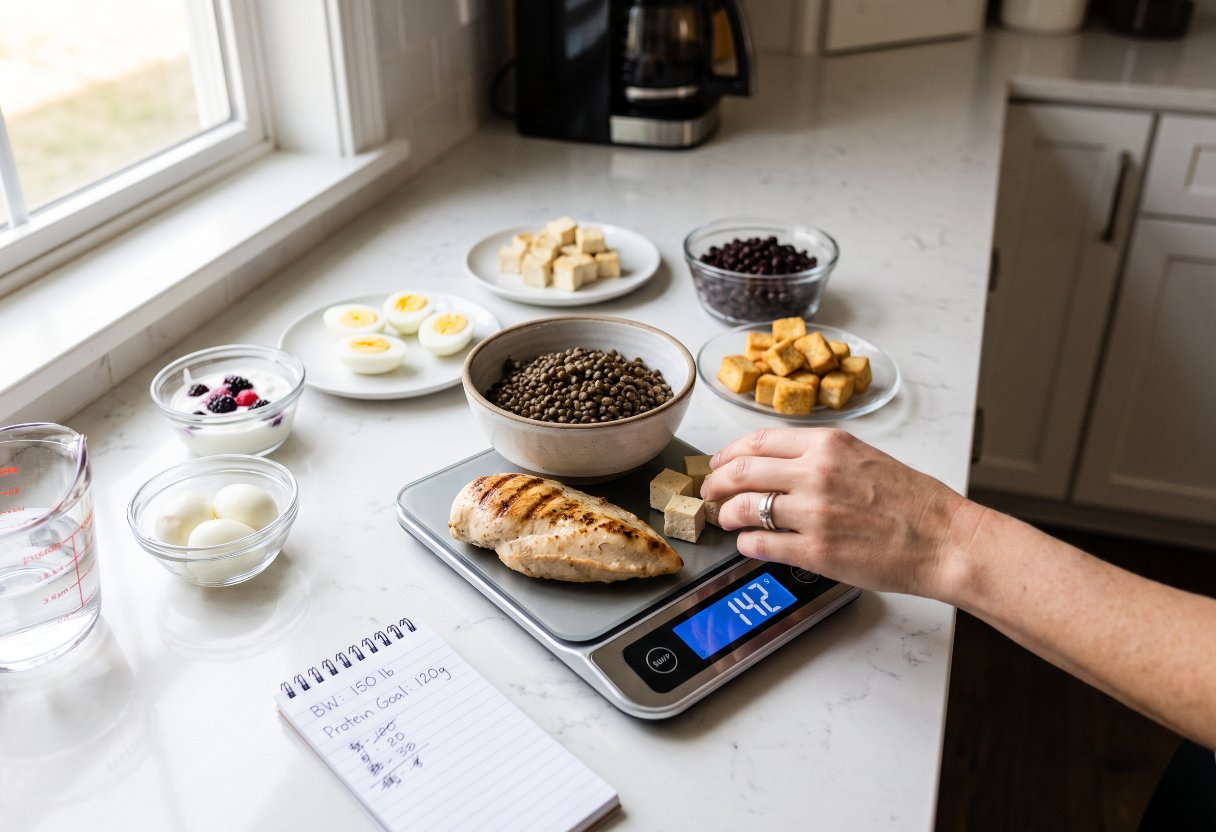
Fish, eggs, skinless poultry, low-fat dairy, beans, lentils, tofu and tempeh can all contribute protein. Plant foods also provide nutrients such as fiber, while choosing leaner animal foods can help limit saturated fat. A 3-ounce (85 g) serving of grilled chicken provides about 26 grams of protein; 1 cup of cooked lentils provides about 18 grams.
Spreading protein across meals makes a daily goal easier to meet than saving most of it for dinner. About 15 to 30 grams per meal is a practical starting point, not a strict limit on how much the body can absorb at once. Someone with higher needs may need larger portions or an additional protein-containing snack.
Too much and too little have different drawbacks
Consistently falling short on protein, especially while eating too little overall, can contribute to muscle loss and slow tissue repair. Eating more than the body needs does not automatically turn into more muscle: protein can be used for energy, and excess calories from any food can be stored as fat.
The source of extra protein matters, too. Relying heavily on fatty or processed meats can increase saturated fat intake and crowd out fiber-rich foods. People with kidney disease should ask their health care team about an appropriate protein target rather than following a high-protein plan.
A food-first plan is easier to adjust
People with excess body weight may overestimate their needs by applying a per-pound formula to their full weight; a registered dietitian can help calculate an adjusted target. Supplements can be convenient, but they need not replace meals. If choosing one, check the label for added sugar, saturated fat and calories alongside the protein amount.
Start by estimating a daily target, then check whether ordinary meals already meet it before buying a protein-fortified product. If chicken is part of those meals, cook it to 165°F (74°C); protein content does not make undercooked poultry safe.