You buy a bag of crisp apples for the week, but a few turn soft before you reach them. Why do some apples stay crunchy while others seem to age overnight?
A week after grocery shopping, the apples in the fruit bowl feel softer and look a little wrinkled. The bowl keeps them within reach, but room-temperature storage lets ripening and moisture loss continue. A different storage spot can help apples stay crisp longer, though some varieties keep better than others.
Warm, dry air makes apples wrinkle and soften
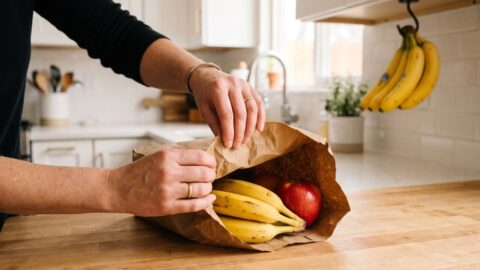
Apples slowly lose moisture through their skin. In a warm, dry fruit bowl, that moisture loss can leave them wrinkled, while ripening gradually softens their flesh. Apples also release ethylene gas, which encourages ripening in nearby produce; keeping them next to bananas can speed up the process.
Cut apples have a different problem: their exposed flesh turns brown when it reacts with oxygen. Browning does not necessarily mean an apple has spoiled, but it can make slices less appealing. Keeping whole apples cold addresses moisture loss and ripening more effectively than treating slices after they are cut.
The refrigerator crisper drawer is the best place for whole apples
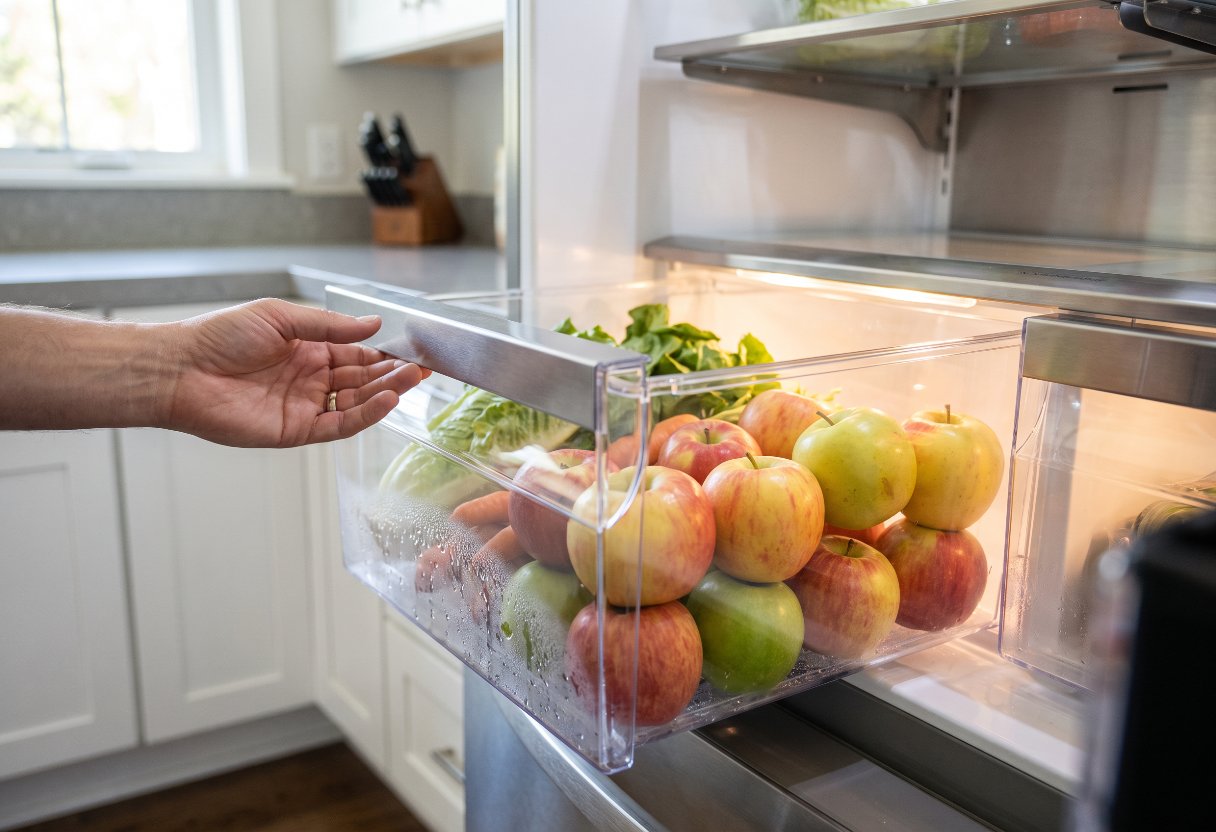
For the longest fresh-eating shelf life at home, Clemson Cooperative Extension recommends the refrigerator crisper drawer. Its cooler, more humid environment slows ripening and helps limit moisture loss. Set the refrigerator to 40°F (4°C) or below, and keep apples from freezing.
Choose firm, unbruised apples, and place them in the crisper without packing them tightly. Check them regularly and remove any with soft spots, mold, or leaking juices. Keep apples apart from produce that ripens quickly in response to ethylene, and wash them under running water just before eating or cutting, rather than before storage.
Variety and condition matter as much as location. Firm types such as Fuji, Honeycrisp, and Granny Smith are better candidates for longer storage; softer apples, including Gala and Red Delicious, are better used sooner. Even in the crisper, months of good quality are a possibility, not a guarantee for every apple.
Paper can protect a large harvest from bruising
For a large batch of homegrown apples, place clean, unprinted paper between layers so the fruit does not press against itself. This helps prevent contact bruises, which create places for decay to start. Paper will not restore an apple that was already damaged or make a warm storage area as effective as a refrigerator.
Commercial growers can use tightly controlled temperature, humidity, and low-oxygen storage to delay ripening. A home refrigerator cannot reproduce those conditions, and vacuum-sealing whole fresh apples is not a reliable substitute. For apples that will not fit in the crisper, use the coolest suitable refrigerator space and inspect them often.
Freezing preserves extra apples for cooking
To freeze apples, peel and slice them, then dip the slices in a mixture of 1 teaspoon salt and 1 quart water to slow browning. Drain and dry them well, pack them in airtight freezer bags, press out excess air, and freeze promptly at 0°F (-18°C). Use them within several months for best quality.
Frozen slices soften when thawed, so they are better for baking or cooking than fresh eating. Apples left on the counter may soften or spoil within 1 to 2 weeks, depending on the variety and room temperature. A merely wrinkled apple can go into a cooked dish, but discard one with mold or signs of rot; put the next firm batch in the crisper as soon as it comes home.