After dinner, a pot of steaming chili sits on the stove while you clean up. When you’re ready to put it away, a familiar kitchen decision could affect whether tomorrow’s lunch is safe.
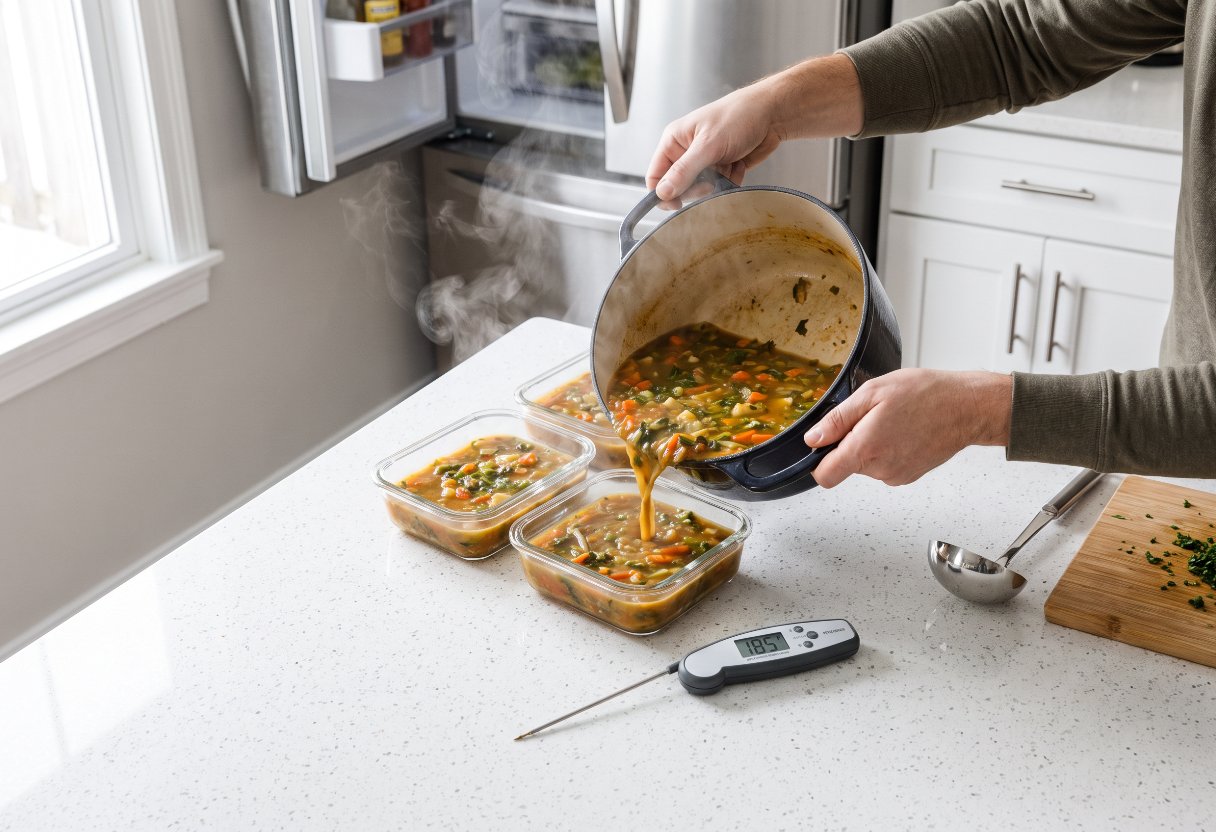
After dinner, a pot of soup sits on the stove, still warm when the dishes are done. Waiting for leftovers to reach room temperature before refrigerating them can keep food between 40°F (4°C) and 140°F (60°C), a range where bacteria can multiply quickly. A simple change in how the soup is cooled can shorten that time without putting a large, hot pot straight into the refrigerator.
Counter cooling keeps leftovers in the danger zone
Leaving a pot of soup or a pan of cooked rice on the counter until it feels cool may seem like a way to protect the refrigerator. The problem is the time it spends warm. The USDA recommends refrigerating perishable leftovers promptly rather than waiting for them to reach room temperature.
Bacteria can multiply as food cools through the “danger zone,” 40°F to 140°F (4°C to 60°C). A typical room temperature of 68°F to 72°F (20°C to 22°C) falls within that range. Food can look and smell normal even when it has been left out too long.
The 2-hour limit is a deadline, not a cooling method
Refrigerate perishable leftovers within 2 hours of cooking or serving. If the surrounding temperature is above 90°F (32°C), as it might be at an outdoor gathering, the limit is 1 hour. These limits do not mean food should sit out for the full period before refrigeration; they set the maximum time before it needs to be chilled.
If leftovers have exceeded the applicable limit, discard them rather than tasting them or relying on reheating. Reheating may kill some bacteria, but it cannot reliably make improperly stored food safe. When reheating properly stored leftovers, bring them to 165°F (74°C).
Small, shallow portions cool faster
After serving, transfer a large batch into shallow containers, with food no more than about 2 inches (5 cm) deep, and put them in the refrigerator promptly. Dividing food increases the area exposed to cold air and shortens the distance heat must travel from the center. A deep, full pot cools much more slowly.
Hot food can go directly into the refrigerator; there is no USDA requirement to wait until it reaches 80°F (27°C). Arrange containers so air can circulate, and keep the refrigerator at 40°F (4°C) or below. Cover containers loosely while food is hot to protect it from contamination and let heat escape, then close them securely once chilled.
A crowded refrigerator needs a different approach
A single shallow container is different from a large stockpot of steaming food. Putting the stockpot in the refrigerator can slow its own cooling and temporarily warm nearby foods. If there is not enough refrigerator space for shallow containers, place the pot in a sink of ice water, stir the food to release heat, then transfer it to shallow containers and refrigerate within the applicable time limit.
Do not use a timer as a reason to leave dinner on the counter. Clear refrigerator space while the meal is being served, then portion and chill the leftovers as soon as serving ends.