After breakfast, a banana peel sits on the counter beside a bottle of vinegar, an unlikely pairing in a busy kitchen. Why are people bringing the two together instead of tossing the peel?
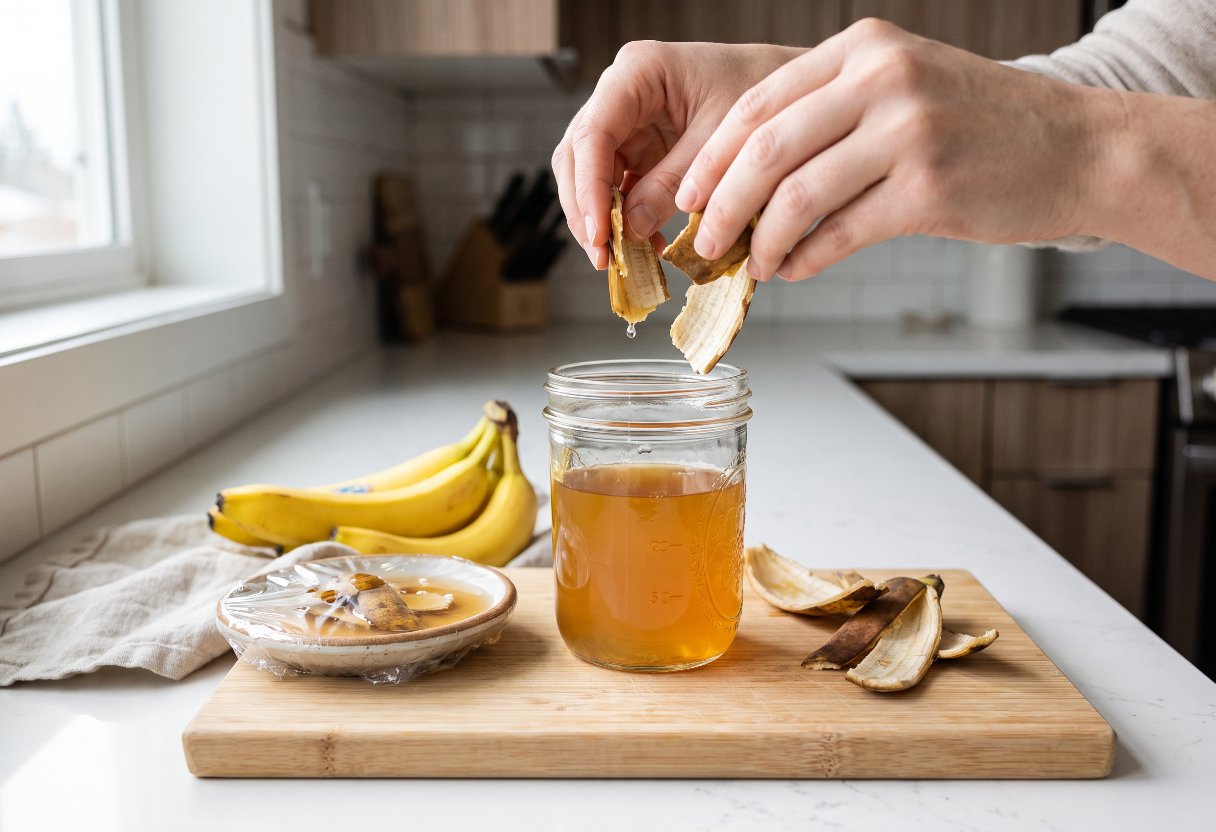
On grocery day, the kitchen trash holds several banana peels from the week’s breakfasts. Tossing them is easy, but it leaves a possible use for those leftovers unexplored. The vinegar pairing making the rounds offers a simple alternative, though it is worth knowing what the mixture can and cannot do before saving the next peel.
Banana peels and vinegar are used for plants and insect traps
People mix banana peels with vinegar mainly to make a DIY garden “fertilizer tea” or a fruit fly and gnat trap. In the first use, vinegar helps break down the peel so some nutrients can enter the liquid; in the second, the smell of apple cider vinegar and banana attracts insects to a container. Both uses are inexpensive to try, but neither is a dependable replacement for established plant care or pest control.
The garden mixture is a supplement, not a complete fertilizer
To make the garden mixture, place banana peels in a clean jar, cover them completely with white or apple cider vinegar, and steep for about 48 hours. Remove the peels and dilute the liquid with water before applying it to soil. The method does not have a verified dilution ratio, so avoid pouring undiluted vinegar onto plants, which may not tolerate the acidity.
Banana peels contain potassium, phosphorus, and calcium, but steeping does not guarantee that enough of those nutrients become available to meet a plant’s needs. Blueberries, tomatoes, ferns, and tropical houseplants are often suggested for the mixture, yet their nutrient and soil requirements differ. Use a fertilizer suited to the plant when it needs reliable feeding, and treat peel vinegar as an experiment rather than its main source of nutrition.
A peel also does not become an instant fertilizer when buried beside a plant. Nutrients must be released as the material breaks down, and one gardener’s houseplant test of banana peel tea failed to show the hoped-for benefit. Composting peels or adding them to a worm farm is a more practical way to process them before using the finished material in a garden.
Apple cider vinegar and peel can attract small flies
For the trap, put small pieces of banana peel in a shallow container of apple cider vinegar and place it near the fruit flies or gnats. The sweet, fermented smell draws insects toward the liquid, where some may become trapped. Keep the container out of reach of children and pets, and discard it if it becomes moldy.
A trap catches only insects that reach it; it does not remove whatever is allowing them to breed. If flies persist, look for the source rather than continuing to add traps. Never mix vinegar with bleach or ammonia when cleaning up.
Peel-only uses are different from vinegar uses
Plain banana peel water is another garden practice, not the same preparation as peel vinegar. One method soaks a peel in water for 1 to 2 weeks, discards it, then mixes 1 part liquid with 4 parts water before watering plants. Claims that peel water sprayed on leaves repels aphids have limited support, so an ongoing infestation calls for a more reliable approach.
For cleaning, the commonly suggested method uses the inside of a banana peel alone to buff leather shoes or furniture, or some metal items. Its waxy surface may leave a temporary shine, but results vary by finish, and this is not a reason to add vinegar to a cleaning mixture. For a valued item, test a small, hidden area first and use a cleaner intended for that surface if the peel leaves residue.