Breakfast gets tricky when you need something filling, inexpensive, and suitable for a gluten-free household. An old trail breakfast might deserve a second look, but what made it practical then may surprise you now.
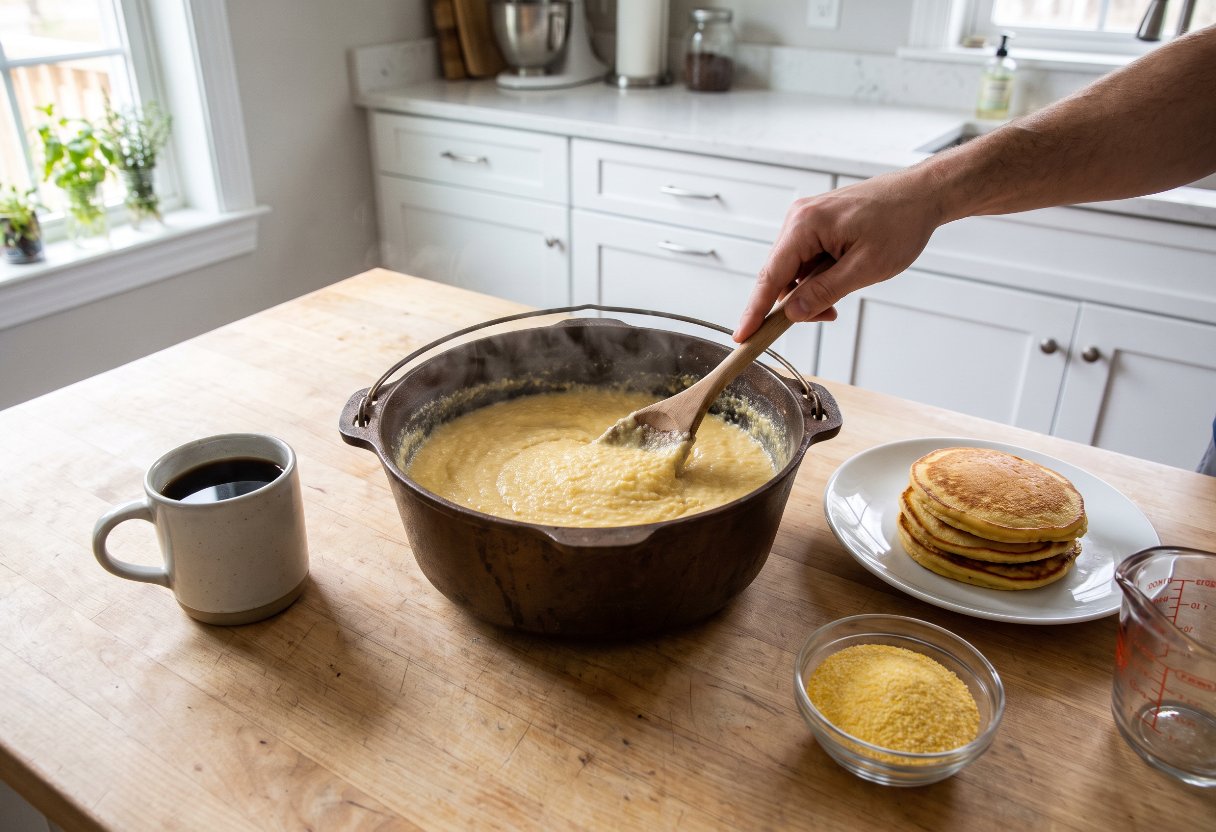
On a weekday morning, the bread bag is empty and the gluten-free pancake mix has only a few spoonfuls left. Buying another specialty mix solves breakfast, but it can strain the grocery budget. An older trail breakfast offers another option that does not depend on a modern mix. For a gluten-free household, though, one detail on the package still matters.
Trail breakfasts relied on portable, filling foods
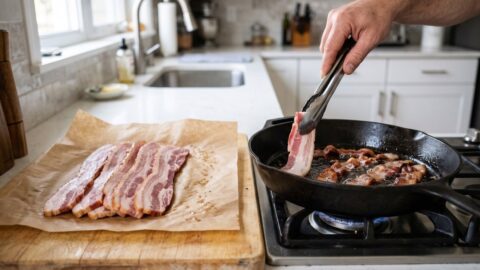
A cowboy breakfast was an early meal built from staples such as beans, cornmeal mush, johnnycakes or pancakes, and coffee. On 19th-century cattle drives and the Oregon Trail, these foods helped feed people facing long days of physical work with ingredients that could travel. Breakfast sometimes had to be finished by about 4 a.m. so a wagon train could move by daybreak.
On cattle drives, the chuck wagon served as a mobile kitchen and pantry. Texas rancher Charles Goodnight is credited with creating one in 1866 by converting a surplus Army wagon so a cook could feed the crew on the trail. It gave the cook a place to carry supplies and prepare meals while the cattle drive kept moving.
Cornmeal was easy to carry and turn into mush
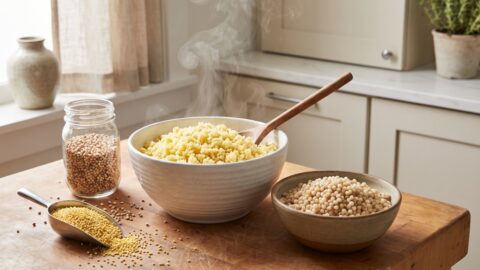
Cornmeal is made from dried, ground corn. It was inexpensive, stored without refrigeration, and was easy to transport, making it useful when fresh ingredients were difficult to carry. Boiled with water, it became cornmeal mush, a filling breakfast made with minimal equipment.
Mush has roots in Indigenous American cooking, and colonists and pioneers learned to make and eat it from Native Americans. A recipe recorded in Lansford Hastings’ 1845 Emigrants’ Guide to Oregon and California included water, cornmeal, lard or butter, salt, and dried currants or raisins. Those additions brought flavor and richness to an otherwise simple dish.
Grits have a related but distinct history in the South, rooted in the Muscogee tribe’s use of maize. Like mush, grits became part of European settlers’ cooking traditions. The 2 dishes share a corn-based foundation, though a modern package of grits should not be taken as proof that every trail cook served them.
Plain cornmeal is gluten-free, but processing matters
Plain cornmeal is naturally gluten-free because corn does not contain the gluten proteins found in wheat, barley, and rye. That makes cornmeal mush a potential breakfast option for someone avoiding gluten. The ingredient alone, however, does not guarantee that every bag is suitable for a person with celiac disease.
Gluten cross-contact can occur if cornmeal is milled or packaged on equipment also used for wheat. People with celiac disease should choose cornmeal labeled certified gluten-free rather than assuming that all cornmeal is safe. The same check matters for packaged grits and any additions used in the bowl.
Cornmeal mush still fits a simple breakfast
Cornmeal mush later became a widespread staple during the Great Depression because it was cheap and filling. Its place in home cooking today reflects that practical appeal, not evidence of a new nationwide breakfast trend. For a modern bowl, choose a cornmeal that meets the household’s gluten needs, then follow its package directions for the amount of water and cooking time; those directions can vary by product.