Your Saturday pancakes look promising in the skillet, then land on the plate flat and dense. Why does your favorite diner’s stack turn out so much taller when yours never seems to?
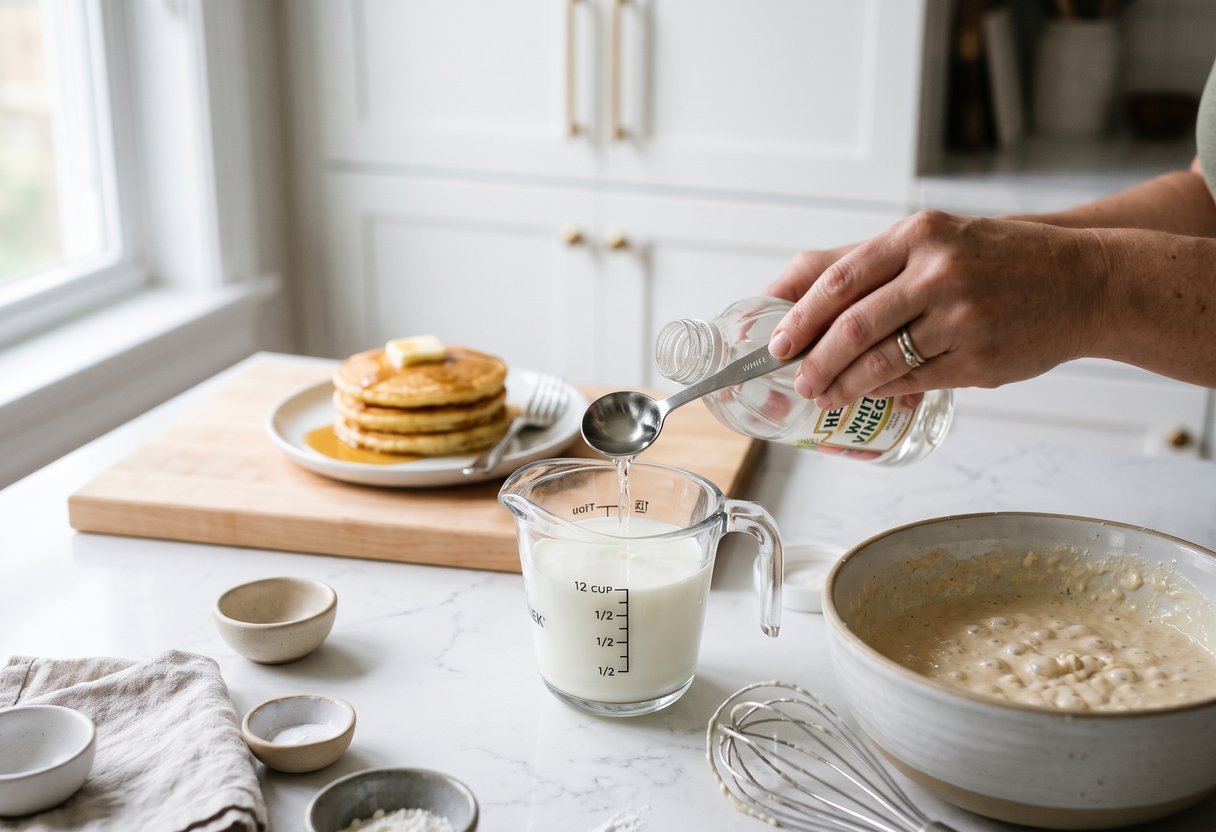
The griddle is heating, and a bowl of pancake batter is ready for its first scoop. Careful measuring can make the batter consistent, but it does not guarantee the tall, tender texture of a diner stack. One small addition can change the result without changing the whole recipe.
Vinegar gives baking soda a way to lift pancakes
A spoonful of vinegar can help pancake batter rise when the recipe contains baking soda. The vinegar’s acid reacts with the baking soda to make carbon dioxide bubbles, which expand as the pancakes cook and leave a lighter texture. Club soda or seltzer offers a separate option: it adds bubbles directly rather than creating them through a reaction.
Neither addition can fix every flat pancake. Batter that is too thin spreads before it gains height, while excessive mixing can work against a tender result. Start with a recipe intended to make fluffy pancakes, then choose the method that fits its ingredients.
Mix vinegar with milk before adding the dry ingredients
For a recipe that contains baking soda, whisk 1 to 2 tablespoons of white vinegar or apple cider vinegar into 3/4 to 1 1/4 cups of milk. Let the mixture stand for about 5 minutes, then add it to the dry ingredients and mix just until combined. This makes a quick buttermilk substitute and brings the acid into contact with the baking soda in the batter.
Another recipe approach uses 1 teaspoon of apple cider vinegar per 1 cup of liquid. Stir it into the wet ingredients, combine the batter, let it rest for 5 to 10 minutes, then cook. Follow one approach rather than adding both amounts of vinegar: too much can leave a sharp taste, and sugar in the recipe helps balance the acidity.
Vinegar is not a substitute for baking soda on its own. If the recipe relies on baking powder instead, the vinegar trick may add little lift; baking powder already reacts to moisture and heat. Do not taste raw batter, and cook the pancakes through before serving.
Club soda adds bubbles without vinegar
For the carbonation method, replace the recipe’s milk or water with the same volume of club soda or seltzer. If it calls for 3/4 cup of liquid, begin with 3/4 cup of the carbonated drink after mixing the dry ingredients. Stir gently, adjust the liquid slightly if needed, and cook the batter while it is still bubbly.
The batter should pour but not run thinly across the cooking surface. Use unsweetened club soda or seltzer, not tonic water, which has different ingredients and can change the flavor. Other products sold as sparkling water vary, so check the label rather than assuming they will taste the same.
Thick batter and gentle mixing still matter
America’s Test Kitchen gets tall pancakes with a thick batter, relatively little liquid, more baking powder and minimal mixing, without relying on vinegar. That is a useful reminder that extra bubbles need enough batter structure to hold them as the pancakes cook.
If a batch spreads flat, check that the batter is pourable but not runny before adding more liquid. For the next batch, follow the recipe’s leavener amounts and mix only until the ingredients come together. Choose vinegar for a baking-soda recipe or club soda for a liquid swap, rather than adding both without a recipe designed for them.