Your grilled cheese is sizzling in the skillet, but the bread browns unevenly while the cheese stays stubbornly firm. A small change before cooking could make the difference, and it may surprise you.
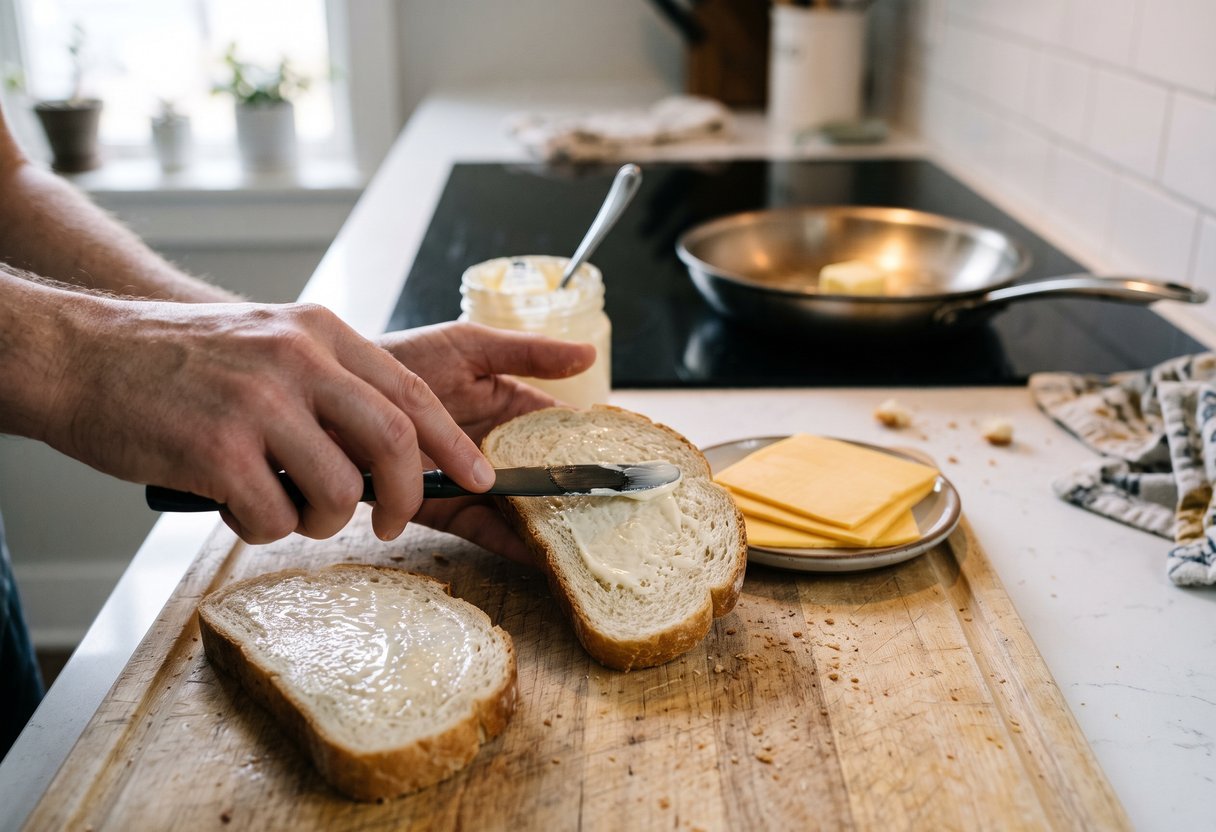
At lunchtime, a cold pat of butter catches on soft sandwich bread and tears a corner before the skillet is even hot. Pressing harder leaves some spots coated and others bare, while waiting for the butter to soften slows down a quick meal. A simple change before the sandwich goes in the skillet can make that step easier, though the finished sandwich may taste a little different.
Mayonnaise makes an easy, crisp grilled cheese crust
Spread mayonnaise on the outside of each bread slice before making grilled cheese. It goes on smoothly straight from the jar, helping the bread make even contact with the pan and develop a crisp, golden-brown crust. The mayonnaise belongs on the surfaces that touch the pan, not between the bread and cheese.
This swap is useful when the butter is cold or difficult to spread without tearing the bread. It is a choice, not a rule: butter can also make an excellent grilled cheese, and its browned milk solids give the sandwich a richer, toasted flavor.
Mayonnaise spreads evenly because its oil stays dispersed
Mayonnaise is an emulsion of oil and water. Egg-yolk lecithin helps keep tiny oil droplets distributed throughout it, so the fat spreads across bread more evenly than cold butter. That even coating helps the surface brown without having to soften the spread first.
Mayonnaise also has a higher smoke point than butter. Michael D. Makuch, department chair at Johnson & Wales University’s College of Food Innovation and Technology, puts mayonnaise’s smoke point at approximately 450°F (232°C). That gives it some flexibility in a hot pan, but it does not make the bread burn-proof: the bread itself can darken before the cheese melts.
Medium heat gives the cheese time to melt
For 1 sandwich, spread a thin, even layer of mayonnaise over the outside of 2 bread slices, using about 1/2 to 1 tablespoon per slice, depending on their size. Place the cheese between the uncoated sides, then set the sandwich in a pan over medium heat. Cook the first side until golden brown, about 2 to 4 minutes, then flip and cook the second side until golden and the cheese is melted, about 2 to 4 minutes more.
Watch the bread rather than relying on the clock alone. If it browns too quickly while the cheese remains firm, lower the heat; turning the heat up further will darken the crust faster without giving the center enough time to warm. Move the sandwich off the heat if the coating starts to scorch.
Butter remains a good choice for its flavor
In direct kitchen testing, America’s Test Kitchen found that both mayonnaise and butter produced crisp, well-browned grilled cheese. Mayonnaise’s clearest advantages are its easy spreadability and even coverage, not a guarantee of a better crust. It may also leave a mild eggy flavor rather than butter’s familiar dairy richness.
For both flavors, spread a thin layer of butter on the sides facing the cheese and mayonnaise on the outsides that touch the pan. Light mayonnaise may brown differently, so regular mayonnaise or butter is a more predictable choice if the crust stays soft. Check the label when serving someone with an egg allergy, and refrigerate any leftovers promptly. For the next sandwich, try the swap over medium heat and choose the crust and flavor that work best.