By Thursday, another bowl of rice can make your gluten-free dinner routine feel stuck on repeat. A less familiar choice at the grocery store might make you rethink what belongs in the pot.
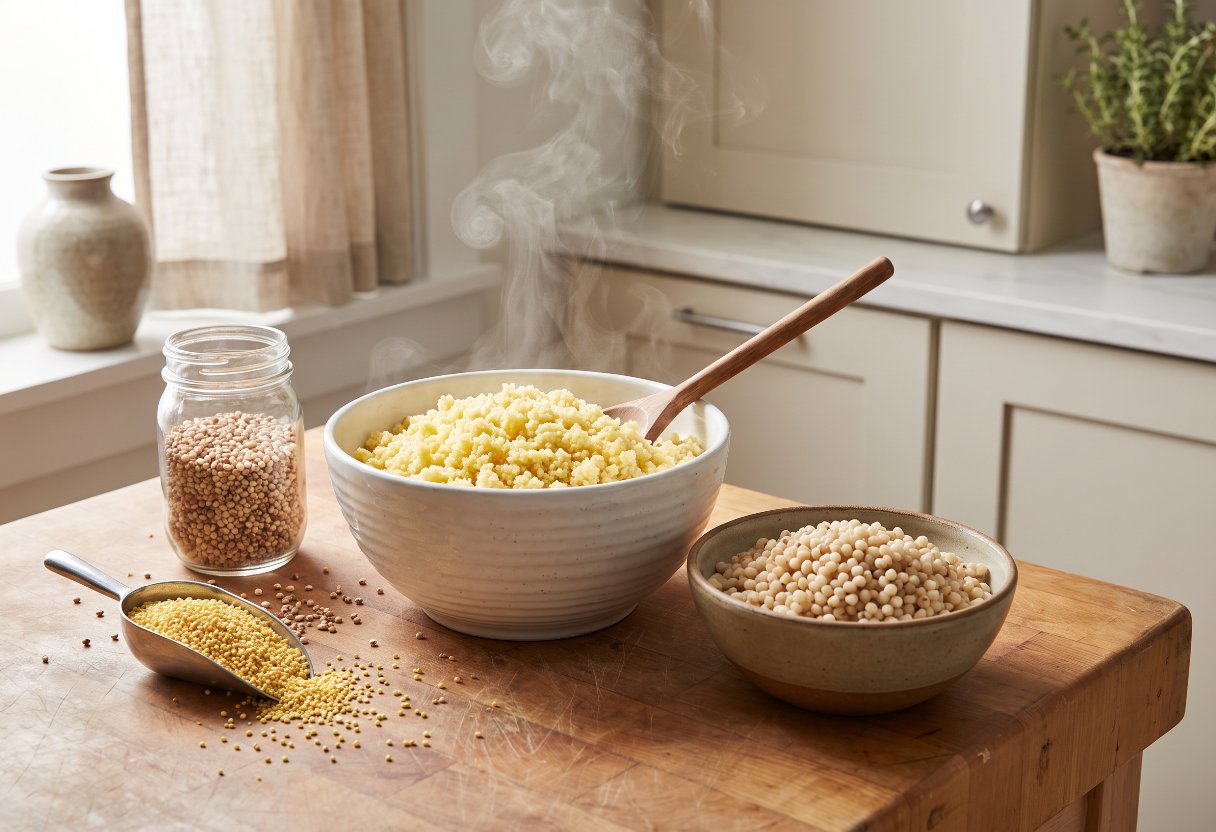
The roasted vegetables are ready, but the grain salad still needs a base. Switching between white and brown rice changes the texture, yet neither may be quite right for the dish. A different choice can change the bite without changing the rest of the meal.
Sorghum, millet, and teff offer different alternatives to rice
Sorghum, millet, and teff give gluten-free cooks more choices for sides, bowls, and breakfast. Sorghum brings a hearty bite, millet cooks fluffy, and tiny teff seeds work well as porridge. Choosing among them is less about replacing rice entirely than matching a grain’s texture to the meal.
White rice remains a useful pantry staple, but changing grains can add variety to both meals and nutrient intake. Naturally gluten-free does not always mean safe for someone who must strictly avoid gluten: grains can come into contact with gluten during processing. Check the package for gluten-free labeling when cross-contact is a concern.
Sorghum holds its shape in hearty dishes
Sorghum is a whole grain with a mild, nutty flavor. Its firm texture makes it useful in pilafs, soups, and grain salads, where softer grains might disappear into the dish. Cooked sorghum looks much like pearl couscous, though couscous made from wheat is not gluten-free.
For a rice cooker, combine 1 cup sorghum with about 3 cups water and cook until the grains are tender; check the cooker’s instructions for the appropriate setting. This is not a quick swap when dinner is almost ready, so use a faster-cooking grain if time is short. A 1/2-cup serving of raw sorghum contains about 10 to 11 grams of protein and 6.5 to 7.5 grams of fiber. Those figures describe dry grain, not a 1/2-cup serving after cooking.
Millet cooks into a fluffy rice-like side
Millet is a gluten-free cereal grain that works in grain bowls or alongside stir-fries. Its lighter texture makes it a better choice than sorghum when a dish calls for fluffy grains. As with sorghum, check the package if gluten cross-contact during processing is a concern.
For a stovetop side, bring 2 cups water to a boil, add 1 cup millet, cover, and simmer for about 15 to 20 minutes. Fluff with a fork before serving. Water absorbed during cooking helps separate and soften the grains, but millet is not a stand-alone source of every essential amino acid in sufficient amounts. Pair it with legumes, nuts, seeds, or dairy as part of a varied meal. A cup of cooked millet provides about 6.1 grams of protein and 2.3 grams of fiber.
Teff belongs in porridge rather than pilaf
Teff is a naturally gluten-free grain native to east-central Africa. Its tiny seeds make it a practical choice for porridge, while teff flour is used to make injera, the spongy Ethiopian flatbread. That same small size makes whole teff less suitable than sorghum for a grain salad with distinct, chewy pieces.
For teff porridge, follow the water amount and cooking time on the package rather than treating it like rice; the goal is a softer texture, not separate grains. Keep rice on hand for meals that need it, and choose sorghum, millet, or teff when its particular texture fits the dish.