You bring home a carton of strawberries, but a little grit makes snack time less appealing. How do you get them clean without turning them mushy?
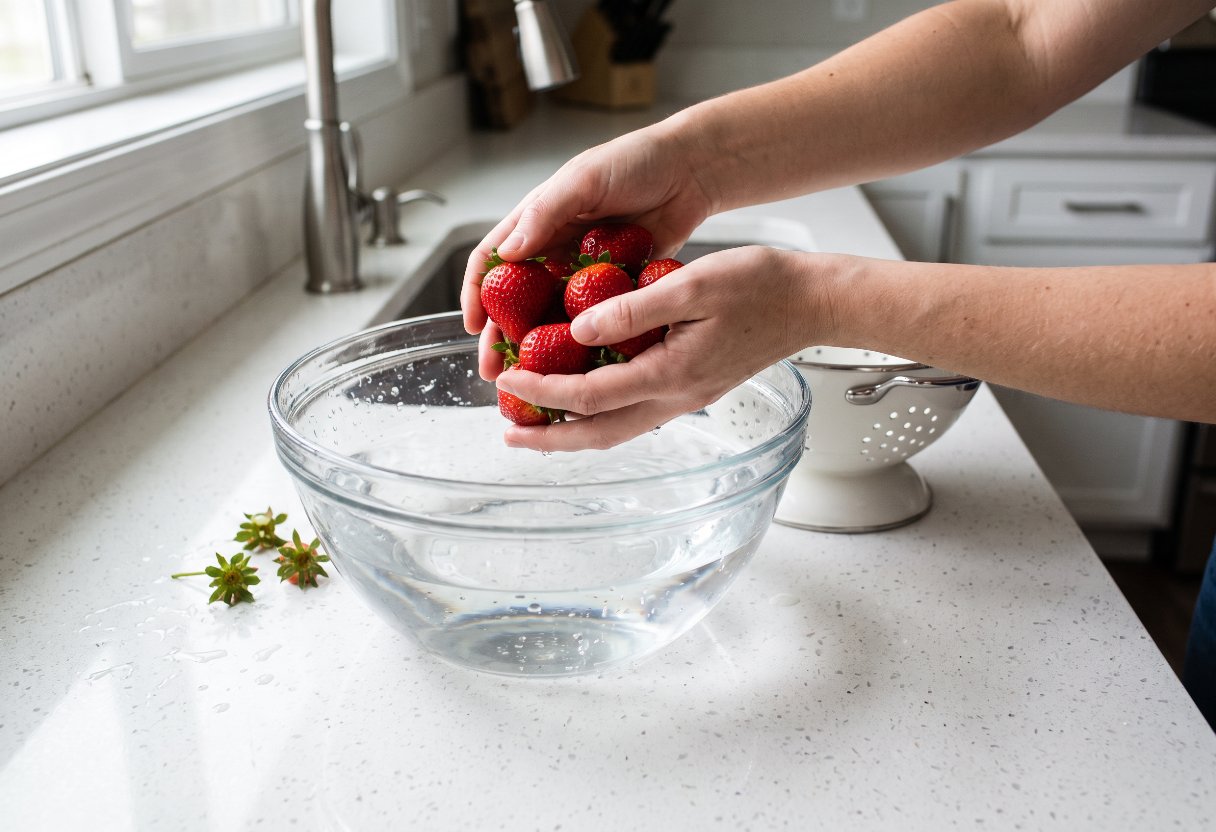
The fruit salad is nearly ready, but a few strawberries still have soil around their leaves after a quick rinse. Water passing over a crowded batch may not reach every berry, while too much handling can bruise the fruit. A small change at the sink can make washing more thorough without being rough on the strawberries. Timing matters, too, if some of the carton is going back in the fridge.
A short soak helps loosen dirt and surface residues
To wash strawberries thoroughly, soak them in clean, cold water for a few minutes, then rinse them under fresh running water. Food scientist Changmou Xu of the University of Illinois Urbana-Champaign recommends this approach to loosen dirt and residues before the final rinse carries them away. A little white vinegar or baking soda is optional, not required.
Washing also helps reduce germs picked up during handling and transport, but it does not make fruit sterile. Strawberries bruise easily, so move them gently rather than scrubbing them.
Vinegar and baking soda soaks need different timing
For a vinegar soak, mix 1 part distilled white vinegar with 3 parts cool water in a large bowl. Add the strawberries, move them gently, and drain them after no more than 1 minute. Rinse thoroughly under cold running water to remove the vinegar taste. A longer soak can change their texture.
For a baking soda soak, dissolve 2 teaspoons of baking soda in about 4 cups of cold water. Add the berries, move them gently for 1 to 2 minutes, then drain and rinse thoroughly under cold running water. These short soaks are practical ways to clean delicate berries; they are not a guarantee that any particular pesticide will be removed.
Running water remains a good everyday option
A bowl is not essential. Place the strawberries in a colander and rinse them under cold running water, moving them by hand until all sides have been exposed. Xu says this can work well, and the FDA recommends thorough rinsing under running water for fresh produce.
Running water carries away loosened dirt and some surface residue instead of leaving it in a bowl with the fruit. Gently moving the berries matters more than rinsing each one separately; Xu says individual rinsing offers only a slight advantage over the colander method.
Washing has limits, so timing matters
In a 2026 review of 47 studies covering 23 produce types and 79 pesticides or metabolites, vinegar and baking soda soaks had greater median pesticide-residue reductions than water washing. Those figures describe varied produce and pesticides, not a tested removal rate for strawberries. A 2017 baking soda study that found substantial reductions in 2 pesticides tested apples, not berries, and used a 12- to 15-minute soak that should not be copied for delicate strawberries.
No wash can reliably remove pesticide residues that have penetrated the fruit. Do not use soap, detergent, commercial produce wash, or household bleach on strawberries; never mix bleach with vinegar or ammonia. Wash berries just before eating or cooking, since leftover moisture can speed spoilage. If berries must be washed ahead, drain and dry them gently before placing them in a breathable container lined with a paper towel.