You pull a tray of roast potatoes from the oven, but the first bite tastes flatter than those golden edges suggest. Before you reach for more salt, there’s something else in your kitchen worth checking.
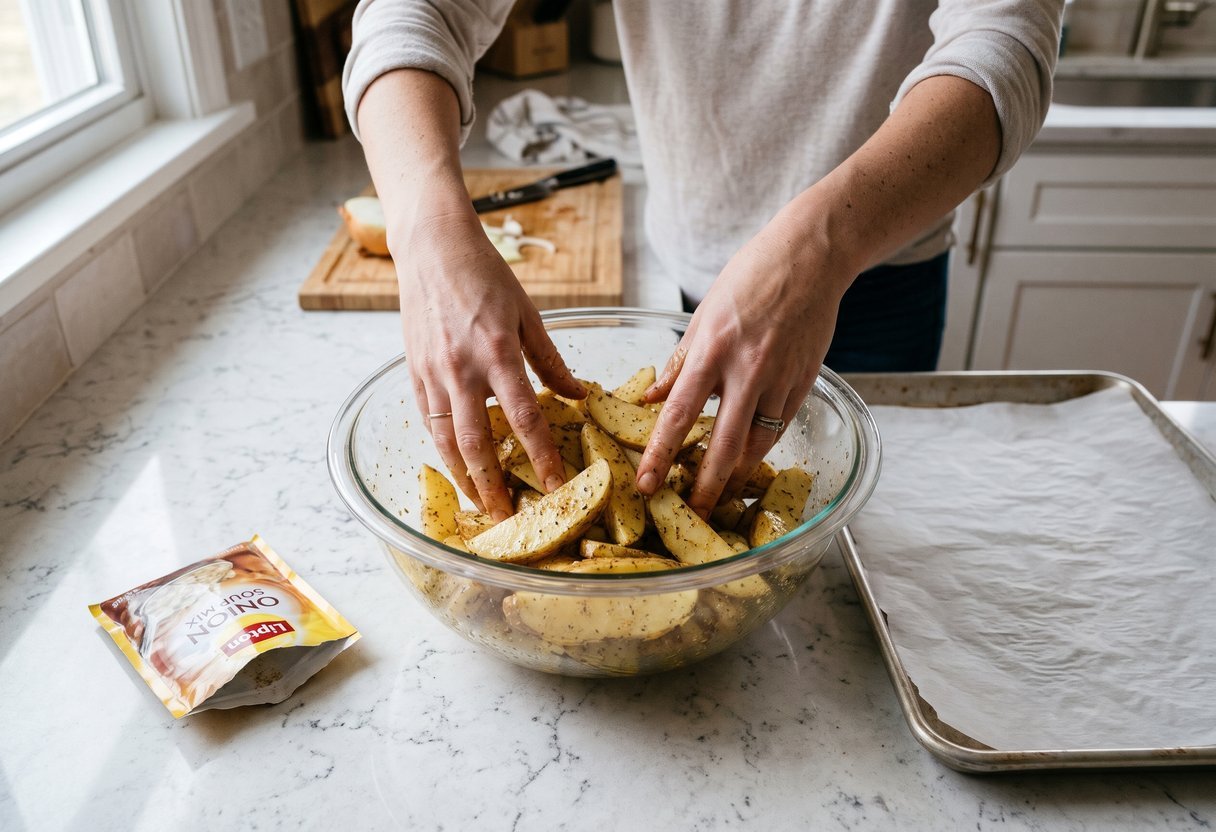
Potato wedges tumble onto a sheet pan while the oven heats for dinner. Salt and pepper are easy to reach for, but they can leave the finished potatoes tasting much the same from batch to batch. Adding more salt may only make them saltier. One small choice before roasting can bring more flavor without making dinner more complicated.
A seasoning packet adds more than salt and pepper
For roast potatoes, a packet of dry onion soup mix or ranch seasoning can replace the usual salt-and-pepper starting point. Each blend adds several flavors at once, while oil helps the seasoning coat the cut potatoes before roasting. The packet is a starting point, not a guarantee that no extra salt will be needed.
Salt brings out the potatoes’ flavor, and pepper adds a little warmth, but neither supplies the onion or herb flavors found in a seasoning mix. Lipton onion soup mix contains dehydrated onion, onion powder, salt and other flavoring ingredients, including MSG. Dry ranch seasoning offers a different flavor profile; its ingredients vary by version, so the package label matters.
Oil helps the seasoning coat the potatoes
Heat the oven to 425°F (220°C). Wash the potatoes, cut them into evenly sized pieces, then pat them dry so surface moisture does not slow browning. Use enough potatoes to cover a baking sheet in a single layer, with space between the pieces rather than a crowded pile.
Toss the potatoes with 2 to 3 tablespoons of olive oil or melted butter, then add 1 packet of dry onion soup mix or ranch seasoning and toss again until the pieces are coated. For bulk ranch powder, 2 tablespoons can stand in for a packet in a ranch-potato recipe. Spread the potatoes on the baking sheet and roast for about 30 to 40 minutes, turning them halfway through, until they are tender inside and golden outside.
The oil helps the dry mix cling instead of falling to the bottom of the bowl. Space on the pan lets moisture escape, which helps the potato surfaces brown. The roasting time is a guide, not a fixed rule: cut size and how crowded the pan is can change when the potatoes are done.
The packet may need an adjustment
Taste the potatoes after roasting before adding salt. One recipe developer found that onion soup mix alone did not provide enough seasoning for the potatoes and added more salt. A small pinch added at the end is easier to control than salting heavily before tasting.
If the flavor seems flat but the potatoes are already salty, try a little garlic powder or paprika instead of more salt. For more control over the ingredients, use dried onion, garlic powder, parsley, salt and pepper in place of a packet. Mix the dry seasonings before tossing them with the oiled potatoes so they distribute more evenly.
Labels and pan space set the limits
Seasoning packets are not interchangeable for every household. Check the sodium and ingredient labels if salt, MSG, milk or gluten is a concern; Hidden Valley sells ranch seasoning versions both with and without MSG. Do not assume a ranch or onion mix fits a dairy-free or gluten-free meal based on its name.
A packet also cannot make crowded, damp potatoes crisp. If the cut pieces will not fit in a single layer, use another baking sheet or roast them in batches. Refrigerate leftovers promptly rather than leaving cooked potatoes on the counter; for the next batch, start with dry potato pieces and enough pan space for them to brown.