That familiar jar of peanut butter can look reassuringly simple until you glance at the fine print during a grocery run. Why do jars that seem nearly identical carry such different names and ingredient lists?
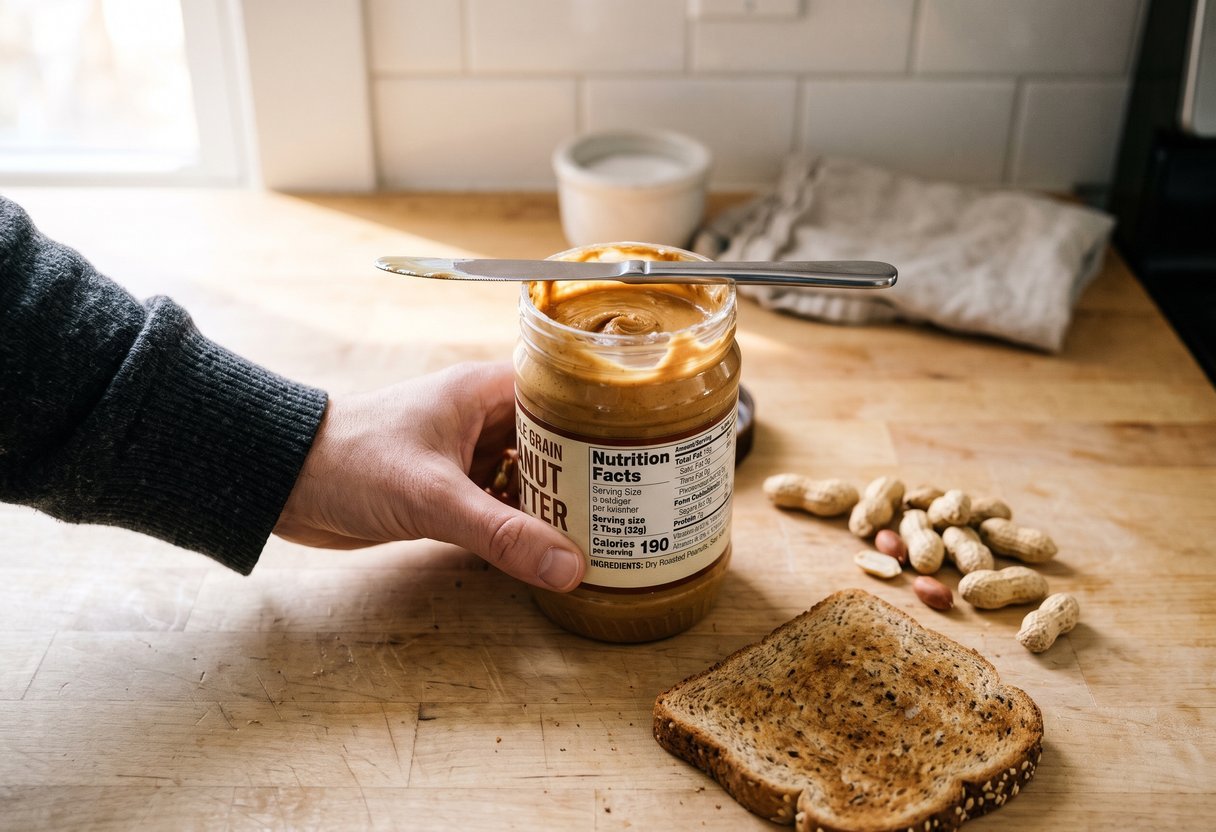
At the grocery store, 2 jars of peanut butter sit side by side: one may need stirring, while the other stays smooth. Choosing by the words on the front can miss what keeps the oil from separating, since “natural” does not tell the whole ingredient story. A closer look at the jar can explain the difference, including why some products are labeled peanut butter and others peanut butter spread.
U.S. peanut butter must contain at least 90% peanuts
The FDA’s standard of identity requires a food labeled “peanut butter” to be at least 90% peanuts by weight. The remaining portion may contain permitted ingredients, including salt, sweeteners, and hydrogenated vegetable oils used to stabilize the texture. The standard also limits total fat to 55% of the finished product.
The rule, now found in 21 CFR §164.150, took effect in 1971 after years of debate over how much non-peanut material manufacturers could add. Jif, Skippy, and Peter Pan were among the brands involved. The 90% minimum gives shoppers a useful baseline, but it does not mean every jar has the same sweetness, salt level, or texture.
Stabilizers keep peanut oil from rising
Peanuts contain their own oil. In a jar without a stabilizer, that oil can rise while the heavier peanut solids settle, leaving a layer to stir back in. Hydrogenated vegetable oils help the mixture stay uniform and easy to spread.
Fully hydrogenated oils contain virtually no trans fat; they are not the same as partially hydrogenated oils, the former major source of industrial trans fat. A stabilizer can affect saturated fat, so compare Nutrition Facts panels rather than assuming all no-stir jars are nutritionally identical. Peanut butter without a stabilizer is not spoiled simply because its oil has separated.
A peanut butter spread can contain plenty of peanuts
“Peanut butter spread” means the product does not meet the FDA’s specific standard for peanut butter. It may contain less than 90% peanuts, but that is not always the reason: a spread with non-hydrogenated palm oil may still contain at least 90% peanuts. Palm oil can limit separation, yet it is not one of the stabilizers permitted under the peanut butter standard.
More added sugar can also leave less room for peanuts if it pushes the peanut content below 90%. The word “natural” on the front of a jar does not settle any of these questions or guarantee that the product has no added sugar or oil. Check the product name and ingredient list together.
The ingredient list makes comparisons easier
For a jar with minimal added ingredients, look for peanuts alone or peanuts and salt. Peanuts should appear first on any peanut butter label, but that alone does not show whether sweeteners or added oils are present. Compare the ingredient lists, then check added sugars, sodium, and saturated fat on Nutrition Facts labels using the same serving size.
A peanuts-only jar may vary more in texture and need stirring before use; a stabilized jar may be more convenient for sandwiches or baking. Neither choice is appropriate for someone with a peanut allergy. Follow the jar’s storage directions, use a clean utensil, and check FDA recall notices if a product is suspected of being recalled. At the store, start with the ingredient list, then choose the texture and nutrition profile that fit the meal.