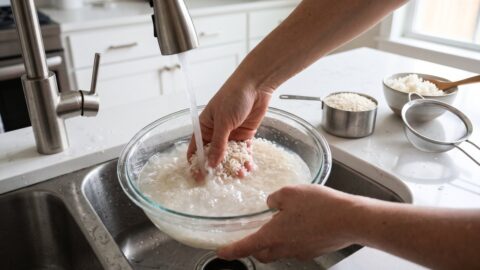
You reach into the crisper for ginger and find a shriveled piece just as dinner gets underway. Keeping it fresh and prepping it can both be frustrating, but a small change could help.
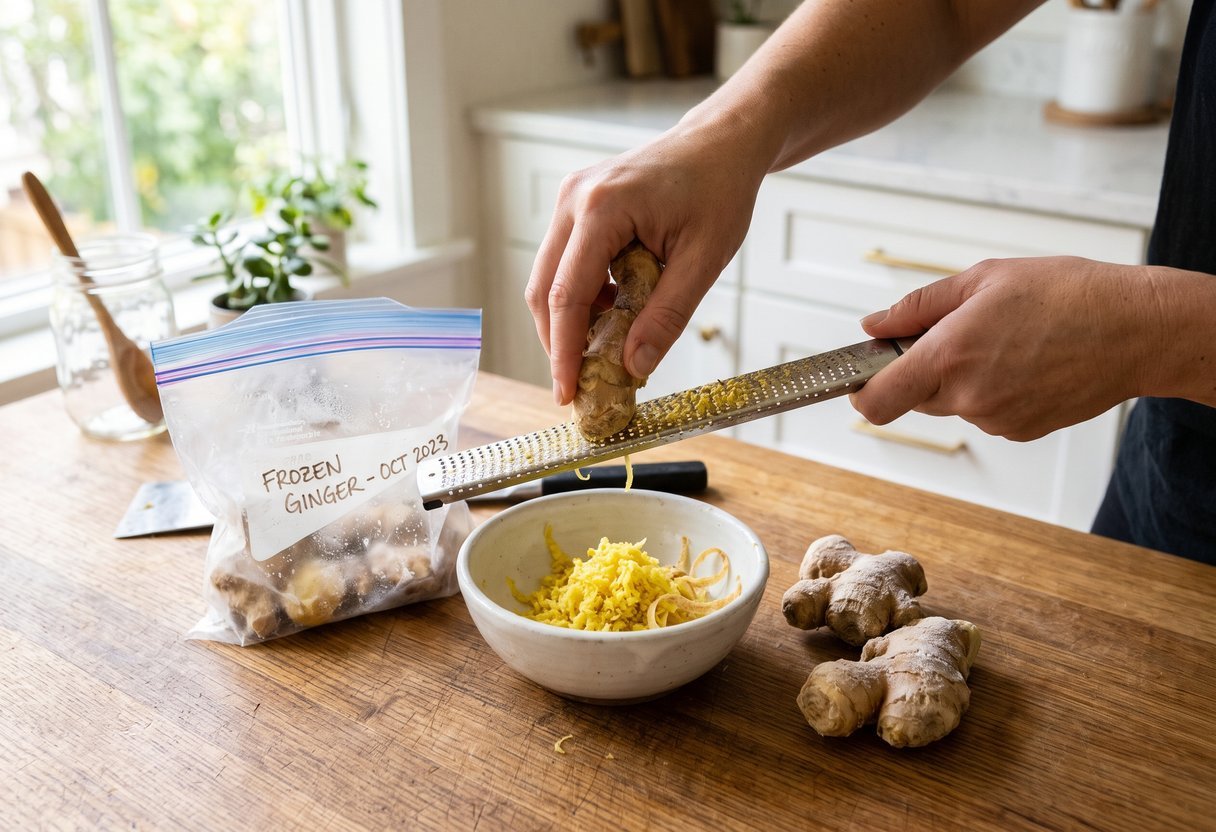
A spoon skids over a knobby piece of ginger while the kettle heats for tea. Scraping around each bump takes time, and the fresh root’s fibers can snag on a grater. A small change in how ginger is kept can make the next cup easier to prepare.
Freeze ginger whole to grate it without peeling
Whole, unpeeled ginger can go straight into an airtight freezer bag or container and be grated while still frozen. This keeps ginger ready for small additions to meals without peeling a fresh piece each time. Properly sealed frozen ginger generally keeps its quality for about 3 to 6 months, compared with roughly 3 to 4 weeks for unpeeled ginger in the refrigerator.
Freezing also changes how ginger behaves on a grater. Water inside the root expands as it turns to ice, weakening the tough fibers so they break apart more cleanly instead of forming strings. The thin peel is edible, so it does not have to be removed before grating.
Air and moisture affect storage quality
Refrigerated ginger can eventually shrivel or develop mold, and leaving it uncovered or in a poorly sealed bag can speed deterioration. An airtight freezer bag or container helps protect frozen ginger from air and excess moisture, which can affect its quality over time. Freezing slows spoilage while the ginger stays frozen, but it does not make a moldy piece good to use.
Choose ginger that is in good condition before freezing it, and discard any piece that is already moldy. Label the freezer container with the date rather than relying on memory. The 3-to-6-month range is a guide to quality, not a guarantee that every piece will taste the same after storage.
Wash and dry ginger before it goes in the freezer
Wash the root, then dry it thoroughly so extra water does not freeze onto its surface. Put the whole, unpeeled piece in a freezer-safe bag or container, press excess air from the bag, and seal it. Keep it frozen at 0°F (-18°C) until needed.
When cooking, take out the ginger and grate the amount needed with a fine grater while the root is still frozen; there is no need to thaw it. Return the remainder to the freezer promptly, with the container sealed. The papery peel may separate during grating, but this does not happen consistently, so leave it in only if its appearance works for the dish.
Portions work better when a recipe needs a measured amount
A frozen whole root is convenient for grating, but its brittle texture is less useful when a recipe calls for precise slices. For ready-to-use portions, peel the ginger if preferred, then mince or grate it before freezing. Press the prepared ginger into ice cube trays, freeze for 3 to 4 hours, and transfer the portions to a freezer-safe bag or container.
Peeling remains a choice rather than a required step for freshly grated ginger. If visible flecks of peel would be unwelcome, remove the peel before freezing portions or as the frozen root is grated. For everyday cooking, a dated bag of whole ginger in the freezer makes it easy to grate only what is needed.