At the grocery store, choosing mayonnaise for a simple sandwich can feel like a guessing game. Chefs face the same crowded shelf, but their own refrigerators suggest they know something most shoppers don’t.
At lunch, a turkey sandwich looks ready until the first bite tastes drier than expected. Adding more of the usual mayonnaise can make the sandwich heavier without improving its flavor. The choice of jar may matter more than the thickness of the spread. Asked what they keep at home, chefs kept returning to the same one.
Duke’s leads several small chef preference panels
Duke’s is the mayonnaise most often named in several small panels of professional chefs, making it a useful starting point for cooks choosing a spread or a base for salads and dressings. Chefs value its creamy texture, richness and subtle acidity, often called its “twang.” That acidity is especially noticeable in otherwise mild foods, while the mayonnaise adds moisture and helps bring dressing ingredients together.
Separate panels of 4, 5 and 6 chefs each found that nearly all participants favored Duke’s. Those are small groups reporting personal preferences, not a nationwide measure of what chefs keep in their kitchens. Other chefs prefer different brands, particularly in regions where those brands are more familiar.
Duke’s brings tanginess without added sugar
Eugenia Duke started selling sandwiches to soldiers near Greenville, South Carolina, in 1917, the beginning of Duke’s South Carolina history. Its mayonnaise has no added sugar, which helps explain why chefs who want a less sweet, tangier flavor reach for it. Sean Brock and Alton Brown have also publicly endorsed Duke’s, citing its tang and lack of added sugar.
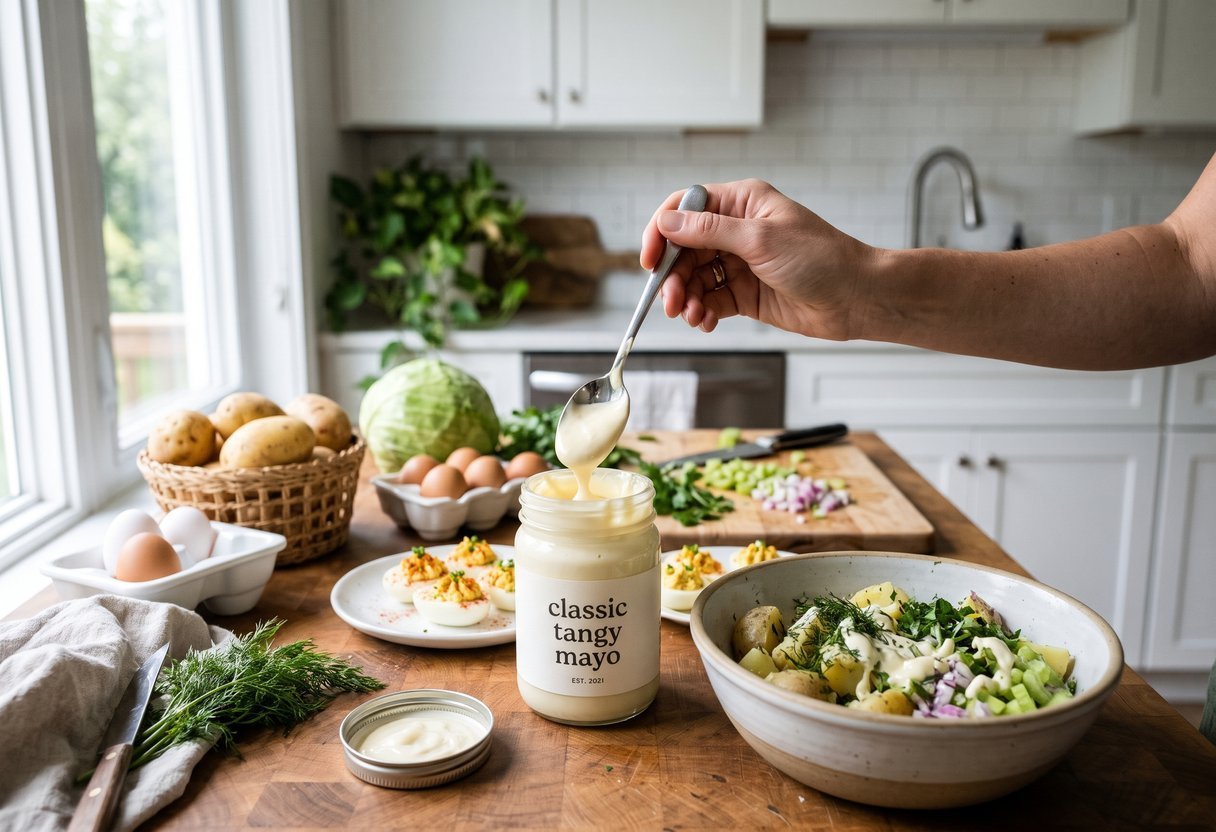
That flavor can stand up to potatoes, cabbage or eggs in dishes such as potato salad, coleslaw and deviled eggs. It is less useful when a recipe calls for a mild background flavor: a tangy mayonnaise can change the balance of a delicate dressing. Creaminess does not make mayonnaise a substitute for proper chilling, either, especially once it is mixed with other perishable ingredients.
Hellmann’s and Kewpie suit different dishes
Hellmann’s has its own long history: Richard and Margaret Hellmann opened a New York City delicatessen in 1913, where his mayonnaise was first sold. In a 2024 America’s Test Kitchen taste test, Hellmann’s Real Mayonnaise and Duke’s Real Mayonnaise were co-winners. Hellmann’s is sold as Best Foods west of the Rockies.
Another taste test favored Hellmann’s for sandwiches, Duke’s for salads and Kewpie for use in a gourmet dinner. A separate test of 8 store-bought brands named Duke’s the overall winner. These results describe tasters’ preferences in particular tests, not a rule that 1 jar will work best in every dish.
Regional habits influence what chefs choose
Many Southern chefs favor Duke’s, while chefs in the North are more likely to favor Hellmann’s. Familiarity and the foods a chef regularly prepares can shape that choice as much as a taste test does. A mayonnaise that works well in a bold salad may be more noticeable than desired on a simple sandwich.
Kewpie offers another option when a cook wants mayonnaise to contribute more flavor rather than blend into the background. Its category win for a gourmet dinner ingredient does not establish that it is the best choice for everyday sandwiches or salads. The useful comparison is how each brand tastes in the dish being made.
Flavor and storage both matter
Choose Duke’s when tang is welcome, consider Hellmann’s for a milder sandwich spread, and try Kewpie when a more pronounced mayonnaise flavor fits the meal. Check the package for ingredients if a dietary restriction matters; brand preference alone cannot establish whether a product meets that need.
Follow the jar’s storage directions and refrigerate opened mayonnaise at or below 40°F (4°C). Keep prepared dishes containing perishable ingredients chilled rather than relying on mayonnaise to protect them at room temperature. If a jar has been stored improperly or shows signs of spoilage, discard it and use a fresh one for the next batch.