At the grocery store, cauliflower, broccoli and cabbage look different enough to belong in separate bins. Why do these familiar dinner staples have more in common than their flavors suggest?
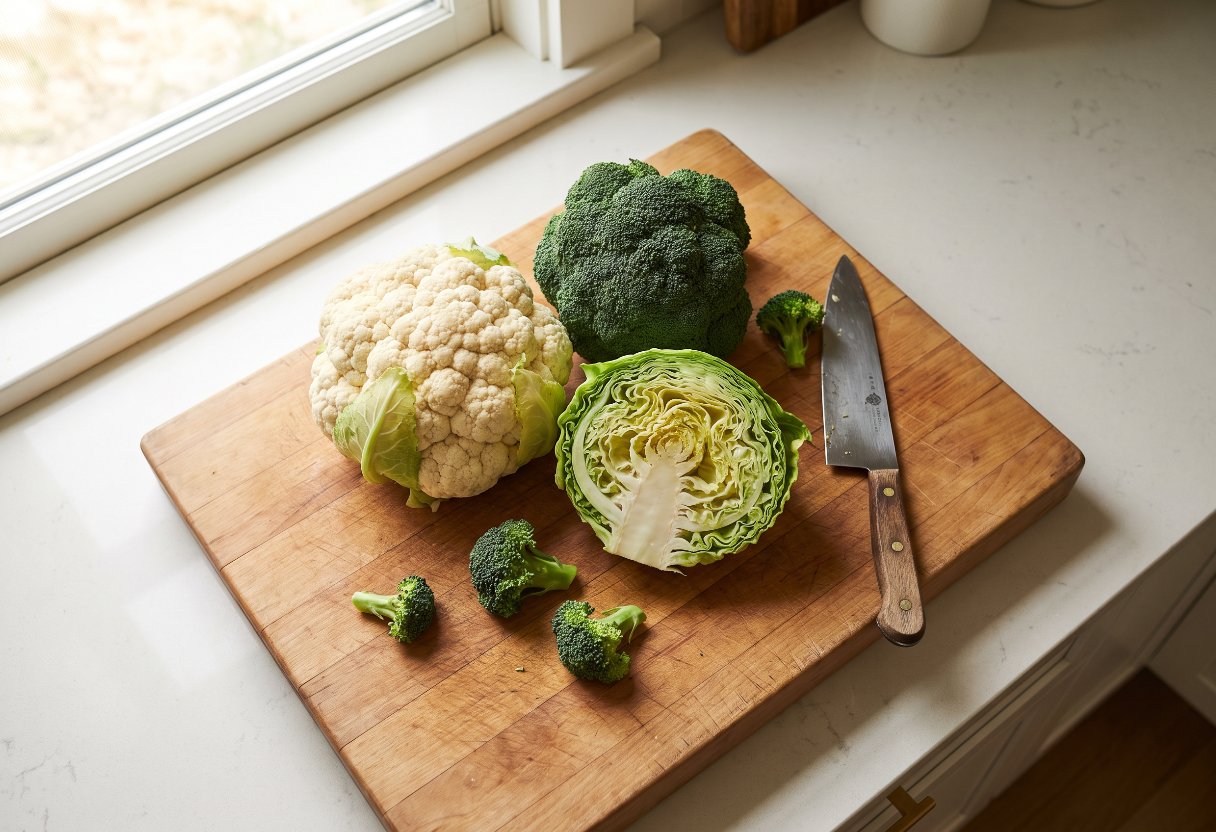
Broccoli goes into the steamer, cabbage gets sliced for slaw, and cauliflower spreads across a sheet pan. Their different shapes and uses make them seem unrelated, but the way a vegetable looks on the plate does not tell its whole story. A closer look reveals a simple reason these familiar foods turned out so differently.
Cauliflower, broccoli, and cabbage belong to the same species
Cauliflower, broccoli, and cabbage are different cultivated forms of Brassica oleracea, not separate species or parts of the same individual plant. Growers developed them from wild cabbage by selecting plants with desirable leaves, flower buds, or stems over many generations. Kale, Brussels sprouts, kohlrabi, and collard greens also belong to this species.
Wild Brassica oleracea grows along seaside cliffs in the Mediterranean region and southwestern Europe, extending as far north as southern England. Kew’s Plants of the World Online database says the species has been cultivated for at least 2,000 years, possibly longer. That long history helps explain how vegetables with such different shapes can share a wild ancestor.
Different cultivar groups emphasize different plant parts
Botanists and horticulturists organize these vegetables into cultivar groups. Capitata includes cabbage, grown for its compact head of leaves; Italica includes broccoli, harvested for green flower buds and its edible stalk. Broccoli’s buds are picked before the flowers open.
Botrytis includes cauliflower and Romanesco broccoli. Cauliflower’s firm head, called the curd, consists of undeveloped flower buds. Gemmifera includes Brussels sprouts, Gongylodes includes kohlrabi, and Alboglabra includes kai-lan, also called Chinese broccoli.
These group names describe cultivated forms within a species, not different species. They are useful at the grocery store because a cabbage head, a broccoli crown, and a cauliflower curd offer different edible structures, even though their botanical relationship is close.
Selective breeding explains the different shapes
Selective breeding means choosing plants with a desired trait and growing successive generations from them. Repeated selection for tightly packed leaves helped produce head cabbage, while selection for immature flower clusters shaped broccoli and cauliflower. The process changes which parts of a plant become especially prominent and useful as food.
The differences are visible before any cooking begins. Cabbage forms a solid head of leaves, broccoli carries clusters of buds above a stalk, and cauliflower forms a dense, undeveloped flower head. Romanesco’s appearance may set it apart in a produce display, but it belongs to the same Botrytis group as cauliflower.
Shared ancestry does not make them interchangeable
In the kitchen, the part being eaten matters more than the shared species name. Cabbage leaves can be sliced for a slaw or fermented into sauerkraut; broccoli florets and cauliflower heads can be divided for cooking. Kohlrabi offers a different shape and texture again, so a recipe designed around cabbage leaves may not work the same way with it.
Cooking also changes texture, and a dense piece may need more time than a smaller one. A practical approach is to cut pieces to a similar size and check them as they cook rather than assume every Brassica oleracea vegetable needs the same preparation. At the store, choose the form that suits the dish, whether that is leaves, a stalk with buds, or a firm flower head.