At the grocery store, rows of canned tuna can turn a quick lunch into an unexpected decision. Which can do chefs actually keep in their own kitchens?
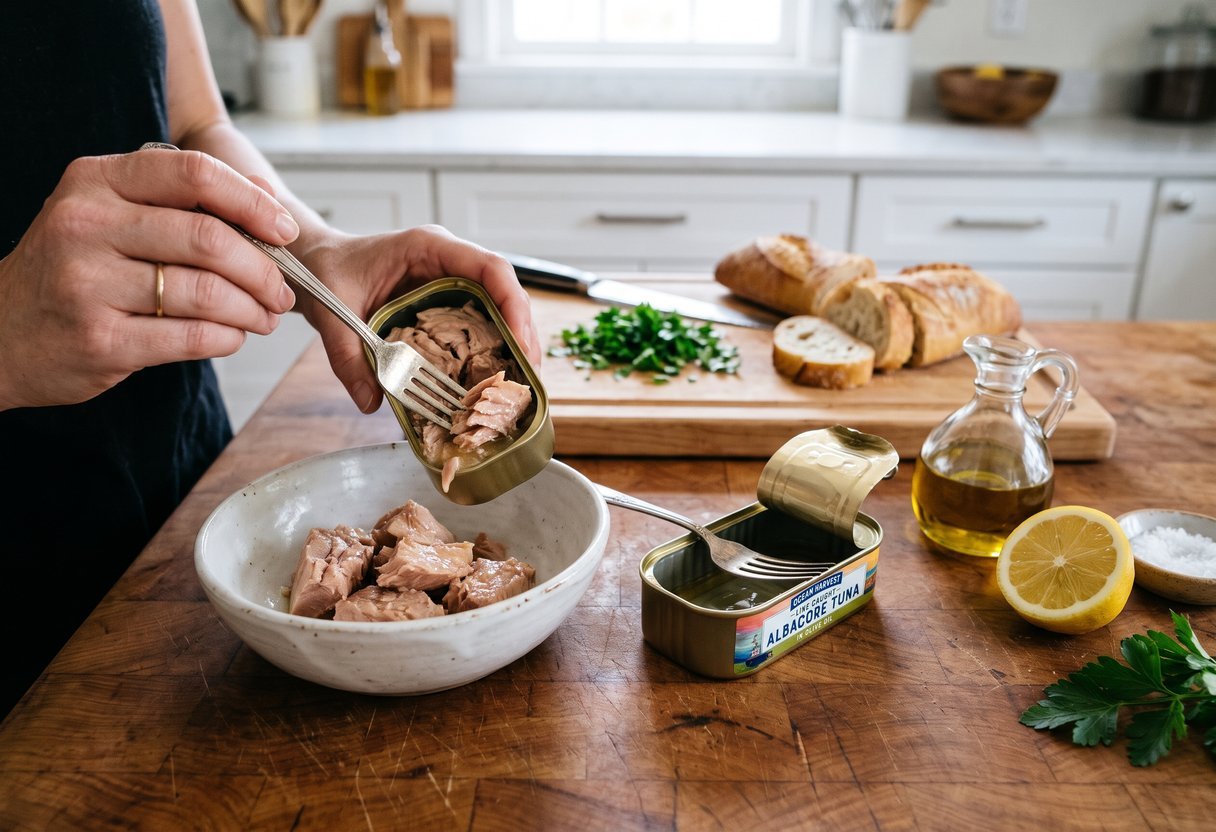
At lunchtime, a can of tuna is opened for sandwiches, and its flavor is hard to overlook. Buying the cheapest can or sticking with a familiar label does not necessarily tell a shopper what to expect inside. A few details beyond the front of the label help explain why certain cans earn a regular spot in chefs’ pantries.
American Tuna was the favorite of 2 chefs
American Tuna was the choice of 2 of the 3 chefs asked to name their preferred canned tuna, making it the most-picked brand in this small group. Harris Mayer of Creamline and Morgan Jarrett of STATE Grill and Bar favored it for different reasons: Mayer likes the clean, lean flavor of its line-caught albacore, while Jarrett values its sustainability commitment and American production.
The third chef, Ruben Garcia of Casa Teresa in Washington, D.C., chose Ortiz. These are personal preferences from 3 professionals, not a blind taste test or evidence that 1 brand will suit every shopper. They do, however, point to useful differences in flavor, packing liquid and fishing methods.
American Tuna and Ortiz offer different eating experiences
American Tuna was founded in 2005 by 6 pole-and-line fishing families in San Diego. Its albacore is caught 1 fish at a time with 1 hook and 1 line, and the company emphasizes traceability back to the source. Mayer describes its flavor as “clean and lean,” a useful starting point for shoppers who do not want the packing liquid to dominate a tuna salad.
Garcia prefers the Spanish brand Ortiz for its combination of quality and value. He chooses its oil-packed, line-caught tuna, which is hand-cleaned during processing. Oil adds richness and helps carry flavor, so this style may be a better fit when the tuna is served with little added dressing. Neither chef preference guarantees that a particular can will match every budget or taste.
Fishing methods matter, but labels need context
All 3 chefs favored sustainably caught, line-caught tuna, even though they did not agree on a brand. Catching fish individually can reduce interference with marine habitat and pollution from discarded fishing gear compared with some net-based methods. It is a reason to look more closely at how tuna was caught, not a guarantee that every environmental impact has been eliminated.
On the shelf, look for specific wording such as “pole-and-line” or “one-by-one caught,” along with information about where the fish came from. A broad sustainability claim without details gives less to evaluate. American Tuna’s emphasis on traceability is one distinguishing feature; Ortiz’s line-caught tuna and careful preparation offer another way to weigh quality alongside sourcing.
The best can depends on the meal
Choose water-packed tuna when a lighter flavor suits the recipe, or oil-packed tuna when a richer taste and texture would help a simple dish. Check the label rather than assuming every product from a favored brand has the same fish, packing liquid or sourcing details. If American Tuna or Ortiz is unavailable, Wild Planet is another brand to compare: its Albacore Solid Wild Tuna in Extra Virgin Olive Oil performed well in a separate taste test of 18 canned tunas.
A chef’s pick can narrow the options, but it cannot replace checking the can in hand. For the next tuna salad or quick pantry meal, start with the preferred packing liquid, then compare the fishing-method and sourcing details on the available labels.