You reach for an onion while making dinner, only to find another one has gone soft. If this keeps happening before you finish your groceries, one overlooked kitchen habit may be to blame.
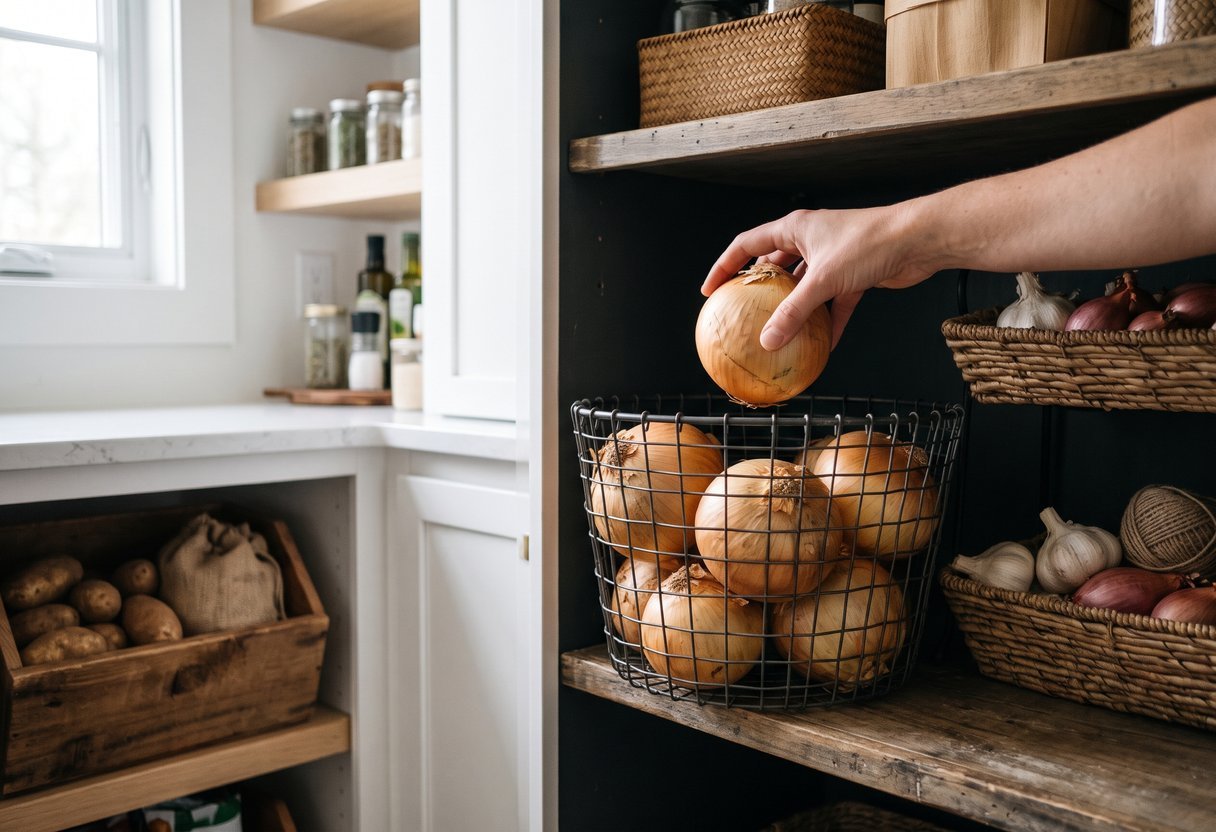
After a grocery run, a bag of onions sits on the counter while everything else gets put away. Sliding it into the first available space seems practical, but that choice can shorten how long the onions stay usable. One small decision during unpacking can help the bag last longer without changing the grocery list.
A cool pantry helps whole onions last for months
A cool, dark pantry with good airflow is the kitchen spot where whole, uncut onions can last about 1 to 3 months. It works because dry air and ventilation limit the moisture buildup that encourages rot, while the cooler temperature slows spoilage.
The National Onion Association recommends a dry, well-ventilated storage area at 45, 55°F (7, 13°C). Check the temperature before relying on a pantry for long-term storage: a warm kitchen cabinet may not offer the same results, even if it is dark.
Airflow matters more than a closed container
Keep whole onions out of plastic bags and wraps. Plastic traps moisture around the bulbs, creating conditions that favor soft spots and mold rather than keeping the onions fresh.
For storage, Iowa State University Extension recommends a mesh bag or wire basket; an old nylon stocking or a crate also allows air to move through. Set the container in a dry spot away from direct sunlight, the stove, and the dishwasher. Leave room around the bulbs instead of packing them tightly together.
Store potatoes separately rather than sharing a basket or bin with onions. Onions release ethylene gas, and food-storage guidance advises keeping the 2 vegetables apart. A separate storage location is more useful than placing them side by side in different bags.
The refrigerator is for peeled or cut onions
A whole onion generally does not benefit from refrigeration. The refrigerator’s cold, humid conditions can leave it soft or mushy and more prone to mold, so a suitable pantry is the better choice for an intact bulb.
Once an onion is peeled or cut, the storage rule changes. Put it in a sealed, airtight container in the refrigerator rather than leaving it in the pantry. The container limits moisture exposure and helps keep the onion’s odor from spreading to other foods.
Storage cannot restore an onion that has already spoiled. Discard onions with visible mold, a slimy texture, or an unusual smell. Check stored bulbs regularly and remove any with soft spots so they do not remain against the others.
Warmer homes call for a shorter storage plan
If the pantry stays warm, an unfinished basement or cool garage may offer a better spot, provided it is dry, dark, and ventilated. Check the conditions there rather than assuming either space stays cool; a damp basement will not solve a moisture problem.
At ordinary room temperature in an open kitchen, whole onions generally last about 2 to 4 weeks instead of months. When no cool storage spot is available, buy amounts that can be used within that shorter window and keep them in a breathable container away from potatoes.