When grocery prices climb, a nearly empty pantry can make dinner feel out of reach. Yet some meals American families still make began under far tighter circumstances, and their staying power might surprise you.
At 6 p.m., a half-used box of macaroni and a can of tomatoes sit on the counter, with no dinner plan in sight. Shopping for a complete recipe may seem like the easiest next step, but it can overlook what is already in the kitchen. The recipes ahead take a different approach, including one dessert with an ingredient list that may look surprising at first.
Some Depression-era dishes need only a few ingredients
A collection of 17 Depression-era recipes still cooked today shows how families made meals from affordable staples, but it does not establish that all 17 use fewer than 5 ingredients. Poorman’s Meal is a clear short-list example; Water Pie has a short filling recipe, though the crust adds another ingredient. Hoover Stew and Wacky Cake also endure, but their ingredient counts depend on the recipe.
The Great Depression lasted from 1929 to 1939, when many households had to make limited supplies go further. The dishes below illustrate different approaches: stretching a small amount of meat with starch, building dessert from pantry ingredients, or leaving out eggs and dairy. Their simplicity can still be useful, even when a modern version calls for more ingredients.
Water Pie and Poorman’s Meal have short ingredient lists
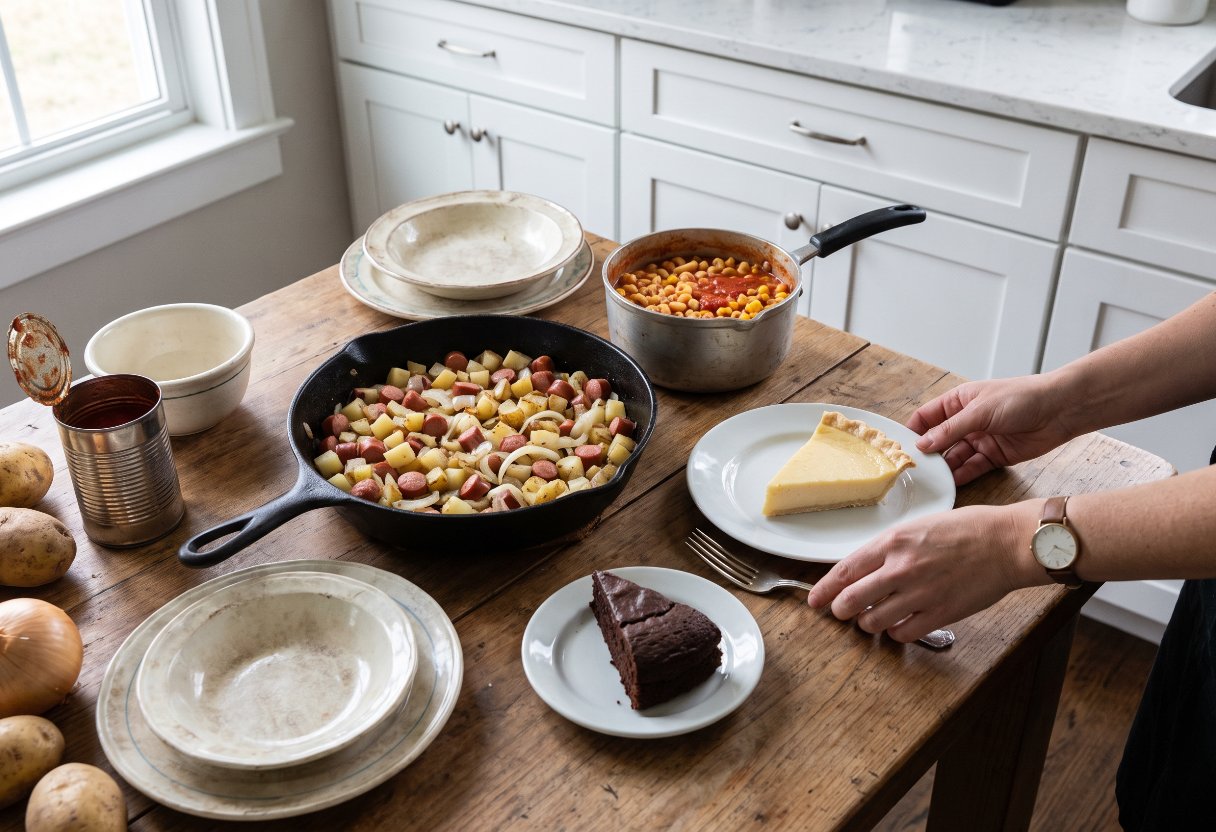
Water Pie combines water, sugar, flour and butter in a pie crust; some versions add vanilla. Flour thickens the liquid into a custard-like filling, so the balance of flour and water matters to its texture. The recipe originated in the late 1800s, before the Depression, but cooks also made it during that period.
Counting ingredients requires a little care here. The basic filling has 4 ingredients, but the crust brings the pie to at least 5, and vanilla adds another. A short filling list does not mean the whole dessert has fewer than 5 ingredients.
Poorman’s Meal typically combines fried potatoes, sliced hot dogs and, often, onions. Potatoes provide most of the bulk, while a smaller amount of hot dog adds flavor to the pan. Clara Cannucciari, who lived through the Depression, helped introduce the dish to modern viewers through videos recalling how it was made.
Hoover Stew stretches hot dogs with pantry staples
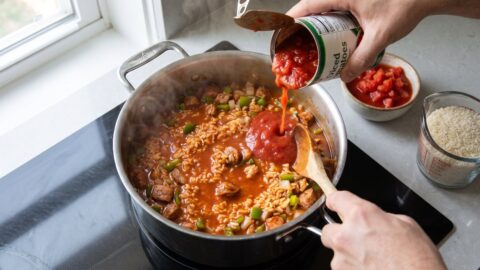
Hoover Stew brings together macaroni, canned tomatoes or tomato sauce, sliced hot dogs and canned corn. Macaroni makes the dish more filling, while tomatoes provide liquid and flavor that tie the ingredients together. The stew was named after President Herbert Hoover, who was widely blamed for the economic hardship at the Depression’s onset.
Those 4 foods describe a basic version, not every recipe. Herbs, beans or other additions push the count higher, so Hoover Stew should not be treated as reliably having fewer than 5 ingredients. Hot dogs and canned foods can also add sodium; using more vegetables and comparing labels are practical ways to adjust a modern version.
Wacky Cake skips eggs, butter and milk
Wacky Cake, also called Depression Cake or Crazy Cake, is a chocolate cake made without eggs, butter or milk. Its ingredient list is not especially short: versions use flour, sugar, cocoa, baking soda, oil, vinegar and water, often with salt and vanilla. Vinegar reacts with baking soda to help the batter rise, while oil supplies moisture.
Leaving out dairy and eggs may make the cake useful when those ingredients are unavailable, but it does not make every version suitable for every diet; the remaining ingredients still matter. For a genuinely short shopping list, Poorman’s Meal is the clearest choice among these examples. For the others, check the particular recipe before assuming it meets a 5-ingredient limit.