You pull a baked potato from the oven expecting a steakhouse-worthy side, but the first bite falls flat. Could something you did before baking it be the reason?
The oven is preheating, and a russet sits on the counter beside the toppings for dinner. A familiar prep routine may seem helpful, but it can leave the skin soft when a crisp bite is the goal. One small choice before baking can change the texture, and what happens to any leftovers matters, too.
Foil traps steam against the potato
For a baked potato with crisp skin, skip the aluminum foil: it traps steam against the potato instead of letting moisture escape. Wrapping is a common habit, especially when potatoes need to stay warm for serving, but it works against the texture many cooks want from an oven-baked potato.
The Idaho Potato Commission says a typical russet potato is about 80% water. As that water heats, some of it leaves as steam; foil holds much of that moisture close to the skin. The result can be a soft, damp exterior rather than a crisp one.
Foil does not make potatoes bake faster
Wrapping may seem like a shortcut, but foil does not noticeably speed baking and can make it take slightly longer because the foil must heat up too. The choice is mainly about texture, not saving time. Chefs who favor crisp skins and fluffy centers generally recommend baking potatoes without a wrapper.
Foil is not always the wrong choice. It can be useful when soft skins are preferred or when potatoes need to be held warm for an event. It will not, however, preserve a crisp skin while it holds in moisture.
Open oven air helps the skin crisp
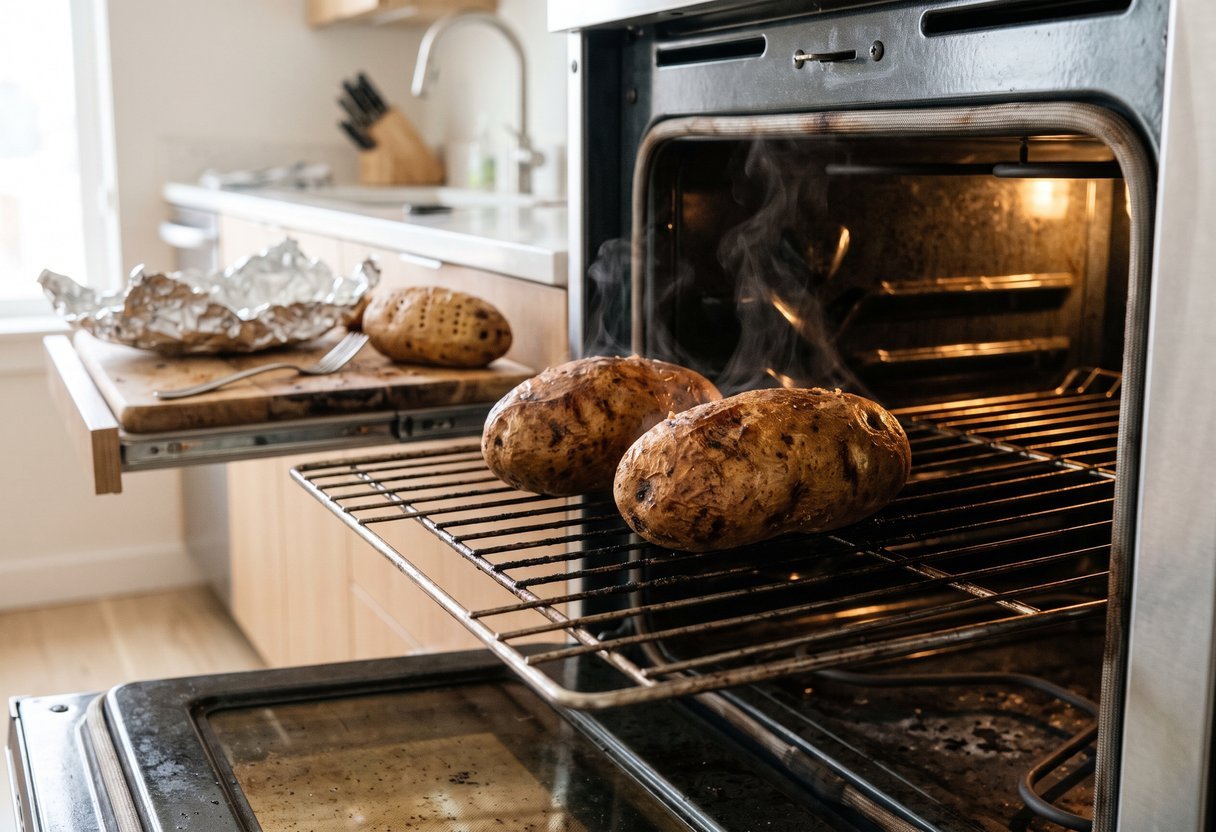
Wash the potatoes, then prick each one about 2 times with a fork so steam has a way to escape. Set them directly on the oven rack, with space between them, rather than on a baking sheet where moisture can collect underneath. For a starting point, bake at 400°F (204°C) for 50 to 60 minutes, checking that a fork slips easily into the center; larger potatoes may need longer.
A small amount of oil or salt rubbed on the skin before baking is an option for a more seasoned, crisp exterior. Neither fixes the moisture trapped by a tight foil wrap, so leave the foil off when crispness is the goal. The oven rack will be hot when the potatoes are ready; use oven mitts to remove them.
Foil-wrapped leftovers need prompt refrigeration
Foil can be used to hold baked potatoes warm for serving, but it is not a substitute for temperature-controlled hot holding. After serving, remove the foil promptly and refrigerate leftover potatoes rather than leaving them wrapped at room temperature. Cooked potatoes without foil also need prompt refrigeration.
Moisture and low oxygen inside a tight wrap can create conditions favorable to Clostridium botulinum, the bacterium responsible for botulism. In April 1994, 30 people became ill in an El Paso, Texas, outbreak linked to a dip made with foil-wrapped baked potatoes held at room temperature for apparently several days. Such cases are rare, but a potato left wrapped out overnight is not worth keeping. For crisp skins and simpler leftover handling, bake potatoes unwrapped and refrigerate any extras promptly.