You bring home fried chicken for dinner, but by the time everyone sits down, its crust has gone soft. The fix may be sitting in your kitchen already.
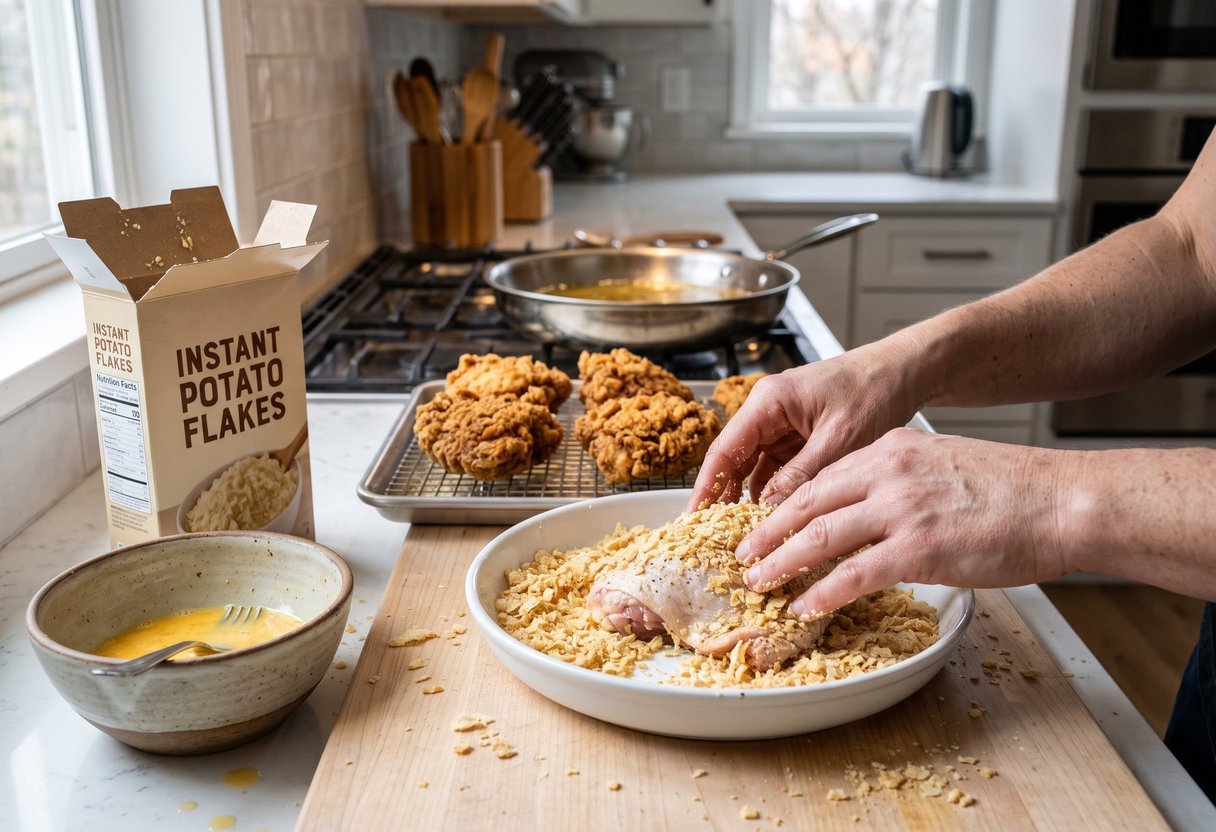
The first batch of fried chicken waits on a plate while the last pieces finish cooking, and its crisp coating begins to soften. A standard flour dredge can lose crunch as moisture from the hot chicken reaches the crust. A simple change to the coating can help it stay crisp longer, though no coating will hold up well when hot pieces are stacked together and trap steam.
Instant potato flakes make a crunchy chicken coating
Plain instant potato flakes, sold in boxes or pouches, can replace flour as a fried chicken coating. The dehydrated potato absorbs moisture from an egg wash or buttermilk and binds into a tight layer that turns golden and crunchy in hot oil. The result is a substantial crust rather than the thin coating that cornstarch or rice flour produces.
That structure may help the crust hold its crunch as the chicken cools, but it does not guarantee crispness for a set number of hours. Steam from the chicken and moisture in the air will eventually soften any fried coating.
Wheat flour produces a different crust
All-purpose flour contains starch and gluten-forming proteins. In hot oil, starch releases moisture and crisps, while the proteins can tighten into bonds that make the coating tougher. A flour crust can also lose its crunch as it takes up oil and moisture after frying.
Flour is still a useful choice for a familiar fried chicken crust. For a coating with some of that texture and some potato-flake crunch, mix the flakes and flour in equal parts. That blend contains wheat, so it is not suitable when a gluten-free coating is needed.
Cornstarch and rice flour offer lighter alternatives
Cornstarch contains no gluten-forming proteins and helps absorb moisture at the chicken’s surface. It can be used alone for a delicate crust or mixed with flour in equal parts. In a test of bone-in, skin-on thighs coated with flour, cornstarch, or an equal-parts blend, tasters preferred the all-cornstarch batch and found the blend lighter and crispier than flour alone. That comparison covered those 3 coatings on 1 cut of chicken, not how long each stayed crisp.
Rice flour is another gluten-free option. It resists moisture absorption and absorbs less oil than wheat flour, helping produce a thin crust that may stay crisp longer. Replace all-purpose flour with the same amount of rice flour, or combine rice flour with cornstarch. Neither makes a wet coating permanently crisp.
Dry chicken and steady oil heat protect the crunch
For a potato-flake coating, pat the chicken dry, dip it in beaten egg or buttermilk, then press it into a shallow dish of flakes until coated. As a starting quantity, set out 1 cup of flakes and add more if needed; for the flour blend, use equal amounts of each. Coat each piece just before frying so the flakes bind to the wet surface without sitting and becoming soggy.
Heat the oil to 350°F to 375°F (175°C to 190°C) and fry in batches, allowing the oil to return to that range between batches. Overcrowding lowers the oil temperature and can leave the crust greasy rather than crisp. Frying time varies by cut and thickness, so check the thickest part with a food thermometer and cook chicken to 165°F (74°C).
If serving is delayed, keep the pieces uncovered and separate rather than trapping steam under a lid. For the best crunch, coat only what can be fried and served promptly.