After a demanding day, you may crawl into bed exhausted but still wake up feeling like you barely slept. Could something already on your grocery list make your nights more restful?
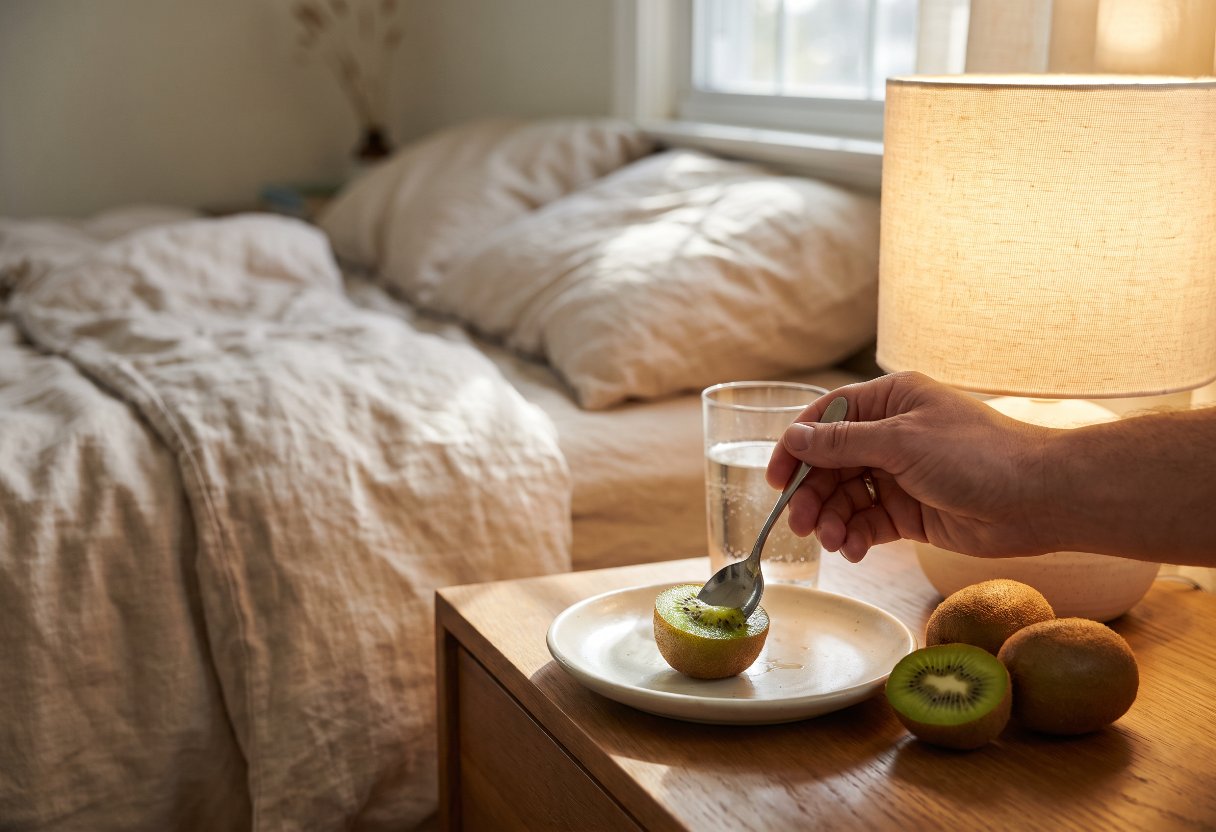
The lights go out at 10 p.m., but the clock reads 11 p.m. before sleep arrives. Going to bed earlier may only mean spending more time awake in bed. A small change to an evening snack may be worth a look: kiwifruit contains melatonin and serotonin, compounds involved in sleep. Sleep measures improved in a 4-week study of 15 elite athletes who ate kiwifruit before bed, but the small, uncontrolled study cannot show that kiwi caused the improvement or that the results apply to other adults.
Sleep problems have more than 1 cause
Sleep helps restore energy and maintain daytime focus, but stress, changing schedules and a noisy bedroom can make it harder to fall or stay asleep. Elite athletes also contend with training demands, travel and performance anxiety. A bedtime food may be easy to try, but it cannot remove those sources of disruption.
Kiwifruit contains compounds linked to sleep
Green kiwifruit contains melatonin, which helps regulate the sleep-wake cycle, and serotonin, a chemical involved in several body processes. It also provides vitamin C and other antioxidants. Researchers have proposed that these compounds could influence sleep, but eating kiwifruit has not been shown to raise brain serotonin or correct a sleep disorder.
Researchers affiliated with Taipei Medical University studied 24 adults who reported sleep problems. After eating 2 kiwifruits 1 hour before bed for 4 weeks, participants reported improvements in several sleep measures, and movement-tracking watches estimated changes as well. The study had no separate control group, so the results cannot show whether kiwifruit caused the improvements.
A small athlete study used 2 kiwifruits nightly
In a separate study, 15 elite runners and sailors ate 2 medium green kiwifruits about 1 hour before bed each night for 4 weeks. Their sleep diaries and questionnaires showed longer sleep, better sleep efficiency and fewer nighttime awakenings after the intervention. Sleep efficiency is the portion of time in bed spent asleep.
That study was small, and everyone knew they were eating kiwifruit. Without a comparison group, changes in training, expectations or routines could also explain the results. Diaries and questionnaires describe participants’ experiences, but they do not measure sleep as precisely as an overnight sleep study.
The bedtime routine is simple, but optional
To follow the studied routine, choose 2 medium green kiwifruits and eat them about 1 hour before bedtime, nightly for up to 4 weeks. Rinse them under running water before peeling or slicing, since a knife can carry material from the skin into the fruit. No supplement or special preparation was part of the routine.
Skip this approach if kiwifruit causes an allergic reaction or digestive discomfort. Anyone with a food restriction or questions about medications can check with a healthcare professional rather than assuming a bedtime fruit is suitable. There is no need to continue buying kiwifruit for sleep if it makes no noticeable difference.
Persistent sleep trouble needs a broader response
A regular bedtime and wake time, less screen use in the 1 to 2 hours before bed, and a cool, dark, quiet room address common disruptions that fruit cannot fix. If sleep problems persist, or symptoms suggest sleep apnea, such as loud snoring with breathing pauses, seek a healthcare evaluation. Keep the kiwifruit only if it is an enjoyable part of an otherwise workable evening routine.