At Thanksgiving, making mashed potatoes for a guest who avoids dairy can feel like a compromise. But one small change may leave everyone wondering why they’re still so creamy.
As Thanksgiving dinner is set out, the serving spoon meets a mound of mashed potatoes that holds its shape a little too well. Simply leaving out butter can make the familiar side less rich, while adding more liquid may make it thin rather than creamy. A small addition can soften the texture without making the potatoes taste like a different dish.
Plain mayonnaise can make dairy-free mashed potatoes creamy
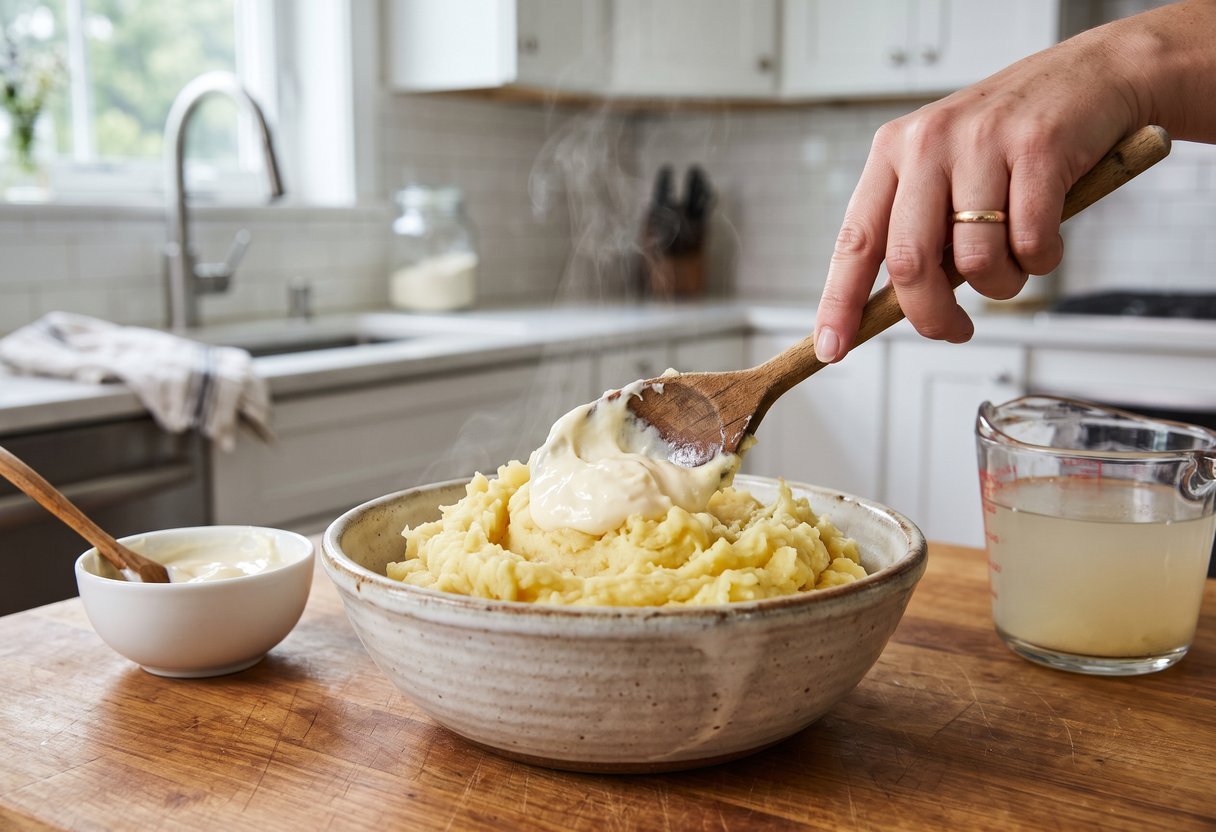
Plain mayonnaise is one way to replace butter in mashed potatoes for a dairy-free Thanksgiving side. Its oil and egg form an emulsion that adds richness without milk or cream, while reserved potato cooking water supplies moisture so the potatoes do not turn out dry.
Mayonnaise has another useful property for a make-ahead dish: it does not harden in the refrigerator the way butter does. In a kitchen demonstration, Justin Chapple found that potatoes made with mayonnaise stayed softer after refrigeration than a butter-only version. His batch also contained butter, however, so it was not a test of a fully dairy-free recipe.
Use plain mayonnaise, not a sweetened dressing, which can change the flavor. Check the label for dairy ingredients if avoiding dairy, and choose the olive oil option below if eggs are also off the menu.
Olive oil and cooking water offer an egg-free option
Extra-virgin olive oil provides fat without butter or eggs. The potato cooking water provides moisture and dissolved starch; when mashed into the potatoes with the oil, it helps the mixture turn creamy rather than greasy. The oil may add a mild fruity or peppery flavor.
For 2 pounds (0.9 kg) of Yukon Gold potatoes, America’s Test Kitchen uses 1/2 cup (120 ml) of olive oil. Cook the potatoes until fork-tender, then reserve some of the cooking water before draining. Mash the hot potatoes by hand, add the oil, and work in the reserved water gradually until the potatoes are soft and creamy.
Add the water a little at a time because the potatoes may not need all of it. A food processor or mixer can overwork the potatoes and make them gluey; a hand masher gives better control over the texture.
Yukon Gold potatoes bring flavor without butter
Traditional mashed potatoes get both fat and moisture from butter, milk, or cream. Removing all 3 without replacing their roles can leave the potatoes dry or pasty, even when the potatoes themselves are well cooked.
Yukon Gold potatoes have a naturally creamy texture and buttery flavor, making them a useful choice for either method. Russets can still be mashed, but they may need more attention to added fat and moisture to achieve the same sense of richness. For a savory variation, vegetable or chicken broth can add moisture, though it brings its own flavor.
Moisture and safe storage still matter
Neither mayonnaise nor olive oil can fix potatoes that lack enough moisture. Save the cooking water before draining so it is available to loosen the mash, rather than adding more fat to a dry batch. Mayonnaise also contains egg, so it is not suitable for someone avoiding eggs.
For make-ahead potatoes, refrigerate them within 2 hours in a refrigerator at 40°F (4°C) or colder. Reheat leftovers to 165°F (74°C), stirring so they heat evenly. At the Thanksgiving table, start with hot, hand-mashed Yukon Golds and add reserved cooking water until the texture is right.