Your morning coffee tastes flat, even though you opened the bag just last week. The problem may have less to do with the beans than with a familiar kitchen habit you rarely think twice about.
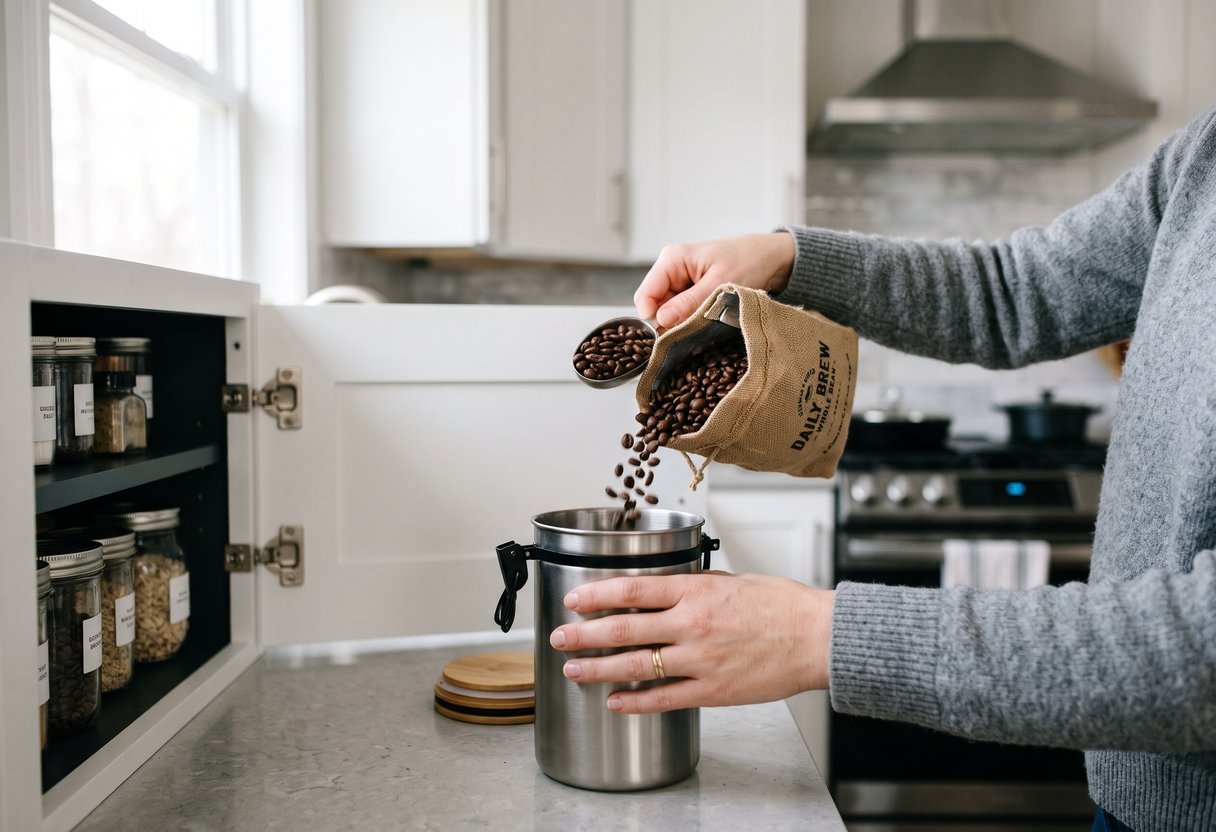
After breakfast, the coffee bag gets clipped shut and returned to its usual spot. Closing the bag seems like enough to keep the beans fresh, but that routine can still leave later cups tasting dull. One easy-to-overlook detail about where the bag sits may explain why.
Storing coffee near the stove makes it go stale faster
Keeping coffee beside or above the stove is convenient when it is time to brew, but it exposes the beans to heat and temperature changes. That heat prompts beans to release their flavorful oils prematurely, so the coffee can taste flat sooner. Moving the container away from the stove protects flavor without changing how the coffee is brewed.
A nearby counter may not be much better if it catches heat from an oven or toaster. Cooking can repeatedly warm and cool that spot, while a window or overhead light adds another source of exposure. A cabinet away from appliances is a more dependable choice than the counter next to the coffee maker.
Air, moisture, and light also affect flavor
The National Coffee Association advises keeping coffee beans away from air, moisture, heat, and light. Air and light contribute to the loss of freshness, while moisture can cause clumping and affect flavor. Heat near a stove makes those problems harder to avoid, particularly when a container is opened often.
Choose an airtight, opaque container made of ceramic, stainless steel, or glass. Keep it in a cool, dry, dark cabinet or pantry at a typical room temperature of 68°F to 77°F (20°C to 25°C). If a cabinet warms up during cooking, use a spot farther from the stove instead.
The refrigerator is not a better storage spot
Refrigeration may seem like a way to protect coffee from kitchen heat, but it can expose beans to moisture and odors from nearby food. Coffee stored in the fridge may lose the flavor that the cooler temperature was meant to preserve. For coffee used regularly, an airtight container in a suitable pantry or cabinet is the simpler choice.
Freezing is an option for coffee that will not be used within the next 1 to 2 weeks. Divide it into small portions, seal each portion in an airtight, freezer-safe container or vacuum-sealed bag, and freeze it. Take out only the portion needed, let it thaw fully before opening to reduce condensation on the beans, and do not return unused thawed beans to the freezer.
Smaller purchases make storage easier
Coffee begins losing freshness soon after roasting, even when it is stored carefully. Buying only enough for about 1 to 2 weeks limits the time it spends exposed to air each time the container is opened. Grinding beans just before brewing also helps preserve their aroma until they are needed.
Moving coffee away from the stove will not restore flavor that has already faded. Stale coffee can still go into a coffee-flavored dessert or the compost, while the next purchase goes into an airtight container in a cool pantry. Check that storage spot while the stove or oven is on: if the cabinet gets warm, choose another one.