Scrambled eggs can turn dry and rubbery before the toast even pops, especially when breakfast has to happen fast. Why do some batches stay soft and silky while yours firm up the moment you look away?
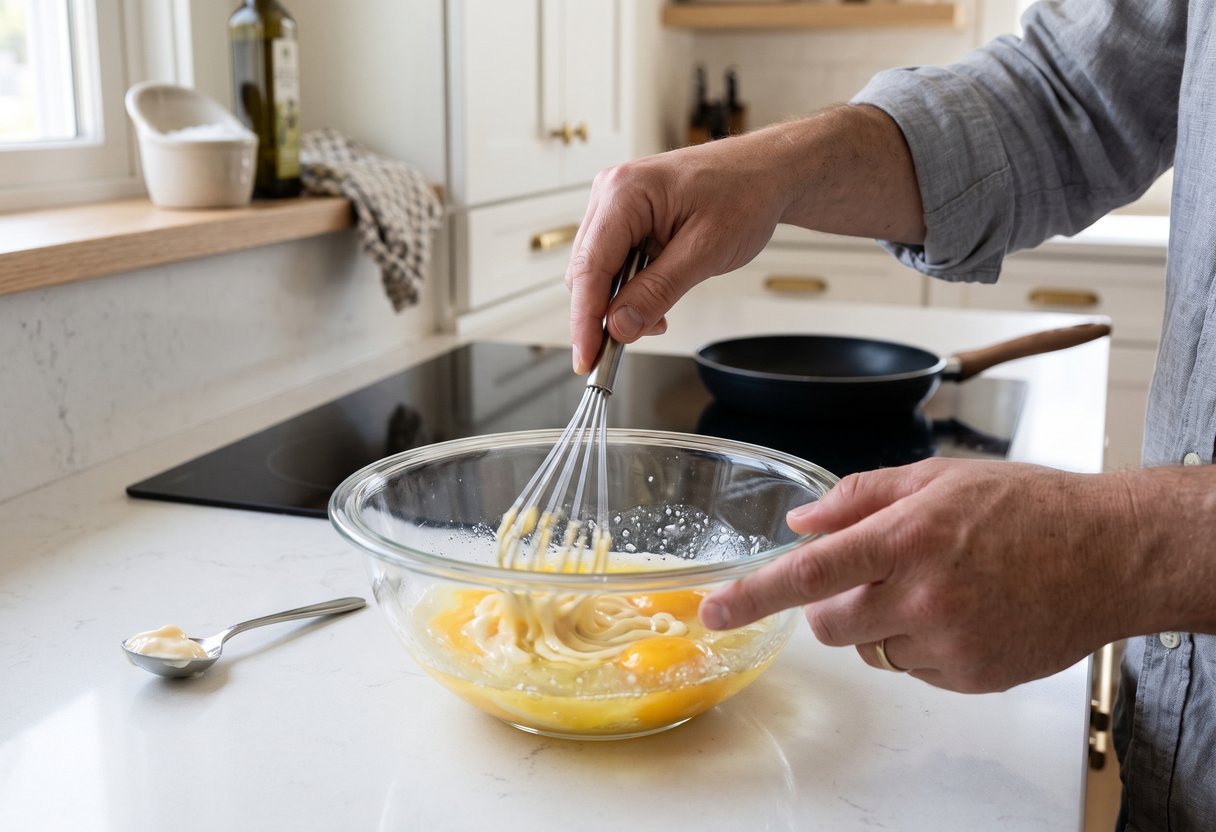
The cream carton is empty just as 3 eggs are cracked into a bowl for breakfast. Reaching for dairy is a familiar way to make scrambled eggs richer, but it does not work for a dairy-free meal. A small addition from the pantry offers another option, though it cannot make up for leaving the eggs on the heat too long.
Mayonnaise makes scrambled eggs creamier without dairy
Mayonnaise is the pantry staple Alton Brown adds to scrambled eggs for a creamier texture without milk or cream. It is an emulsion of egg yolk and oil, so a small amount blends into whisked eggs rather than sitting apart from them.
For Brown’s version, whisk 1 teaspoon of mayonnaise and 1 teaspoon of water into 3 eggs before they go into the pan. Cook over low heat, stirring as the eggs set. The mayonnaise should disappear into the mixture; cooks who have tried this amount report no detectable mayonnaise flavor. Check the label if avoiding dairy, since packaged mayonnaise ingredients can vary.
Gentle heat keeps egg proteins from tightening
As eggs heat, their proteins bond and form soft curds. Too much heat makes those bonds tighten quickly, squeezing out moisture and leaving the eggs dry or rubbery. Mayonnaise can improve texture, but it cannot undo overcooking.
Cornstarch offers a different way to slow that tightening. J. Kenji López-Alt recommends adding it to raw eggs: starch granules interfere with egg proteins linking together as they heat, helping the eggs retain moisture. One recipe uses 1 3/4 teaspoons of cornstarch for 3 large eggs. First whisk the starch with a little water until smooth, then whisk that mixture into the eggs; dry starch added straight to eggs can form lumps.
Olive oil adds fat and its own flavor
Olive oil is another dairy-free option, but it works differently from mayonnaise or cornstarch. A little oil in the pan provides cooking fat in place of butter and contributes a noticeable olive-oil flavor. It does not stop egg proteins from tightening if the pan is too hot.
Coat the pan lightly with olive oil, warm it over low heat, then add the whisked eggs and stir as they cook. Choose this approach when olive oil’s flavor is welcome, rather than expecting it to taste like eggs made with cream. The 3 additions are separate options, not ingredients that must all go into the same batch.
Slow cooking is an option when there is more time
For eggs without any added dairy or starch, gentle cooking can produce a soft texture on its own. America’s Test Kitchen’s French-style method takes about 12 to 16 minutes over very low heat and can be made without added fat. That timing belongs to the slow-cooked method, not to the quicker mayonnaise or cornstarch versions.
Very soft, saucy eggs may not meet food-safety guidance for fully cooked eggs, particularly for people at higher risk from foodborne illness. USDA guidance calls for egg dishes to reach 160°F (71°C); cook eggs thoroughly when that safety margin matters. For an everyday dairy-free batch, start with the measured mayonnaise and water, keep the heat low, and stop stirring only when the eggs are cooked to the desired, safe doneness.