Bread is a breakfast staple, but its effect on blood sugar may be harder to predict than you think. Even when you buy the same loaf, what happens before you eat it could make a difference.
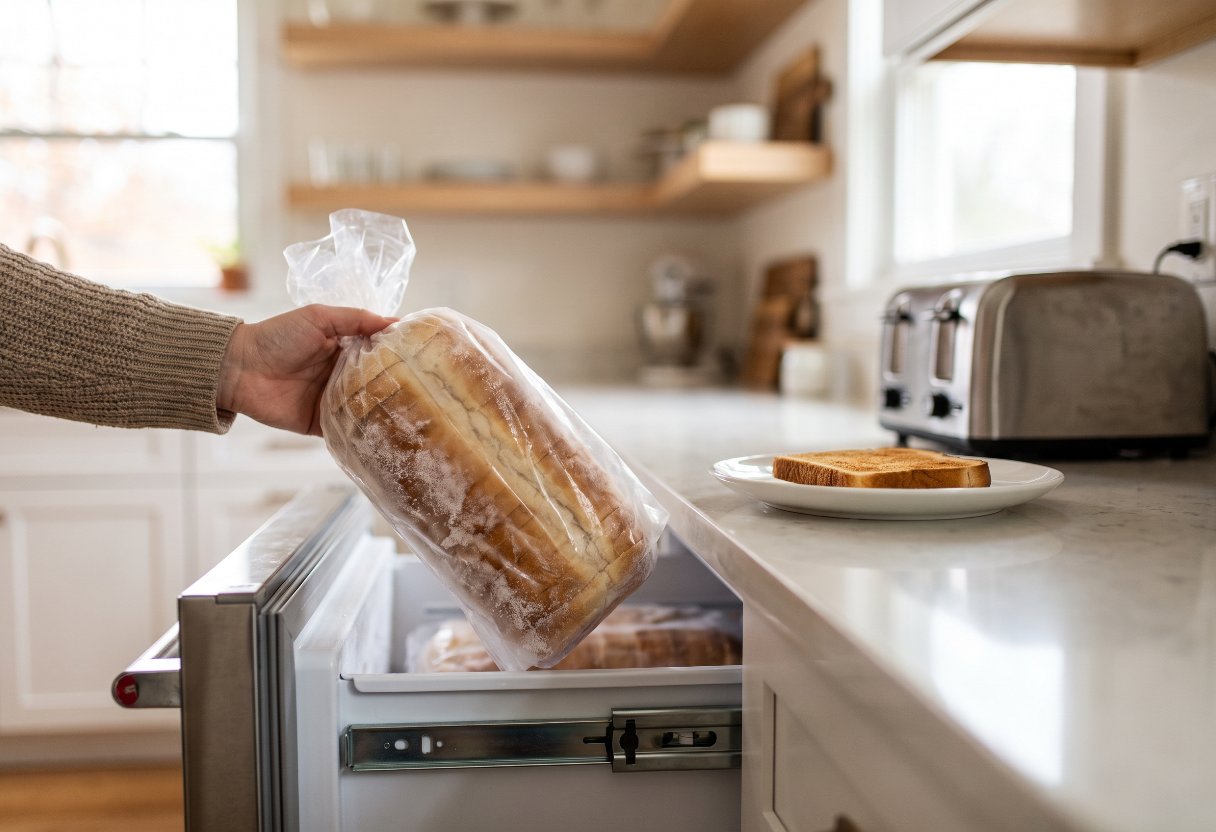
At breakfast, a slice of white bread turns golden in the toaster while the rest of the loaf stays on the counter. Toasting it straight from the bag makes it crisp, but the browned surface says little about how the starch inside will be digested. A simple change in how the bread is stored first may make some of that starch harder to digest. A study of just 10 healthy adults found a lower blood sugar response with bread prepared differently, but it cannot predict how any one person will respond.
White bread can raise blood sugar quickly
Starch in bread is broken down into glucose during digestion. White bread often produces a relatively quick rise in blood sugar because much of its starch is readily digested. The size of that rise varies with the portion, the rest of the meal and the person eating it.
Freezing bread may change that response, but it does not remove carbohydrates. For someone who monitors blood sugar, frozen toast still counts as bread, not as a substitute for an established eating plan.
Freezing and toasting changed the response in small studies
As cooked starch cools, some of its molecules can rearrange into a structure that digestive enzymes break down less easily. This process, called retrogradation, can increase resistant starch. It offers a possible explanation for a lower blood sugar response, although the bread studies did not establish how much resistant starch each slice gained.
In an Oxford Brookes University trial, 10 healthy adults ate homemade and commercial white bread prepared in different ways. Compared with fresh bread, toast made from bread that had been frozen and then defrosted produced a lower blood glucose response over 2 hours. Toasting fresh bread also lowered the measured response, so the study does not show that freezing is essential.
Another trial followed 32 healthy adults eating fresh or frozen and reheated white bread. Blood sugar readings were lower after the frozen and reheated bread, but freezing it for 5 or 7 days showed no clear advantage over 3 days. Both studies were small, tested white bread and involved people without diabetes; neither establishes a reliable effect for every loaf or every person.
Freezing slices makes the method practical
Separate a fresh loaf into slices, seal them in a freezer bag to limit moisture loss and freezer odors, and store them at 0°F (-18°C). The 32-person trial tested bread frozen for 3 days, but it did not find that a longer freeze improved the response. For a preparation closer to the Oxford Brookes trial, defrost a slice, then toast it until lightly browned.
Toasting a slice directly from frozen is convenient, but the Oxford Brookes trial tested bread that was defrosted before toasting. Its results cannot confirm that skipping that step has the same effect. Use the toaster’s frozen-bread setting if available, and keep fingers and metal utensils out of the toaster.
Freezing does not replace a good bread choice
Results from white bread cannot simply be applied to whole-grain or gluten-free bread, which may contain different amounts and types of starch and fiber. Check the ingredient list and fiber content when shopping. Adding avocado, nut butter or another protein- or fiber-containing food changes the meal, but it does not erase the bread’s carbohydrates.
Do not freeze or toast bread to salvage a moldy loaf; discard it instead. Anyone managing diabetes should continue following their usual guidance for carbohydrate intake and medication rather than changing it on the strength of these small trials. For everyday toast, freeze slices while they are fresh, then choose the bread and portion that fit the meal.