You buy bananas for the week, only to find them spotted and soft before Wednesday. Why does a fresh bunch turn so quickly, and how can you stop wasting your grocery money?
The bananas that looked ready for breakfast yesterday are spotted and soft by morning. In a crowded fruit bowl, pressure can bruise them, while ethylene gas from nearby fruit speeds ripening. Moving still-green bananas to the fridge is not the answer either, since the cold can darken their peels. A small change in where they sit can help them stay yellow longer.
Ethylene and heat speed banana ripening
Bananas release ethylene, a natural plant hormone that helps fruit ripen. As a banana ripens, its flesh softens and its starches turn to sugars. Warm conditions speed the process, so a bunch left beside a sunny window or a warm oven may turn soft sooner than expected.
Other ripening fruit can add to the ethylene nearby. Keep bananas separate from apples and other produce rather than piling everything into 1 fruit bowl. Separation slows exposure, but it cannot stop bananas from producing their own ethylene or ripening eventually.
A cool counter and a hanger help prevent damage
For bananas that are still green, choose a dry counter away from direct sun and heat, ideally at 54°F to 70°F (12°C to 21°C). Buying slightly green bananas gives them time to finish ripening at home. A hot kitchen offers less control, so buy only what is likely to be eaten soon and plan to refrigerate the rest once ripe.
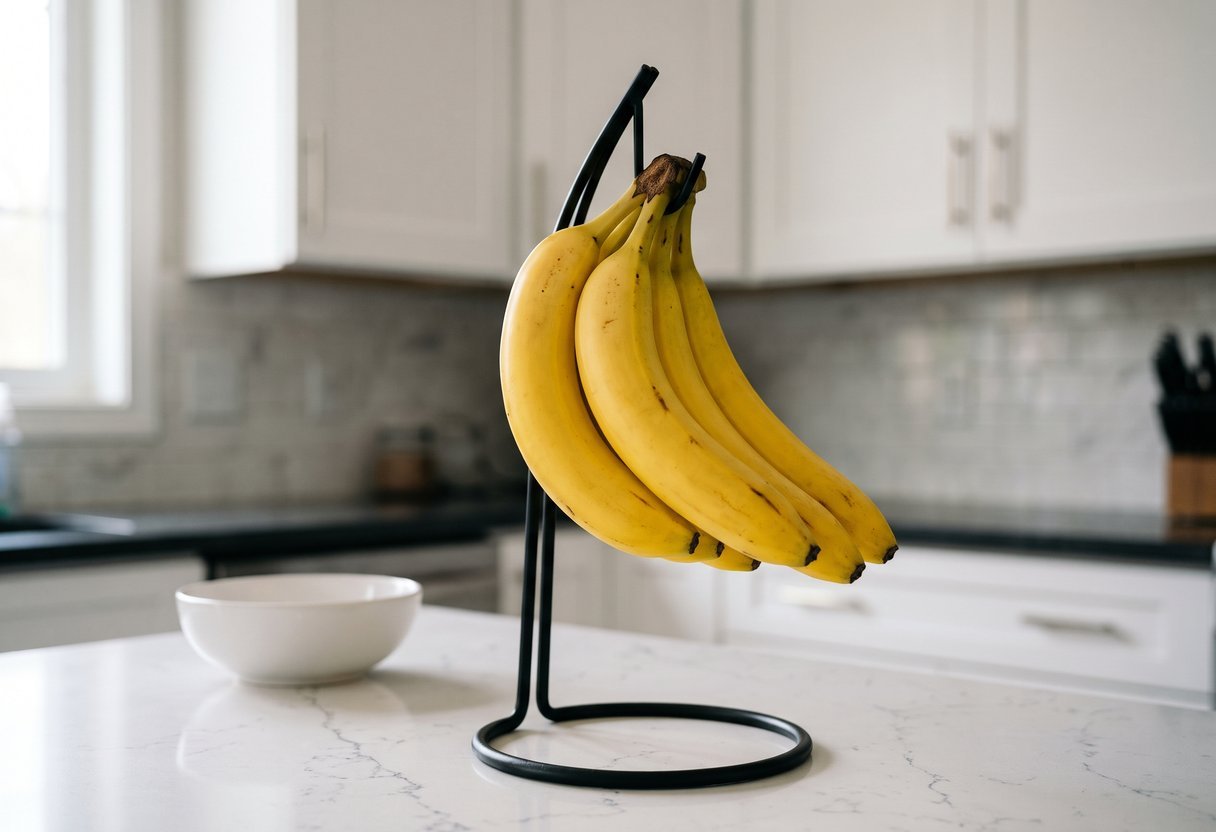
A banana hanger keeps the fruit off a hard counter, reducing pressure points and bruises. It also leaves room for air to move around the bunch, though hanging is more reliable for preventing bruises than for noticeably slowing ripening. Without a hanger, set the bunch where it will not be crushed and handle it gently.
Wrapping the joined stems snugly with plastic wrap or aluminum foil may modestly limit gas movement around that area. It is not a seal around the fruit, and ethylene comes from the bananas themselves, so do not expect wrapping alone to keep a ripe bunch fresh for weeks. Remove and discard loose wrapping before serving, and keep small pieces away from young children and pets.
Refrigeration helps after bananas turn ripe
Once bananas are yellow and ripe, place them in the refrigerator, where the cold slows further softening. The peel may turn dark because it is sensitive to cold, while the fruit inside can remain usable for several more days, sometimes up to 1 week. Check the flesh rather than judging the banana by its peel alone.
Do not refrigerate green bananas to make them last longer: cold can interrupt normal ripening and leave their flavor and texture disappointing. Refrigeration also will not rescue fruit that is already spoiled. Discard bananas with mold, leaking flesh or an off smell rather than using them in a recipe.
Freezing puts ripe bananas to work later
For bananas that are ripe faster than they can be eaten, peel and slice them, then spread the pieces on a parchment-lined baking sheet. Freeze until solid, about 2 hours, before transferring them to an airtight freezer bag or container. Freezing the pieces separately first keeps them from forming a single clump.
Thawed bananas become soft, so use them in smoothies, banana bread or muffins rather than expecting the texture of a fresh banana. Keep a few slightly green bananas on the counter for eating, then refrigerate or freeze the ripe ones before they deteriorate.