You reach for potatoes to make dinner, only to find soft spots and sprouts in a bag you bought last week. An ordinary storage habit may be cutting their shelf life short.
After a grocery run, a bag of potatoes lands in an open corner of the kitchen counter. It is easy to reach there, but convenience does not make it a good place to keep potatoes for long. Choosing a different spot may help the bag last much longer, without any special equipment.
Cool, dark storage keeps raw potatoes fresh longer
The common kitchen mistake is putting raw potatoes in the refrigerator or beside the onions. For storage that can last months, keep whole, uncut potatoes in a cool, dark, ventilated place away from onions. These conditions slow sprouting and moisture loss without exposing the potatoes to light.
A cellar or unheated basement can provide those conditions, but a warm kitchen cabinet usually cannot. In a cool, dark pantry or cupboard, potatoes may last up to 5 weeks; keeping them for several months calls for steadier, cooler conditions.
Temperature, light and airflow each matter
Aim for 43 to 50°F (6 to 10°C). Michigan State University Extension recommends cool, dark, ventilated storage, preferably at 45 to 50°F (7 to 10°C). Above 50°F (10°C), potatoes can lose moisture, shrivel and sprout faster.
Do not refrigerate raw potatoes for long-term storage. Refrigerator temperatures convert some of their starch to sugar, changing their cooking quality and potentially increasing acrylamide formation if they are later baked or fried at high heat. The advice to avoid refrigeration applies to whole, uncut potatoes, not potatoes that have already been cut or peeled.
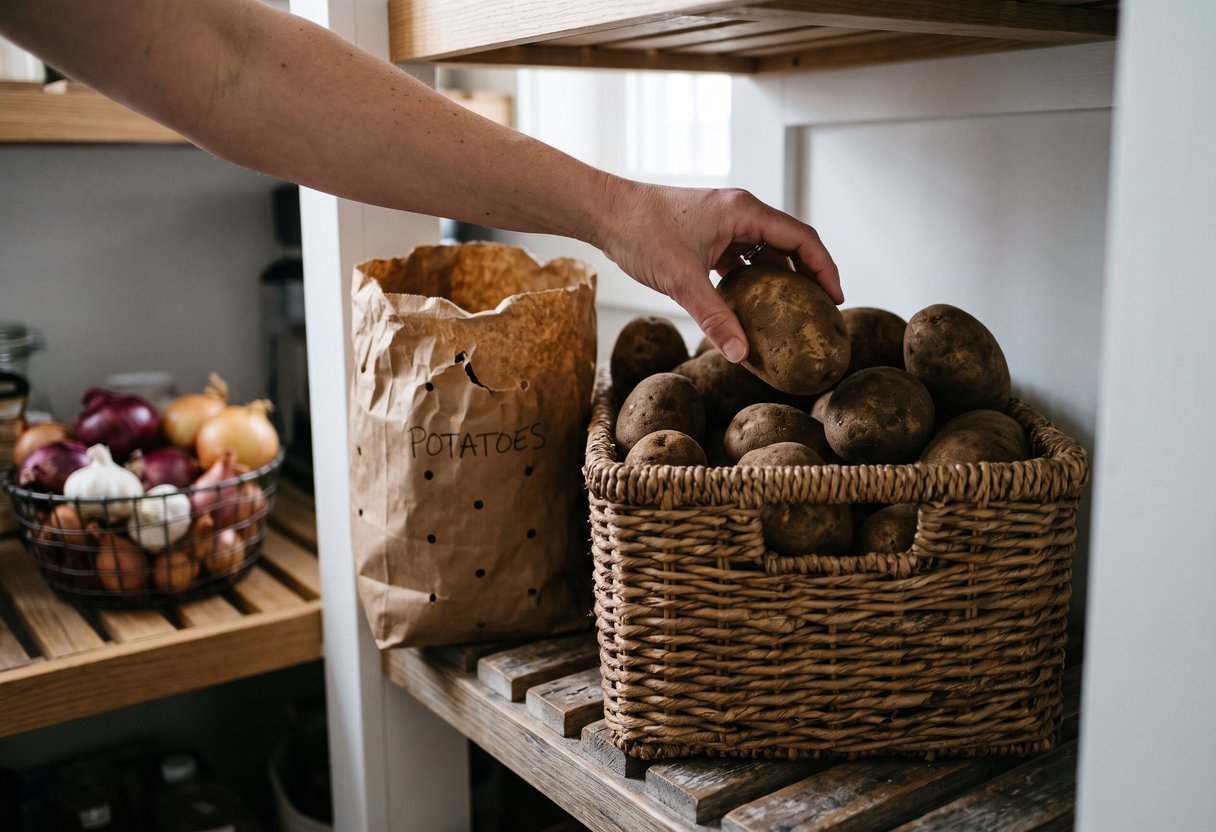
Keep light off the potatoes with a dark storage spot or a paper bag. Light can turn potatoes green and increase their natural glycoalkaloid toxins. A crate, a cardboard box with holes or a paper bag allows air to circulate; an airtight container traps moisture instead.
Onions belong in a separate spot
Move onions away from stored potatoes rather than keeping both in the same bin. Onions release ethylene gas, which encourages potatoes to sprout and spoil sooner. Separate storage areas are a clearer choice than relying on a particular distance between containers.
Check the storage spot periodically, especially if its temperature changes with the season. Remove potatoes that are spoiling so they do not sit against the rest, and plan to use sound potatoes showing early signs of sprouting sooner. Storage conditions slow changes; they do not stop them.
Greening and heavy sprouting have limits
Sprouts and green areas deserve attention because solanine and chaconine increase as potatoes sprout or turn green. Iowa State University Extension says potatoes with limited sprouting or greening may still be usable after the sprouts and green spots are cut away. Discard potatoes that are heavily green or heavily sprouted rather than trying to salvage them.
If there is no cellar or reliably cool basement, choose the coolest dark pantry space away from heat and sunlight. Keep the potatoes ventilated and separate from onions, then buy amounts that can be used within the shorter pantry storage window.