Your skillet is hot, but your homemade hash browns turn soft while the diner’s arrive with crisp, golden edges. What happens before they hit the pan that makes such a difference?
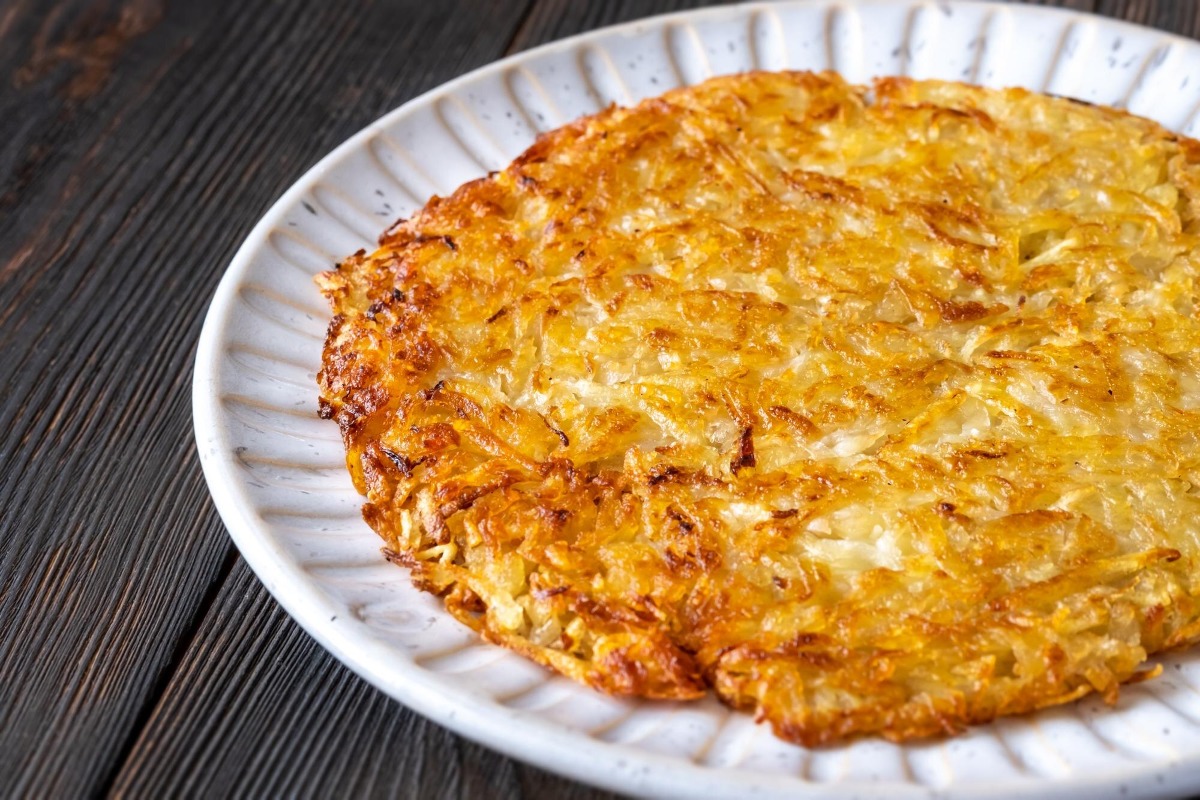
The eggs are nearly done, and a bowl of grated potatoes sits beside the stove, ready for breakfast. Turning up the heat or adding more butter might seem like the way to get diner-style crunch, but either approach can still leave the potatoes soft. The difference comes from a simple step before frying, away from the burner.
Rinsing and drying keep shredded potatoes from turning gummy
The key prep for diner-style hash browns is to rinse grated potatoes under cold water, then squeeze them thoroughly dry before frying. Rinsing removes loose surface starch that can make the shreds sticky; squeezing removes water that would otherwise steam them in the skillet. Both steps matter for shredded potatoes cooked in a thin layer of fat.
A potato can look drained and still hold enough water to interfere with browning. Once wet shreds hit the pan, some of the heat goes toward evaporating that water instead of crisping their surfaces. A colander drains the rinse water, but a firm squeeze with a clean kitchen towel or by hand gets more moisture out.
Russets and a hot skillet help build a crisp crust
Russet potatoes, often sold as Idaho potatoes, are a good choice for this style of hash brown. They are starchier and lower in moisture than waxy varieties, which are less suited to a crisp, shredded result. Rinsing removes loose starch on the cut surfaces; it does not turn a russet into a waxy potato.
The skillet also needs enough heat and fat for the potatoes to fry rather than sit in released moisture. A generous coating of clarified butter works well because it lacks the milk solids in regular butter that can scorch. Regular butter can be used, but watch it closely and lower the heat if it begins to darken before the potatoes brown.
A thin layer gives the shreds room to brown
Peel 1 pound of russet potatoes and grate them coarsely. Put the shreds in a colander and rinse under cold running water until the water runs clear, gently moving them so the water reaches all sides. Drain, then squeeze firmly in a clean kitchen towel, by hand, or against the colander until the shreds are as dry as possible.
Heat a generous coating of clarified butter in a large skillet over medium-high heat. If checking the hot fat with a suitable thermometer, aim for roughly 350, 375°F (175, 190°C). Spread the potatoes in an even, thin layer without crowding the pan; cook in batches if needed.
Leave the potatoes undisturbed for 3, 4 minutes, then turn them and cook for another 3, 4 minutes, until golden and crisp. Those times are a guide, not a guarantee: a thicker layer or a cooler pan may need longer. Keep hands clear of the skillet when adding the shreds, since any remaining water can make hot fat splatter.
Soggy hash browns usually need less water or more space
If the potatoes turn soft instead of brown, check how firmly they were squeezed and whether the skillet was crowded. A cool pan also slows browning and can leave the hash browns greasy. For the next batch, dry the shreds again, heat the fat before adding them, and use a thinner layer.
Shreds prepared ahead can be kept covered with cold water in the refrigerator, but they still need to be drained and squeezed dry before frying. Do not leave prepared potatoes at room temperature while waiting for a later meal. For the next skilletful, start with dry russet shreds and give them enough room to fry.