Lettuce can look clean after a rinse under the kitchen faucet, but the outer leaves don’t tell the whole story. Soil and debris can remain tucked between the folds, near the stem, and beneath leaves that never came into contact with the running water. A clean-looking surface doesn’t mean the entire head has been washed.
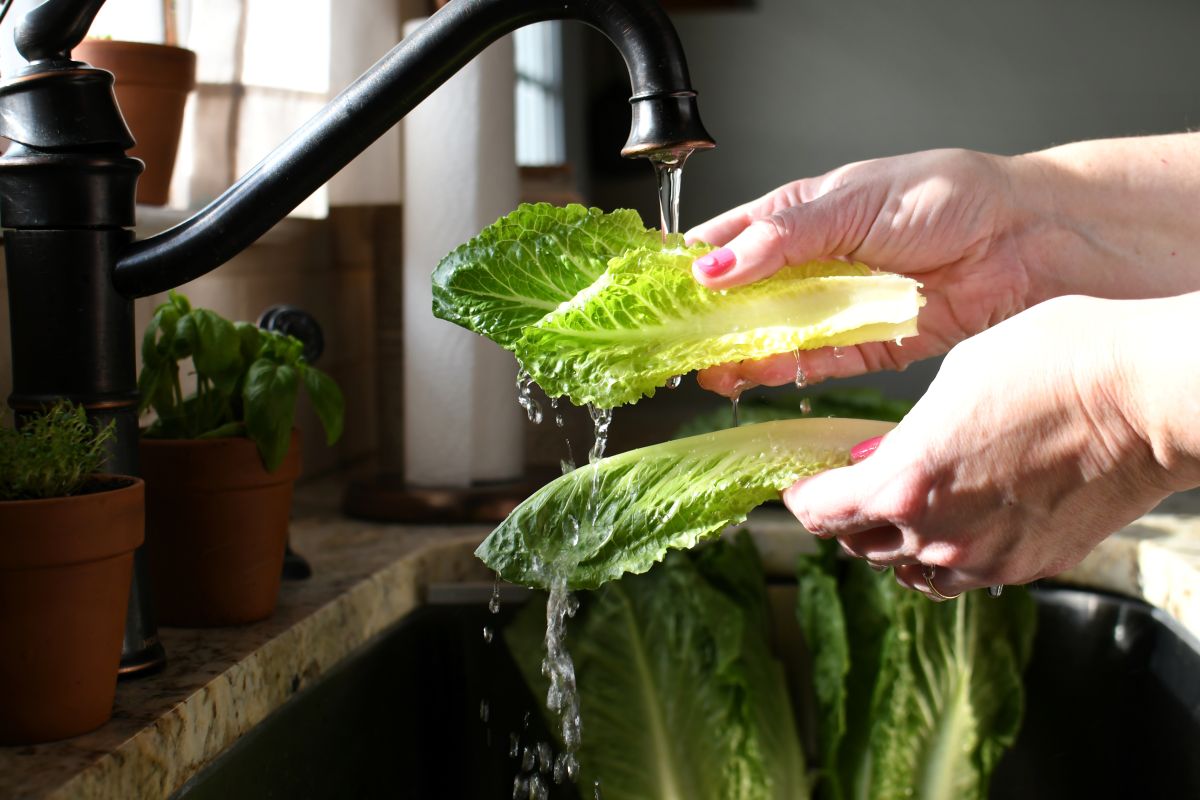
Unlike potatoes or apples, lettuce has overlapping leaves that create narrow spaces where dirt can collect. Running water across the outside may leave those inner areas untouched, particularly when the leaves remain attached to the head.
Food specialists recommend separating the leaves before washing them, allowing water to reach the folds and surfaces that a quick rinse can miss. The method requires cold water, not soap or a special produce cleaner.
Separate the leaves before rinsing
Start by removing damaged or bruised leaves, then pull the remaining leaves apart from the base of the lettuce.
Hold them under cold running water, turning each leaf so the water reaches both sides and the folds near the stem.
The University of Maryland recommends separating leafy greens during washing and paying attention to the crevices where hidden dirt can remain.
For lettuce with deep folds, the University of Maine also recommends soaking the leaves in clean water for one to two minutes to help loosen trapped debris.
Lift the leaves out of the water rather than pouring the collected dirt back over them, then rinse under running water.
Rub away visible soil with your fingers, checking the thicker ribs and areas where leaves were attached to the head.
Cold running water helps remove dirt and some microorganisms, but washing cannot guarantee the removal of every harmful germ or pesticide residue.
Dry the leaves before using or storing them
Once the lettuce has been rinsed, place the leaves in a colander to drain.
A salad spinner can remove water caught between the folds, while a clean kitchen towel offers another way to absorb moisture.
Drying matters when the lettuce will be stored after washing, since excess water left against the leaves can contribute to deterioration.
Cleveland Clinic dietitian Kristin Kirkpatrick recommends washing produce before use and removing damaged areas that may harbor bacteria.
The guidance also advises against washing vegetables with soap or household detergents, which can leave residues not intended for consumption.
Clean the cutting board, utensils, and salad spinner after use, and wash your hands with soap and water before handling food.
A whole head of lettuce may look free of dirt after its outer leaves have been rinsed, but the folds inside can remain untouched. Separating the leaves gives water access to those hidden surfaces before the lettuce reaches the plate.