One green spot appears on a slice of bread, a strawberry, or a block of cheese. Cutting away the affected section seems enough to save the rest, especially when the surrounding food looks untouched. But mold doesn’t always stop where the discoloration ends, and removing the visible patch may leave contamination behind.
Mold grows through microscopic filaments that can extend beneath a food’s surface. Those structures may spread through soft foods before additional spots become visible, making it difficult to judge contamination from appearance alone.
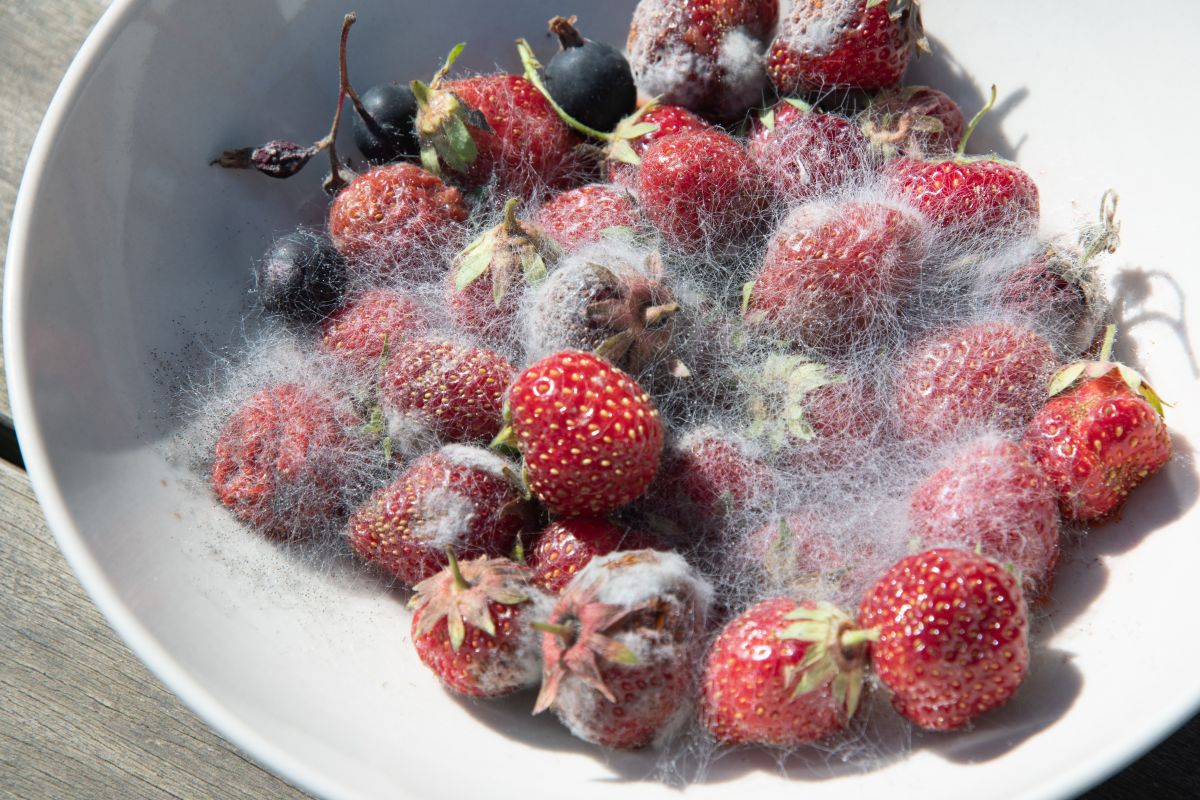
The USDA warns that cutting away mold isn’t safe for every food. Bread, yogurt, soft fruit, and hard cheese don’t respond to mold growth in the same way, and the difference determines whether the remaining portion can be saved.
Mold can spread beneath the visible spot
Mold is a fungus that grows on foods through microscopic structures called hyphae. These thread-like filaments can penetrate beneath the surface while spores spread through air, water, or contact.
The colored or fuzzy patch visible on food represents only part of the growth.
Soft, moist foods allow mold to penetrate beyond the affected area, sometimes without producing visible changes.
Bread and other baked goods should be discarded when mold appears, even if the spot covers just one corner.
Soft fruits and vegetables, including strawberries, peaches, and tomatoes, should also be discarded when moldy.
The USDA gives similar advice for yogurt, sour cream, jams, and soft cheeses with unexpected mold growth.
Some molds produce mycotoxins, while moldy foods may also contain bacteria that cannot be detected through appearance or smell.
Removing the discolored section doesn’t guarantee that these contaminants have been eliminated.
Some hard foods can be saved with a deeper cut
Dense foods provide a different environment for mold growth, making it harder for filaments to penetrate far beneath the surface.
The USDA permits removing mold from certain hard cheeses and firm vegetables when the affected area is limited.
For hard cheeses such as cheddar or Parmesan, cut at least 1 inch (2.5 centimeters) around and beneath the mold.
Keep the knife away from the mold itself to avoid transferring contamination onto the remaining cheese.
Firm vegetables such as carrots and cabbage may also be salvageable using the same approach when the mold is confined to a small area.
This exception doesn’t apply to bread, soft cheese, yogurt, or other foods where mold can spread through the interior.
Cheeses manufactured with edible mold cultures, including certain blue cheeses and Brie, are a separate category. Their intended mold is part of production, but unexpected growth can still indicate spoilage.
The USDA also advises against smelling moldy food to check whether it has spoiled, since inhaling spores can cause respiratory irritation.
Discard affected foods when required, clean the storage area, and inspect nearby products for signs of contamination.
A small mold patch may be the only visible warning, but it doesn’t reveal how far the fungus has spread. The decision to cut or discard depends on the food’s structure, not the size of the spot.