You brown ground beef for taco night, pile it into tortillas, and still miss the flavor of your favorite neighborhood taqueria. What makes the difference might be easy to overlook in a busy home kitchen.
A spoonful of taco meat falls out of the tortilla in dry little crumbles just as dinner is served. Another sprinkle of seasoning might add heat, but it may not give the filling the balanced flavor expected from a taqueria. A small addition can make a difference without turning taco night into a longer project.
Tomato paste and broth make taco beef saucier
Stir tomato paste into browned ground beef for a saucy coating that helps the seasoning cling to each crumble. Add beef broth as the meat simmers to keep it moist and distribute flavor more evenly. Together, they make home-cooked taco meat closer in texture to taqueria-style beef without relying on a single “secret” ingredient.
Ground beef can turn dry or gritty when all its rendered fat and liquid are drained away, or when it simmers until the pan is dry. Tomato paste adds body and a little acidity, while broth supplies the moisture needed to keep the mixture loose. Neither can undo beef that has been cooked for too long, so watch the pan as the liquid reduces.
Each addition has a different job
A couple of tablespoons of tomato paste balance rich beef and savory spices such as cumin and chili powder. Briefly cooking the paste in the beef’s rendered fat also lets it mix into the meat instead of sitting in separate clumps. Leave a little fat in the skillet for this step, but remove excess if the meat looks oily.
Broth helps the paste and spices coat the beef as they simmer. A splash of apple cider vinegar at the end adds a sharper note that cuts through the richness; red wine vinegar can serve the same purpose. Vinegar is a finishing option in some recipes, not a required taqueria technique, and adding too much can overpower the seasoning.
Build the sauce after browning the beef
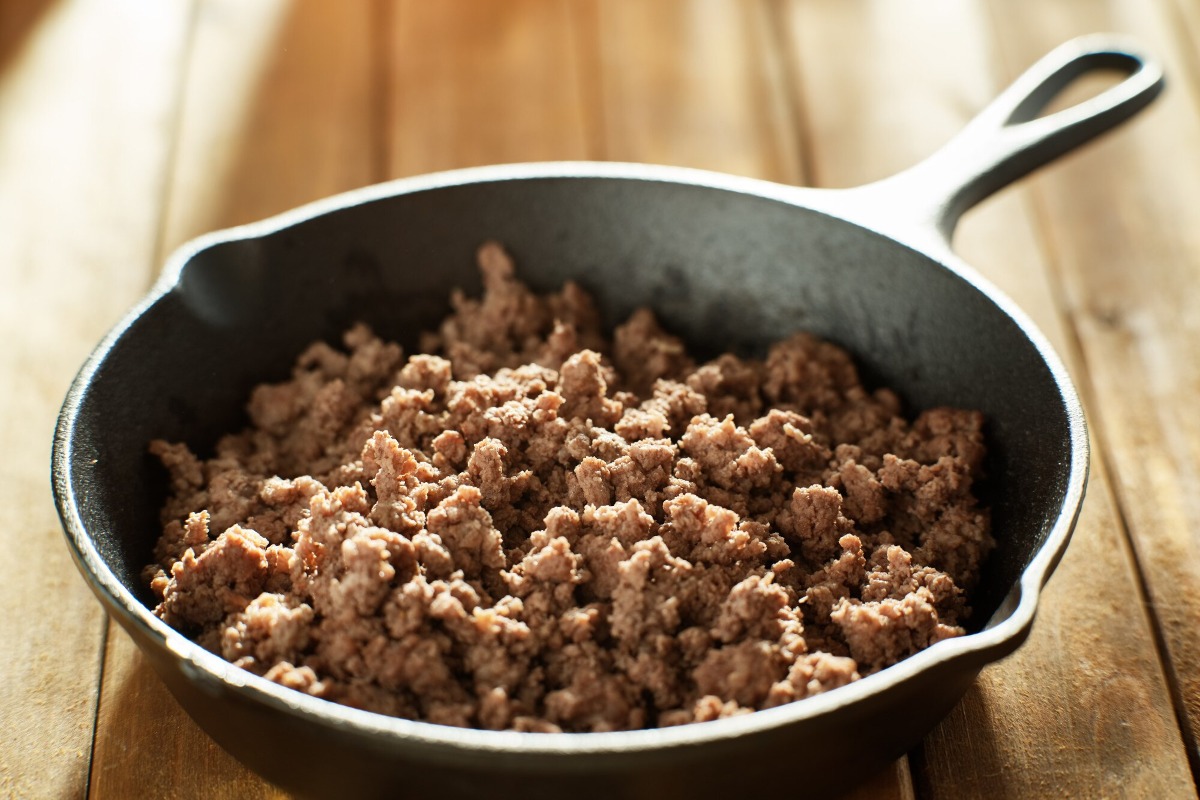
Brown 1 pound (454 g) of ground beef in a skillet over medium heat, breaking it into small crumbles. If using lean beef, add 1 tablespoon of oil; if the beef releases substantial grease, remove the excess while leaving a little in the pan. Browning develops flavor, but color alone does not establish that the beef is safely cooked.
Push the beef to the sides of the skillet. Add 1 to 2 minced garlic cloves and 2 tablespoons of tomato paste to the center, and cook for 1 to 2 minutes, stirring, until fragrant. Mix in cumin, chili powder, paprika and onion powder to taste, then stir for about 1 minute before coating the beef with the paste.
Pour in ⅓ to ½ cup (80 to 120 mL) of beef broth and simmer gently for 5 to 7 minutes. Stir occasionally and stop when the liquid has thickened enough to cling to the beef, rather than evaporating completely. Just before serving, stir in 1 tablespoon of apple cider vinegar and adjust the salt and pepper to taste.
Moisture does not replace safe cooking
Use a food thermometer to confirm that the ground beef reaches the USDA’s safe minimum temperature of 160°F (71°C). Reheated taco meat should reach 165°F (74°C). Broth may improve its texture, but it does not make undercooked beef safe.
If the meat looks dry during simmering, add a small splash of broth or water instead of continuing to cook it down. For dry leftovers, stir in 1 to 2 tablespoons of liquid before reheating; for bland meat, taste before adding a little more salt, cumin or vinegar. Keep the finished filling moist enough to spoon into tortillas, not so wet that liquid pools in the pan.