At the grocery store, two similar bottles can make a quick vinegar purchase surprisingly confusing. When dinner prep and household chores are both on your list, grabbing the wrong one could matter more than you think.
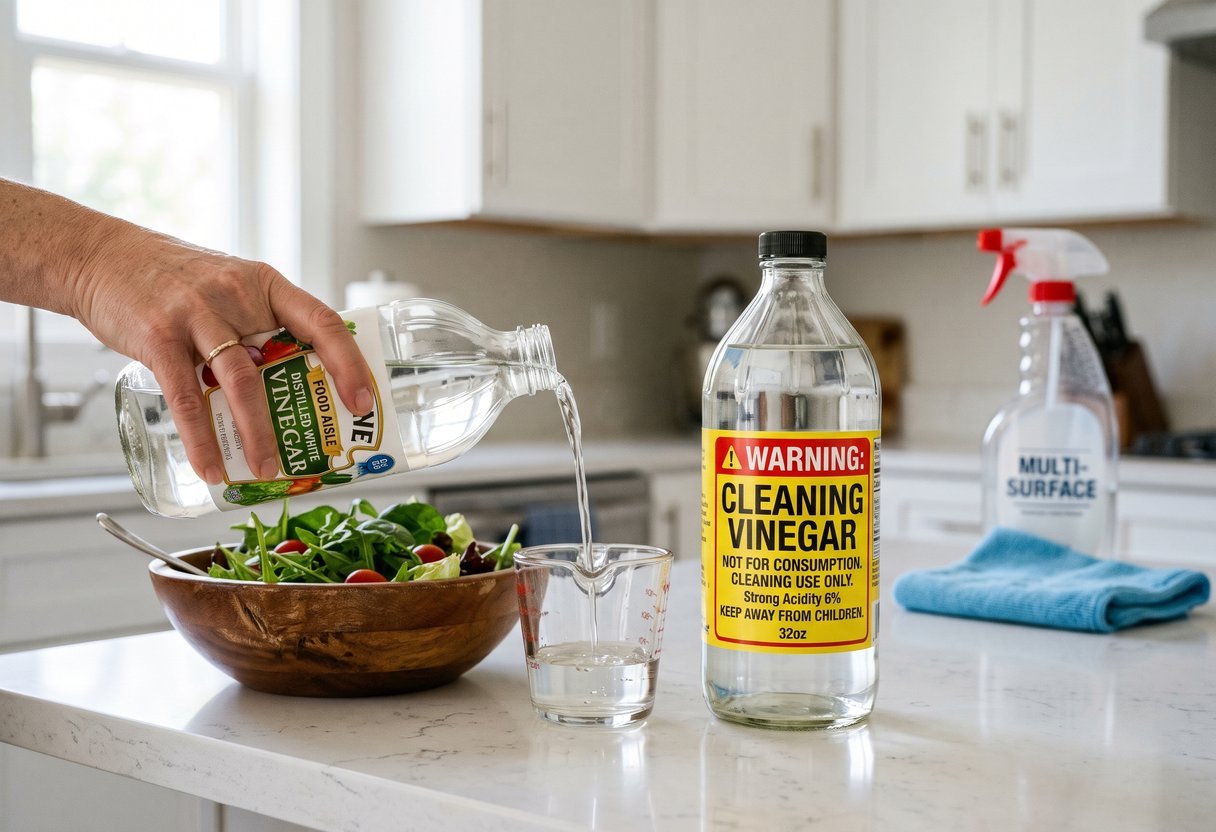
A bowl of sliced cucumbers sits on the counter beside 2 similar-looking bottles of vinegar. With dinner underway, grabbing the closest one seems easier than stopping to read the label. But the usual assumption that similar bottles are interchangeable leaves out a detail that matters. A quick look before pouring can prevent a mistake.
Cleaning vinegar belongs in the cleaning aisle, not in food
Cleaning vinegar is made for household cleaning and should not be used in cooking or food preservation. It typically contains 6% acetic acid, compared with 5% in white distilled vinegar sold in the grocery food aisle, and it may contain ingredients not intended for food contact. The similar names and appearance make the bottles easy to confuse, so the label matters more than the word “vinegar.”
Both products get their acidity from acetic acid. Moving from 5% to 6% means cleaning vinegar contains about 20% more acetic acid, not that it is simply a stronger version of a food ingredient. Fragrances, surfactants, or processing agents may also be present in a cleaning product.
Food-grade vinegar has a place in cooking and pickling
White distilled vinegar labeled for food use works in salad dressings and other recipes that call for it. Its acidity also helps dissolve mineral buildup in appliances, although appliance instructions should determine whether vinegar is suitable for a particular machine. Using food-grade vinegar for cleaning does not turn a bottle of cleaning vinegar into a food-grade substitute.
For home canning and pickling, the acidity printed on the bottle is a safety check, not a flavor preference. The National Center for Home Food Preservation recommends 5% white distilled or cider vinegar and advises against changing the vinegar, food, or water proportions in tested recipes. Those proportions provide the acidity the recipe was designed to achieve.
Cleaning uses do not make cleaning vinegar safe to eat
Cleaning vinegar can be used for household jobs such as removing soap scum or cleaning windows, following the product label. Its extra acetic acid can help with buildup, but a cleaning product should be kept off food and out of food preparation. It is not a substitute for food-grade vinegar in a dressing, marinade, or jar of pickles.
Do not mix vinegar with bleach or ammonia. Keep cleaning products away from children and pets, and follow label directions for surfaces and storage. If cleaning vinegar gets on food, discard the affected food rather than trying to rinse the cleaner away.
Preservation recipes depend on the labeled acidity
A vinegar labeled below 5% acidity should not be substituted into a home preservation recipe calling for 5%. Virginia Tech food safety experts warn against lower-acidity vinegar for this use. Less acid can leave a finished preserve outside the conditions its tested recipe was designed to provide.
More acid is not a reason to swap in cleaning vinegar, either. UC Master Food Preservers note that their tested preservation recipes use 5% vinegar. A 6% cleaning product is not food-grade, and changing the specified ingredient does not follow the tested recipe.
The label settles an uncertain bottle
Check both the intended use and the acidity percentage before pouring vinegar into food. If either cannot be verified, set that bottle aside and choose food-grade vinegar labeled 5% acidity for the recipe. Storing cleaning vinegar separately from cooking ingredients makes that check easier the next time a bottle is needed.