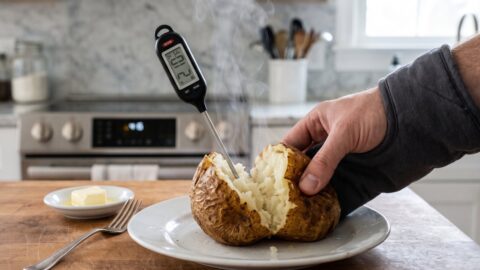
Thanksgiving dinner is almost ready, but the gravy in your pan is full of stubborn lumps. The cause may be a small misstep you made while juggling everything else.
The turkey is resting, the potatoes are being passed, and the gravy boat is still empty on the counter. A last-minute burst of whisking may smooth a few rough spots, but it cannot reliably fix a panful of clumps. One small adjustment earlier in the process can make the gravy much easier to serve.
Lumps form when dry thickener meets hot liquid
Thanksgiving gravy gets lumpy when dry flour or starch touches hot stock before it has been evenly mixed. The outside of each clump thickens first, trapping dry powder inside; making a smooth roux or slurry before adding the bulk of the liquid prevents that problem.
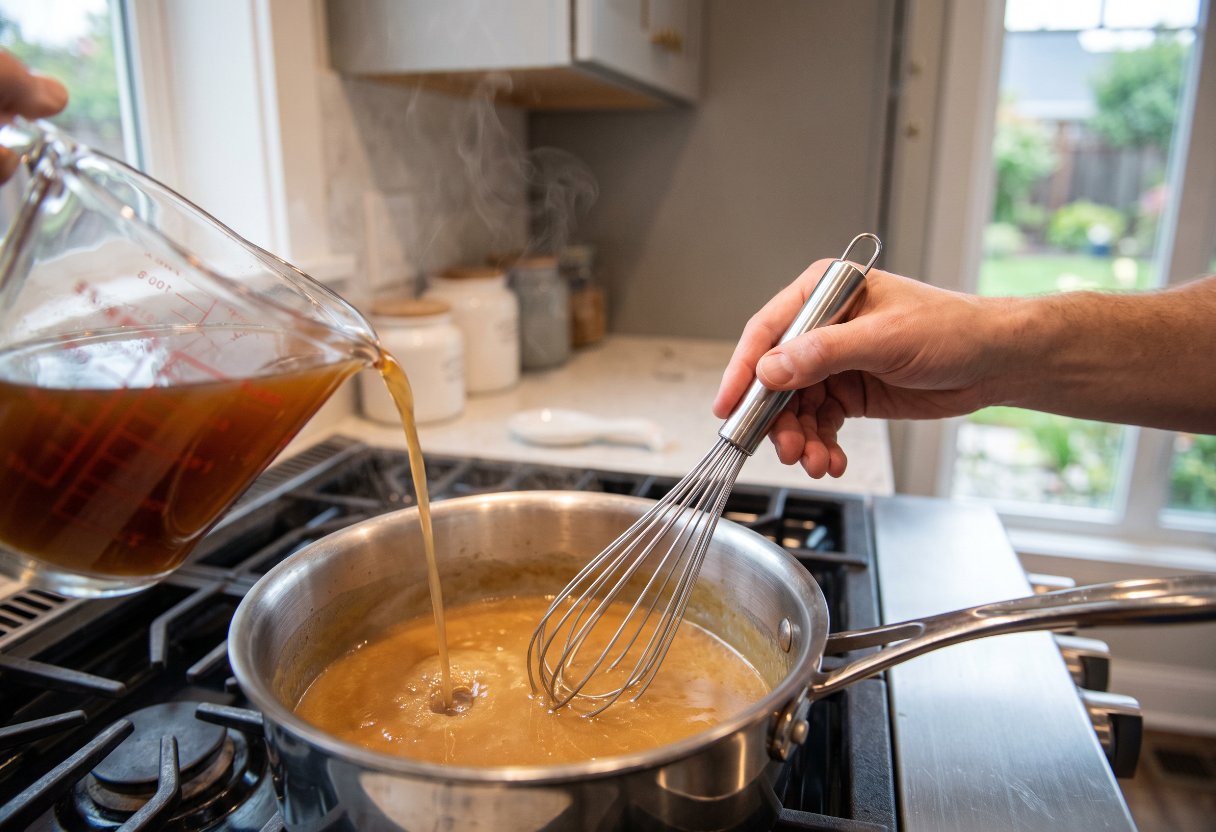
Pouring stock into a roux all at once can also leave pockets of flour behind. Adding liquid gradually and whisking into the corners of the pan gives the thickener a chance to spread evenly. A spoon is less effective at reaching those corners.
A roux gives flour gravy a smooth start
For a fairly thick gravy, start with 2 tablespoons of flour and 2 tablespoons of fat, such as butter or turkey drippings, for 1 cup of stock. Heat the fat in a pan over medium heat, whisk in the flour, and keep whisking until it forms a smooth paste and the raw flour smell is gone. Cooking the flour in fat before adding stock helps prevent dry flour from clumping.
Whisk in hot stock a little at a time, smoothing the paste after each addition. Once all the stock is incorporated, keep whisking as the gravy thickens. If it becomes thicker than intended, whisk in more stock gradually rather than adding a large amount at once.
A cold slurry works for cornstarch gravy
For a gluten-free option, use about 1 tablespoon of cornstarch for 1 cup of stock. Whisk the cornstarch with 2 tablespoons of cold or room-temperature water until no dry powder remains. Pour the slurry a little at a time into simmering stock, whisking constantly as the gravy returns to a boil and thickens.
Potato starch can be mixed in the same proportion: 1 tablespoon of starch with 2 tablespoons of water for 1 cup of hot liquid. Arrowroot powder and tapioca starch are other gluten-free options, though they may produce a different texture. Do not sprinkle any of these dry starches directly into hot gravy; the cold-water mixing step is what keeps them dispersed.
Straining or blending can rescue lumpy gravy
If lumps survive whisking, pour the finished gravy through a fine-mesh strainer. A blender or food processor can also smooth it, but use care with hot liquid and avoid sealing it tightly in a blender. Return the gravy to low heat afterward and whisk frequently until ready to serve.
Add fresh herbs or cooked mushrooms after removing the lumps, so those ingredients do not get caught in the strainer or blended into the gravy. Butter and a splash of sherry vinegar can also go in near the end. If the gravy must wait for the meal, keep it hot rather than leaving it at room temperature; refrigerate leftovers promptly.
The mixing step matters most
Choose a flour-and-fat roux for a traditional gravy or a cold-water cornstarch slurry for a gluten-free one. In either case, make the thickener smooth first, then add it to the rest of the liquid gradually while whisking.