Packing your kid’s school lunch can bring back memories of snacks you haven’t seen at the grocery store in years. How did treats that once seemed to be everywhere become so hard to find?
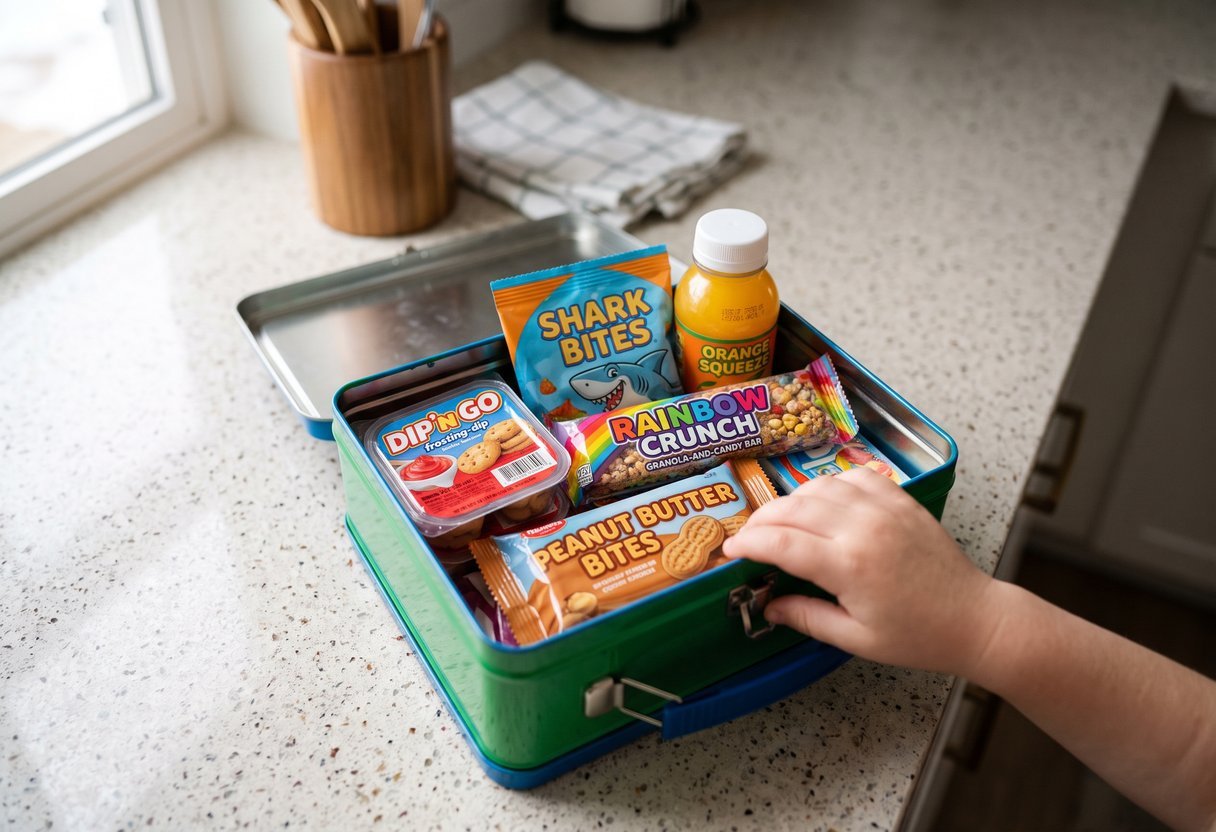
An old cafeteria photo turns up in a kitchen drawer, and a bright snack wrapper in the corner looks familiar. Searching for that wrapper today may turn up a look-alike, but a familiar package does not guarantee the same snack inside. An empty spot on a grocery shelf does not explain what happened, either. A closer look at these lunchbox favorites reveals how much can change between childhood and the next trip down the snack aisle.
Six lunchbox favorites became hard to find
Dunkaroos, Planters P.B. Crisps, Kudos bars, Shark Bites, Squeezit, and the fruit-snack pair Fruit Wrinkles and Fruit String Thing were familiar parts of 1990s lunchboxes. Their cookies, candy flavors, squeeze bottles, and peelable shapes made them memorable, but the versions children knew eventually disappeared from shelves. “Without warning” captures how that felt to shoppers, not a single unexplained event: for some products, declining sales or changing preferences offer at least part of the explanation.
Cookies and candy flavors made snacks feel like treats
Betty Crocker released Dunkaroos in 1990. The kangaroo-mascot snack paired cookies with sweet frosting for dipping, giving children a small activity along with dessert. Dunkaroos disappeared from US shelves during the 2010s, although accounts differ on the exact year.
Planters introduced P.B. Crisps in 1992. Each peanut-shaped piece had a crisp cookie outside and a creamy peanut butter filling, a combination that distinguished it from a plain cookie or cracker. The snack was discontinued in the late 1990s, reportedly because sales were too low to sustain it.
Kudos bars had a different pitch: they were marketed as granola bars with 100 calories each. Later varieties featured Dove, M&M’s, and Snickers flavors, blurring the line between snack bar and candy. Kudos were discontinued in 2017; criticism of their sugar content and nutritional value, along with competition from bars such as Clif Bars, has been cited in their decline. A 100-calorie label alone does not tell shoppers how much sugar a bar contains.
Playful shapes and packaging stayed in memory
Betty Crocker Fruit Corners made Shark Bites in shapes that included hammerhead, mako, tiger, and great white sharks. The company brought the fruit snacks back in the 2010s, but that return did not reproduce the original formula or prize-inside experience. For someone remembering the original, a familiar name was not quite the same snack.
General Mills’ Squeezit was a fruit-flavored drink in a plastic, twist-top squeeze bottle. It arrived in the late 1980s, became a 1990s lunchbox fixture, and was gone from shelves by 2001. Growing concern about sugary drinks for children and tighter school policies contributed to its decline as other bottled drinks took its place.
Fruit Wrinkles and Fruit String Thing offered different kinds of fruit-snack novelty. Fruit Wrinkles were marketed as made with real fruit and came as small, chewy, irregular pieces; Fruit String Thing was colorful, sticky, and peelable. Fruit String Thing lasted into the 2000s before quietly disappearing from stores.
Nostalgia is different from an everyday grocery choice
These snacks are easy to remember because their shapes, flavors, and packaging were part of the lunchtime experience, not just something to eat. Their departures also had different timelines and explanations, so no single change in school lunches accounts for all of them. When choosing a current lunchbox snack, compare serving sizes and sugar on the label rather than treating a fruit-themed name or a 100-calorie claim as a measure of overall nutrition.