You toss ground beef into a hot skillet for taco night, only to watch it turn gray and watery. Why does it happen so often, even when the pan seems hot enough?
The ground beef for lettuce wraps is cooked through, but the spoon turns up soft, pale crumbles instead of browned bits. Turning up the heat or leaving it in the skillet longer does not always help, and extra cooking can dry out the meat. A small step before cooking can make a difference, especially for a quick dinner that will not simmer for hours.
Baking soda helps ground beef brown instead of steam
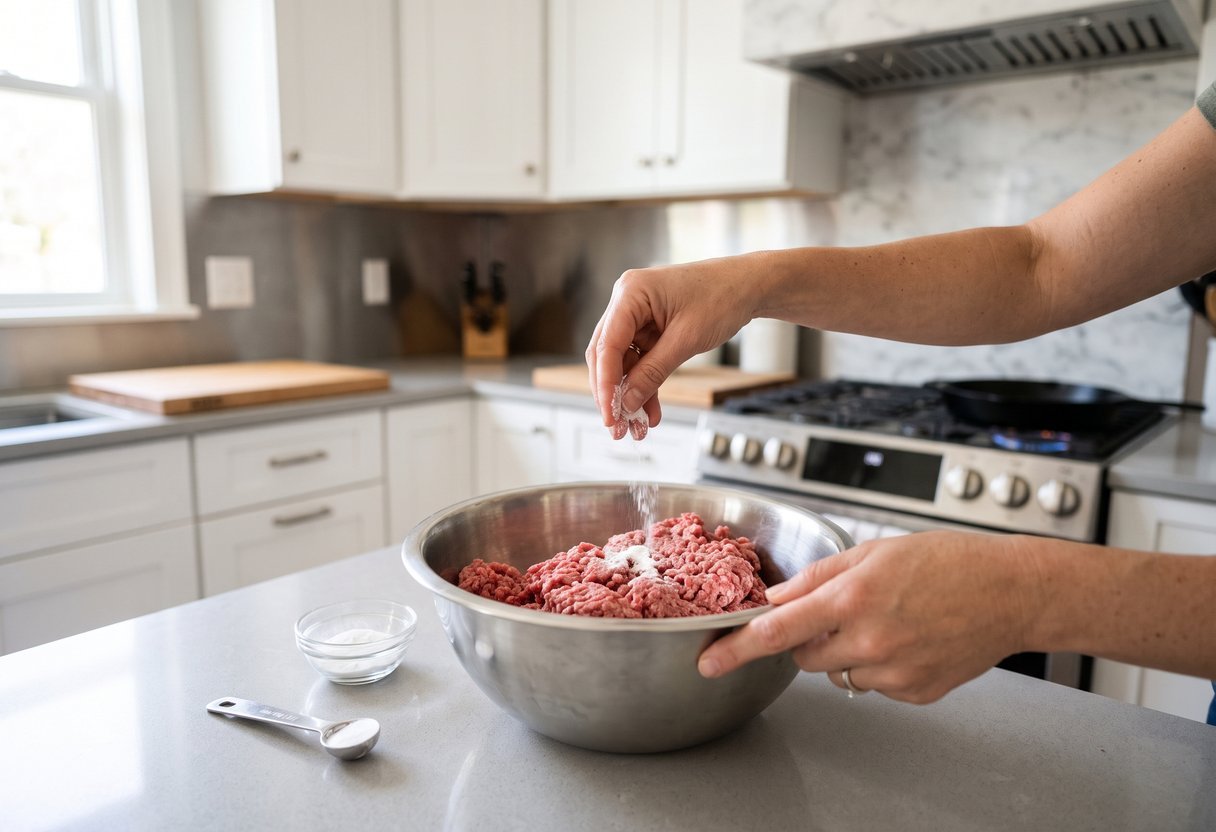
Mix baking soda into raw ground beef before cooking to help it brown instead of turning gray in the pan. Baking soda raises the meat’s surface pH, which slows the rapid protein tightening that squeezes liquid into the skillet. The meat can also stay more tender as it cooks.
When ground beef releases enough liquid to pool around it, that liquid turns to steam. The meat cooks, but its surface cannot brown well while it remains wet. Browning develops flavor through the Maillard reaction, which works best when the meat has direct contact with the hot pan rather than sitting in its juices.
A small measured amount is enough
For 1 pound of ground beef, dissolve 1/4 teaspoon of baking soda in 1 tablespoon of water, then toss the solution evenly with the raw meat. Another commonly used ratio is 1/2 teaspoon of baking soda mixed directly into 1 pound of beef. Either way, let the treated meat rest for about 15 minutes before cooking so the baking soda has time to affect its surface.
Measure rather than adding an unmeasured pinch. More baking soda is not necessarily better: too much can give the beef a slightly soapy taste. The water in the lighter method helps distribute the small amount of baking soda, but it does not replace browning the meat in a hot, uncrowded skillet.
Pan space still matters
Heat a skillet over medium-high heat, then add the treated beef in a layer that leaves room around it. If the beef crowds the pan or liquid begins pooling, cook it in batches instead. Give the meat time to brown against the skillet before stirring and breaking it into smaller pieces.
Baking soda reduces moisture release, but it cannot make a crowded pan dry. This method is most useful for quick-cooking dishes such as tacos and skillet meals, where browned bits contribute directly to the finished dish. Its tenderizing and browning benefits may be less noticeable after the beef spends hours simmering in a soup or sauce.
Gray raw beef is a separate issue
Baking soda addresses gray beef during cooking, not a color change in the refrigerator. Raw ground beef can change color as oxygen interacts with myoglobin, a muscle protein. Color alone does not establish whether the beef is safe to eat, and baking soda does not make questionable meat safe.
Keep raw ground beef at 40°F (4°C) or below, and cook it to a safe internal temperature of 160°F (71°C), checked with a food thermometer. If the goal is browned beef for dinner, start with properly stored meat, measure the baking soda, and leave enough space in the skillet for moisture to evaporate.