You carve the Thanksgiving turkey, only to find the breast dry while everyone waits for dinner. A small decision earlier in the process could make the difference, and it’s one many home cooks miss.
The oven timer beeps, and the turkey breast looks golden through the oven door. But a set cooking time and browned skin do not guarantee tender slices. An easy-to-overlook step before roasting can help protect the breast from drying out. It takes little hands-on effort, but it cannot be rushed at the last minute.
Dry brining helps turkey breast stay juicy
The step is dry brining: rubbing turkey breast with salt and refrigerating it before cooking. It gives the salt time to move into the meat, helping the breast retain moisture as it roasts. Chef and test-kitchen guidance also emphasizes resting the cooked turkey before slicing it.
Turkey breast is lean, so it has little fat to buffer it from overcooking. As the meat heats, its proteins tighten and squeeze out moisture. Dry brining can help, but it cannot make an overcooked breast juicy again.
A measured salt rub needs time to work
For a bone-in or boneless breast, use about 3/4 teaspoon of salt per pound. A 4-pound (1.8 kg) breast needs 3 teaspoons. Dried herbs, spices or citrus zest can be mixed with the salt for flavor, but they are optional.
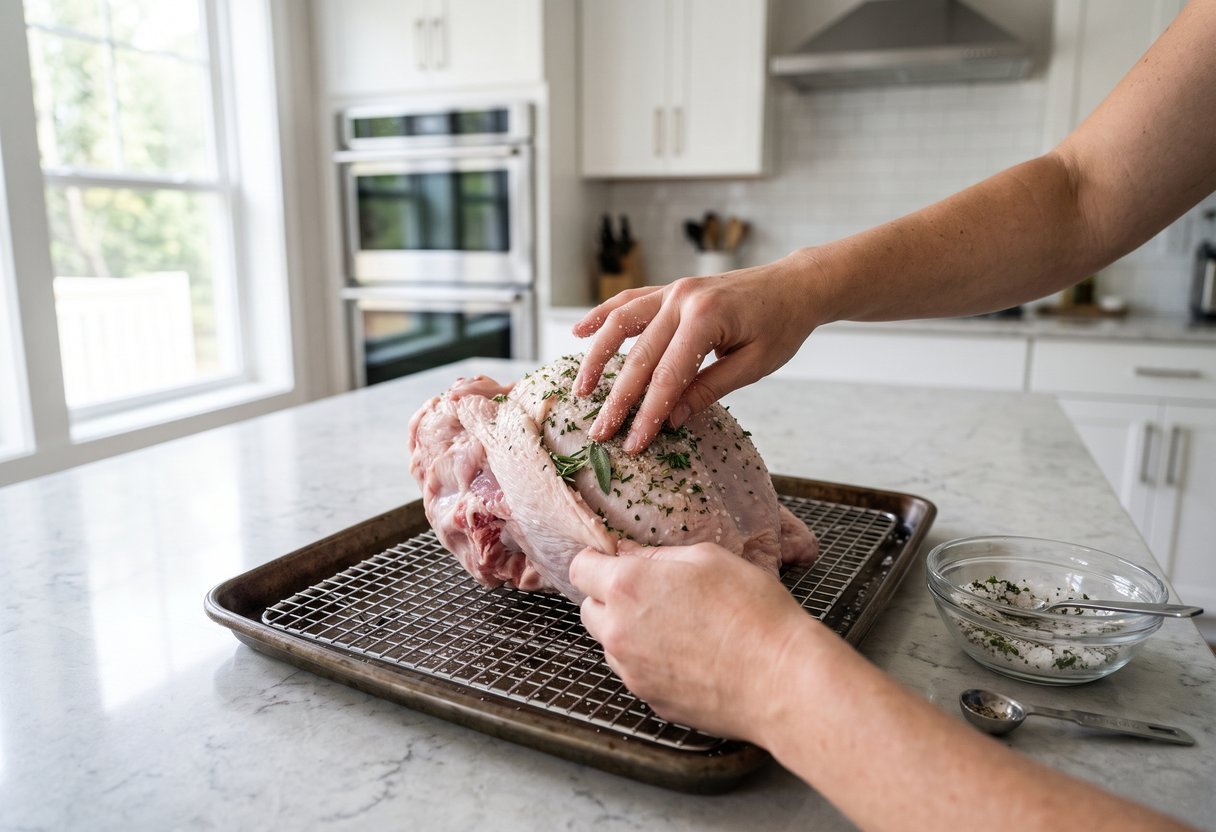
Rub the mixture evenly over the breast, including under the skin where possible. Set the turkey on a rack or baking sheet, then refrigerate it uncovered for at least 6 hours and up to 24 hours before cooking. Keep it separated from foods that will be eaten without cooking, and clean surfaces and utensils that touch the raw turkey.
At first, salt draws moisture to the surface. That moisture dissolves the salt, which then moves into the meat and changes how its proteins hold water during cooking. A shorter rest gives that process less time to work. Some dry-brine recipes include baking powder for crispier skin, but it is unnecessary when the breast will cook covered, as it would in a braise.
Resting helps only after safe cooking
Roast the breast according to a recipe, checking the thickest part with a food thermometer. The USDA says turkey must reach a minimum internal temperature of 165°F (74°C). Although the temperature may rise after the turkey leaves the oven, do not assume resting will bring an undercooked breast to that minimum.
Once it reaches 165°F (74°C), remove the breast from the heat, tent it loosely with foil and rest it for 15 to 20 minutes before carving. As the meat cools slightly, its fibers relax and more juice stays in the slices rather than spilling onto the cutting board. Resting does not replace a thermometer check or undo moisture lost during overcooking.
A dry breast still has useful options
If the breast turns out dry, slice it thinly and serve it with gravy or a creamy sauce. Salt and resting cannot restore moisture that cooking has already driven out, but sauce makes each bite less dry.
Refrigerate leftovers promptly in a sealed container; a little broth can help keep sliced turkey moist. Do not leave raw or cooked turkey at room temperature for more than 2 hours. For the next breast, start the salt rub the day before and keep the thermometer ready for roasting.