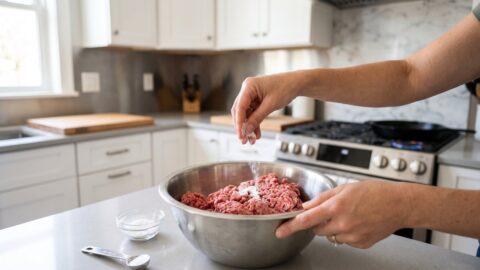
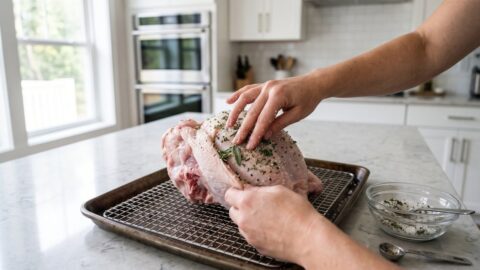
You may have watched someone carry raw chicken to the sink while dinner ingredients crowd the counter. That ordinary moment raises a food safety question many home cooks never think to ask.
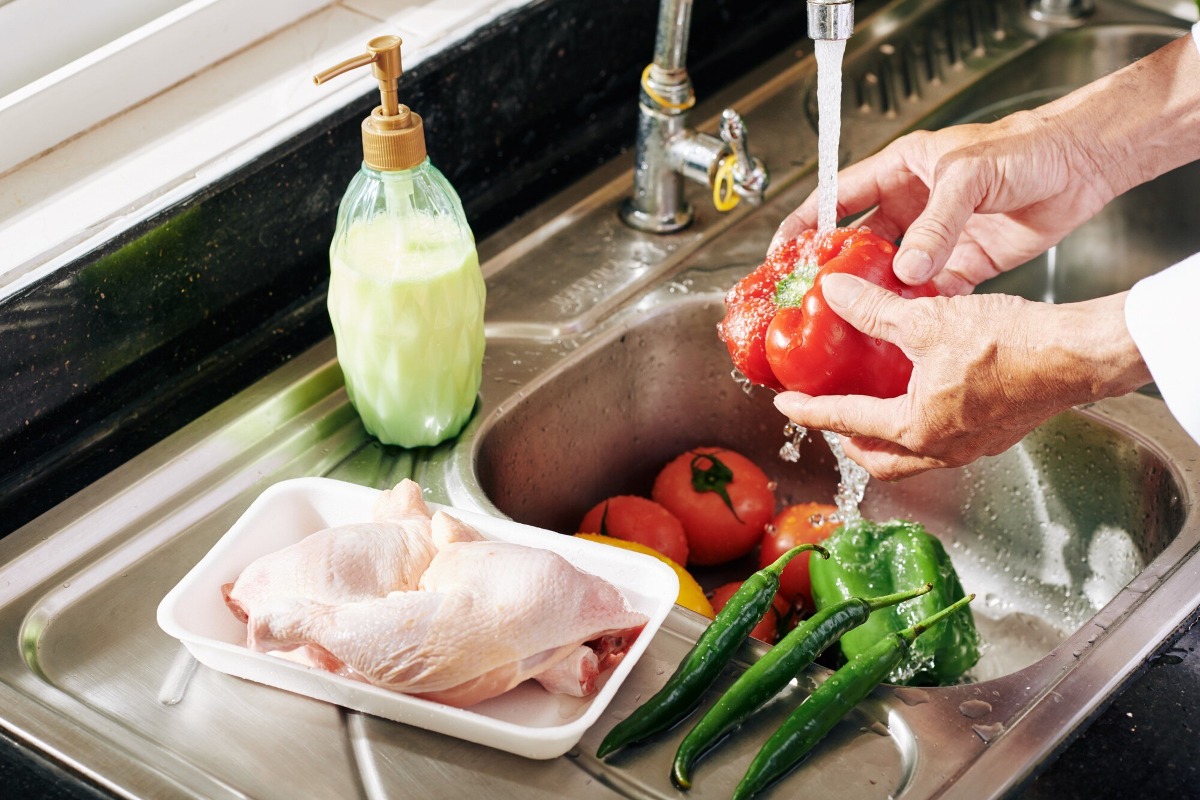
The salad is ready to serve when the chicken comes out of its package for dinner. Giving the chicken a quick rinse may feel like careful prep, but that familiar step does not necessarily make the meal safer. The reason has less to do with how the chicken looks than with what happens during the few minutes before it goes into the pan.
Rinsing raw chicken spreads bacteria instead of removing them
USDA food safety experts recommend cooking raw chicken without washing it first. Rinsing can move loosely attached bacteria from the chicken into the sink and onto nearby food or surfaces, while cooking chicken to a safe internal temperature is the reliable way to destroy harmful bacteria.
Water splashing off raw poultry can carry bacteria as far as 3 feet (91 cm) from the sink. That puts countertops, utensils and ready-to-eat foods at risk of contamination. Salt water, vinegar and lemon juice do not make raw chicken safe by washing away or destroying bacteria such as Salmonella and Campylobacter.
Studies show that skipping the rinse is only 1 part of safe handling
In a USDA observational study conducted with RTI International and North Carolina State University, 60% of participants who washed or rinsed raw poultry had bacteria in their sinks afterward. Among those who attempted to clean the sink, 14% still had bacteria there. The study documents contamination during kitchen tasks; it does not mean every sink or cleaning attempt will have the same result.
The USDA study also found that 26% of participants who washed poultry transferred bacteria to ready-to-eat salad lettuce. Bacteria reached lettuce for 31% of participants who did not wash poultry, too. Those figures should not be read as evidence that washing is safer: hands, utensils and work surfaces can spread raw poultry juices even without a rinse.
A separate 2022 North Carolina State University study involved 300 home cooks who had previously said they washed poultry. More than 25% still contaminated salad with raw poultry after an educational intervention recommending against washing. The finding underscores the need for careful handling, but it does not show that advice alone prevents contamination in every kitchen.
Cooking and clean hands provide better protection
Keep raw chicken away from foods that will not be cooked, and wash hands with soap and water for at least 20 seconds before and immediately after handling it. Clean utensils and surfaces that touch raw poultry promptly with hot, soapy water, then use a kitchen-safe disinfectant according to its label. Never mix bleach with vinegar or ammonia, and keep cleaning products away from children and pets.
Cook the chicken and check the thickest part with a food thermometer. It must reach 165°F (74°C) internally; the appearance of the meat is not a substitute for that measurement. Cleaning reduces cross-contamination, but it cannot replace cooking to a safe temperature.
Brined poultry is a narrow exception
The USDA advises rinsing poultry after brining to remove brine before cooking. For unbrined chicken, a rinse offers no comparable purpose and adds splash risk. If brined poultry must be rinsed, keep other food and clean utensils away from the sink, then clean and disinfect the sink and surrounding surfaces.
Washing chicken was more useful when poultry commonly arrived with visible dirt or feathers; modern processed chicken does not need that treatment. For an everyday package of raw chicken, leave the tap off, handle it carefully and use a thermometer before serving.