You open the fridge to make breakfast and grab eggs from the spot you’ve always used. It seems convenient, but that familiar routine raises a question worth asking before you crack the next one.
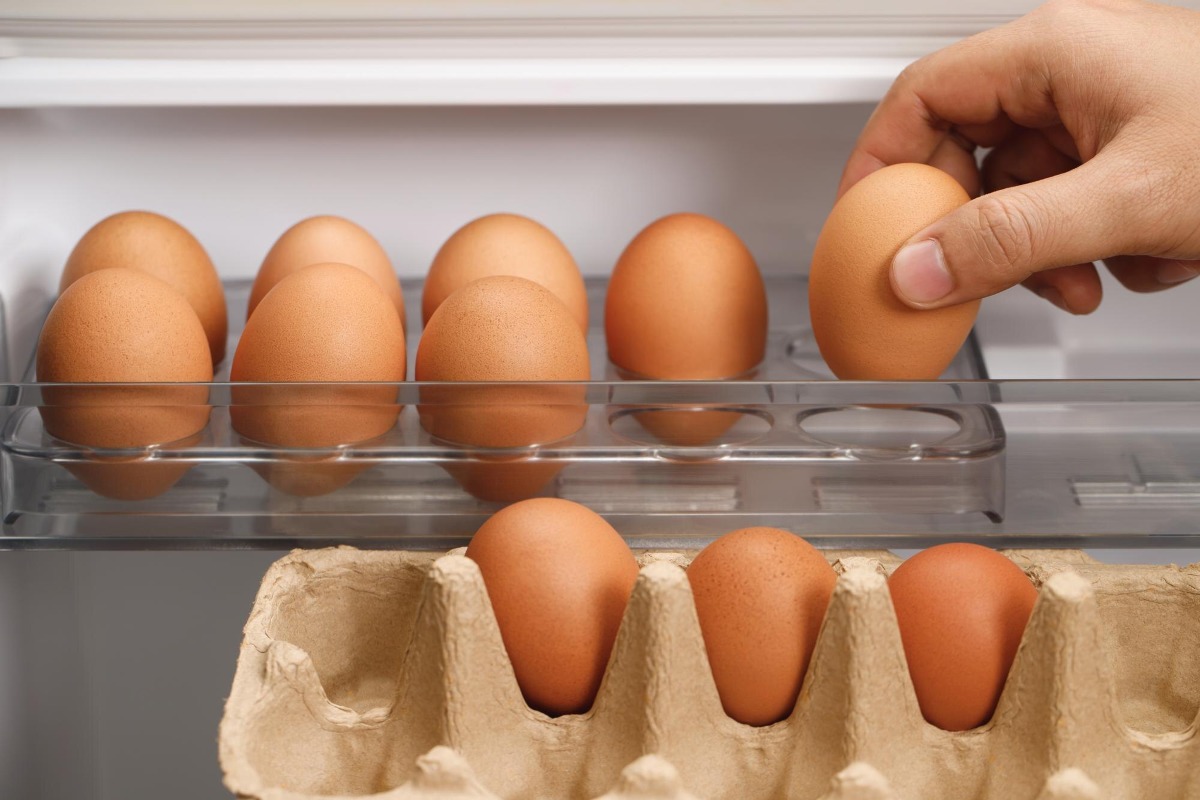
After a grocery run, the egg carton is the last thing left on the counter. The built-in egg holder looks like an easy choice, but a convenient spot is not always the best one for keeping eggs fresh. A small change in where the carton goes can make a difference.
Eggs stay fresher on a shelf than in the fridge door
Store eggs in their original carton on a shelf in the main refrigerator compartment, preferably toward the back, where the temperature stays more consistent. Built-in door holders may be convenient, but the door warms more often as it opens, making it a less reliable place for eggs.
That difference matters even when the refrigerator feels cold. Eggs need steady refrigeration to maintain their quality, and repeated temperature changes make the door a poor spot for perishable foods.
The door has more temperature swings
Opening the refrigerator exposes the door bins to warmer room air. The USDA Food Safety and Inspection Service advises storing eggs on a shelf because door-bin temperatures fluctuate more than temperatures inside the main compartment.
Commercially sold eggs in the United States are washed before sale, removing the shell’s natural protective coating. Consistent refrigeration is especially important for these eggs because washing leaves them more vulnerable to contamination. Moving the carton off the door reduces temperature changes, but it does not make an overly warm refrigerator safe.
The original carton and a cold shelf protect quality
Leave eggs in their original carton rather than transferring them to a door holder. The carton helps protect shells from damage and limits exposure to odors from other foods. Place it toward the back of a middle or lower shelf, away from the warmer door.
Keep the refrigerator at 40°F (4°C) or below throughout the unit, and check the temperature with an appliance thermometer rather than relying only on the control setting. University of Illinois Extension recommends keeping eggs inside the refrigerator, not in its door. If a shelf cannot stay at or below 40°F (4°C), changing the eggs’ position alone will not solve the problem.
Refrigeration does not make eggs last indefinitely
The FDA recommends using refrigerated eggs within 3 weeks of purchase for best quality. Guidance for eggs kept in their shells and continuously refrigerated gives a range of 3 to 5 weeks from purchase, but that range is not a reason to keep eggs in a refrigerator that runs too warm. Hard-boiled eggs, peeled or unpeeled, should be used within 1 week when refrigerated.
Discard eggs with cracked shells or an unusual smell. A water test cannot establish that an egg is safe: floating can indicate age, while sinking does not rule out contamination. When storage conditions are uncertain, appearance alone is not a dependable safety check.
Eggs already in the door can be moved
Finding eggs in the door does not automatically mean they must be thrown out. If the refrigerator has stayed at or below 40°F (4°C), the shells are intact, and the eggs are within the recommended storage period, move the carton to a shelf and use the eggs promptly. For the next carton, make room on a cold main shelf before putting groceries away.