The Thanksgiving turkey is out of the oven, the sides are getting cold, and everyone wants a slice. What happens next could make a surprising difference when dinner reaches the table.
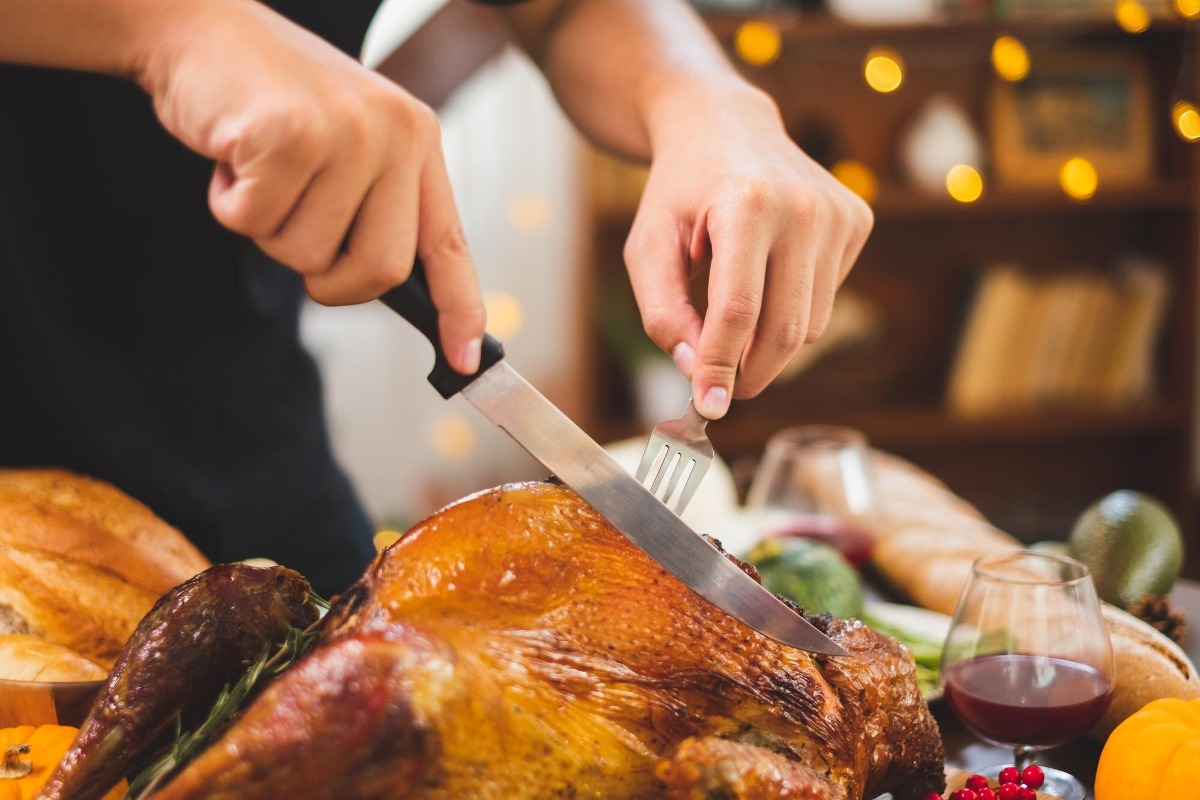
The carving knife is ready on the cutting board, and a platter is waiting for the first slices. Cutting the turkey right away seems efficient, but the meat can end up drier than expected. One small choice before the first cut can make a difference without adding another cooking step.
Carving right away lets turkey juices escape
Let a roasted turkey rest for about 30 minutes before carving so its juices stay in the meat instead of running onto the cutting board. Slicing as soon as the bird leaves the oven releases juices that would otherwise make each serving moister. The pause also gives the turkey time to firm up slightly, making it easier to carve.
During cooking, juices move toward the center of the bird. As the turkey rests, its muscle fibers relax and the juices redistribute. Resting cannot fix meat that has already been overcooked, but it can prevent the immediate loss of juices caused by carving too soon.
Resting time depends on the turkey and the meal
Plan on 30 minutes for a Thanksgiving turkey. That is a practical target, not a single official rule: the USDA says to let the bird stand 20 minutes before removing stuffing and carving. Texas A&M AgriLife Extension recommends 30 to 60 minutes under a foil tent, while other cooking guidance falls within that range.
Build the rest into the serving schedule rather than pulling the turkey from the oven when everyone is ready to eat. A longer rest may suit a larger bird or a meal that is still being finished, but leaving the turkey out indefinitely is not a way to keep it ready for serving. If the meal is substantially delayed, refrigerate the turkey and stuffing promptly instead of extending the countertop rest.
Check the temperature before the rest begins
Before removing the turkey from the oven, use a food thermometer to confirm that the turkey has reached at least 165°F (74°C). If the bird is stuffed, the center of the stuffing must also reach 165°F (74°C). If either is below that temperature, continue cooking and check again; resting is not a substitute for reaching a safe temperature.
The turkey’s internal temperature can rise another 5 to 10°F (3 to 6°C) after it leaves the oven because heat continues moving inward. That carryover cooking is worth anticipating, but the size of the rise varies. It should not be used to guess whether an under-temperature turkey will become safe while it sits on the counter.
A loose foil tent protects heat without trapping as much steam
Once the temperature check is complete, transfer the turkey to a cutting board and drape foil loosely over it. Leave room for steam to escape rather than wrapping the bird tightly; trapped moisture can soften the skin. After about 30 minutes, remove the foil, take out any stuffing and carve.
Keep the thermometer handy if there is any doubt about doneness. The useful habit is simple: verify 165°F (74°C) before the turkey leaves the oven, then allow time for the juices to settle before the first cut.