
Sunday’s pot roast smells great, but the gravy can turn out thin and forgettable just as everyone sits down. If that sounds familiar, one small decision during cooking may be worth a second look.
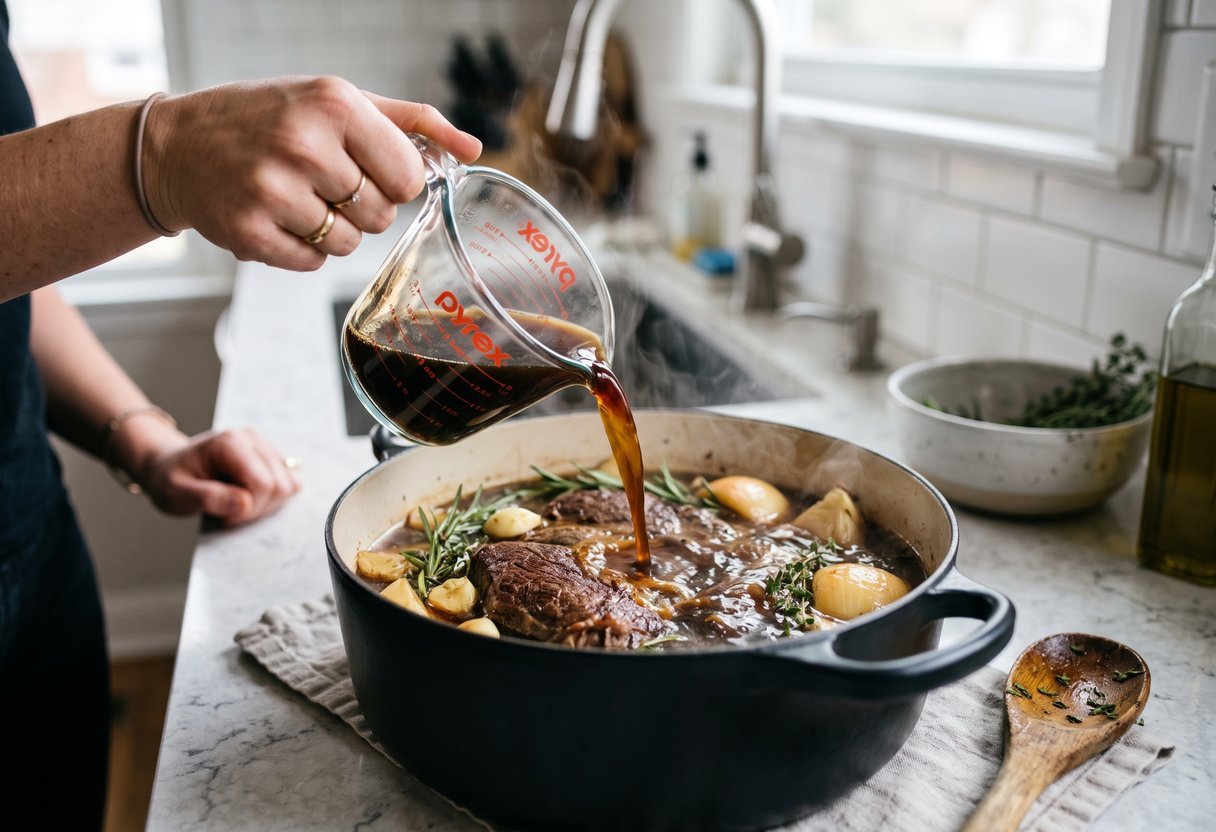
At the grocery store, a chuck roast and a carton of beef broth land in the cart for Sunday dinner. The usual plan is to let hours of cooking do all the work, but time alone cannot build flavor that was never in the pot. One small choice before the lid goes on can make a difference, without adding a complicated step at the end. What works best depends on the flavor the cook wants.
A cup of brewed coffee adds roasted depth to pot roast gravy
Add 1 cup of brewed coffee to the broth for a 3-pound chuck roast. It gives the cooking liquid a deeper, roasted flavor, so the juices left in the pot make a more flavorful base for gravy. Coffee is 1 option, not a required ingredient, and it will not thicken thin broth by itself.
Broth alone may need help becoming gravy
Beef broth, onion, and garlic make a useful braising base, but the liquid left after cooking can taste mild or remain too thin to spoon over sliced beef. Adding a strongly flavored liquid changes the taste of that base; thickening is a separate step if a thicker gravy is wanted.
Coffee can be added before the roast cooks or stirred into gravy while making a roux. Its roasted, slightly bitter taste works best when that flavor sounds appealing. A brief coffee soak is not a reliable way to tenderize raw steak, and coffee should not be counted on to make a tough roast tender without adequate cooking time.
Red wine and pepperoncini brine offer different flavors
For a fruitier gravy, use 1 cup of dry red wine, such as Cabernet or Merlot, with beef broth instead of coffee. As the braising liquid simmers, the sauce can reduce and thicken, though results depend on how much liquid remains. Avoid sweet wine if a savory gravy is the goal, and choose a nonalcoholic option when alcohol needs to be avoided.
Pepperoncini brine adds tangy acidity and a little heat rather than roasted depth. It can also bring considerable salt, so taste the liquid before adding more seasoning; a full cup may be too sharp or salty for some roasts. Coca-Cola is another option some cooks use, but its sweetness can dominate, and carbonation does not make it a dependable tenderizer.
Dry onion soup mix builds a savory base
Dry onion soup mix offers a concentrated onion flavor and can be used with coffee or wine, or with water as the braising liquid. To make a Dutch oven pot roast, brown a 3-pound chuck roast, then add the soup mix, 1 cup of the chosen liquid, and enough broth to come partway up the meat. Bring the liquid to a boil, cover, and simmer over low heat until the roast is tender; Lipton’s water-based onion soup mix method calls for about 2.5 hours.
Check the mix label when sodium or gluten is a concern, since products vary. Using a lower-sodium broth may help keep the finished gravy from tasting overly salty, but it will not remove the salt already in the mix or pepperoncini brine.
Adjust the finished cooking liquid before serving
After the roast is tender, taste the liquid before adding salt. If it tastes weak, reduce it by simmering uncovered; evaporation concentrates flavor but can also concentrate salt. If the flavor is right but the liquid is thin, thicken it separately with a roux rather than adding more coffee or wine.
Keep cooked roast and gravy refrigerated at 40°F (4°C) or below, and refrigerate leftovers within 2 hours. For the next pot roast, choose coffee for roasted depth or dry red wine for fruitier flavor, then decide whether the finished liquid needs reducing or thickening.



Pepperoncini makes it a Mississippi pot roast. yuk, yuk, yuk.