A Sunday roast chicken looks promising until you carve into dry meat beneath skin that never quite crisps. Before your next bird goes in the oven, take another look inside your fridge.
Halfway through roasting, the top of the chicken is deep brown, but the skin along the sides still looks pale. Turning up the heat or leaving it in longer can overcook the breast before the rest catches up. The next step starts before the chicken goes in the oven, with something already in many refrigerator doors.
Mayonnaise helps chicken skin brown while the meat stays moist
A thin coating of mayonnaise can help roast chicken develop crisp, browned skin while keeping the meat moist. It works because mayonnaise brings oil and egg yolk together in a coating that clings to the chicken as it cooks.
Roast chicken can have dry breast meat even when its skin looks pale or feels rubbery. Mayonnaise addresses both problems, but it cannot make up for overcooking: the chicken still needs to come out of the oven when it reaches a safe temperature.
Oil promotes browning, and the coating holds moisture
Mayonnaise is an emulsion of vegetable oil, egg yolk, and vinegar or lemon juice. Its oil helps the skin brown and crisp in the oven, while proteins in the coating help hold moisture near the meat. Browning involves the Maillard reaction, which occurs when proteins and sugars react under heat.
The emulsion also holds seasonings against the chicken instead of letting them run straight into the pan. Herbs, garlic, lemon juice, or spices can be mixed into the mayonnaise before it goes on the bird. These additions change the flavor, not the need to check doneness with a thermometer.
A flattened chicken cooks more evenly
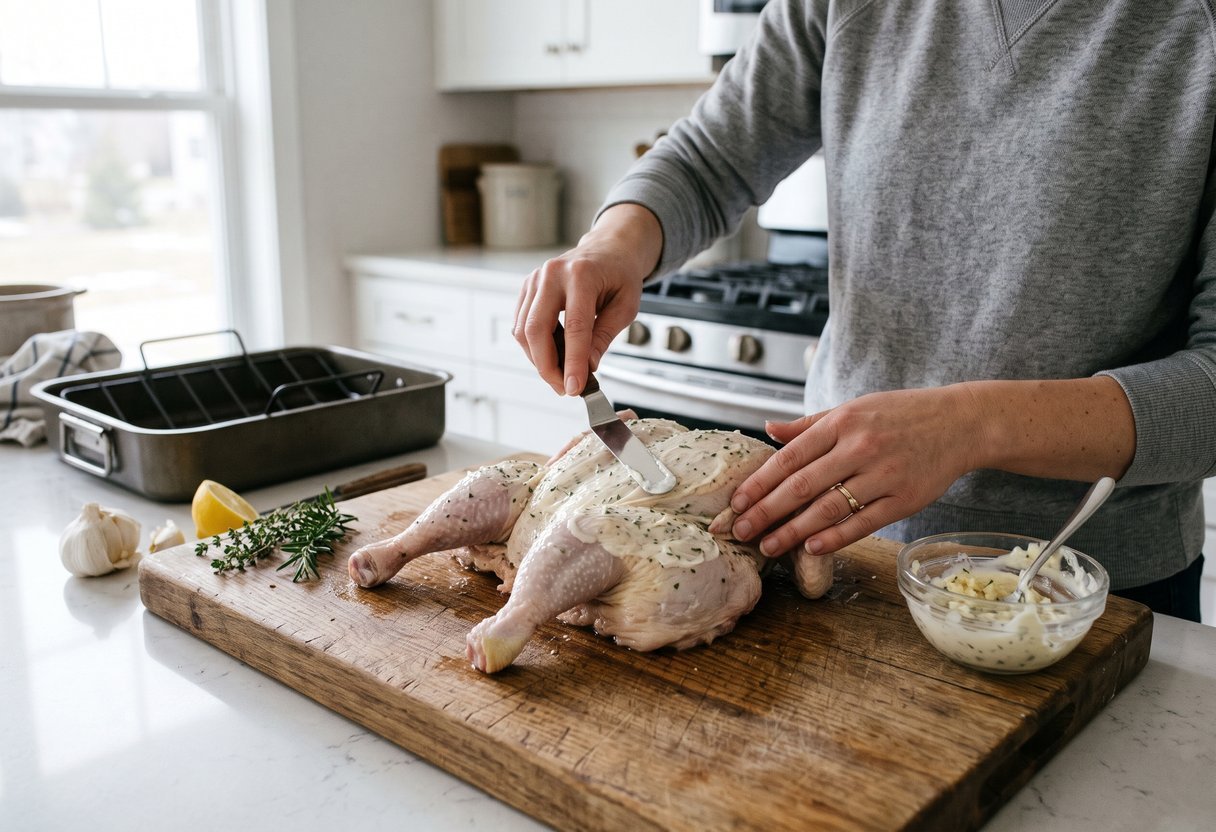
For a 4- to 5-pound (1.8- to 2.3-kg) chicken, preheat the oven to 450°F (230°C). Remove the backbone and press the bird flat, breast side up. This spatchcocked shape helps the chicken cook faster and more evenly than an intact bird.
Mix about 1/4 cup of mayonnaise with herbs or other seasonings, if desired. Gently loosen the skin and spread the mixture underneath it, then apply a thin additional layer of mayonnaise over the outside. Keep utensils that touch raw chicken away from ready-to-eat food.
Roast for 40 to 55 minutes, using that range as a guide rather than a guarantee. The USDA calls for a safe internal temperature of 165°F (74°C) in the innermost part of the thigh and wing and the thickest part of the breast. Let the chicken rest for 10 minutes before carving.
The coating has limits
Mayonnaise can improve skin-on chicken, but skinless cuts cannot gain crispy skin from it. A heavy coating may leave the surface greasy, so spread it thinly rather than piling it on. The fat may encourage browning, but browned skin alone does not show that the meat is safely cooked.
If the skin browns before the chicken reaches 165°F (74°C) in all 3 places, keep cooking and rely on the thermometer, not the clock. For the next roast, start with a flattened bird and a thin coating, then check the breast, thigh, and wing before carving.