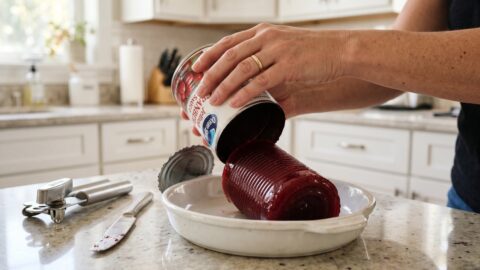
Dinner is an hour away, and the chicken you meant to use is still frozen solid. A familiar kitchen shortcut might seem harmless, but there’s something you can’t tell just by looking at the meat.
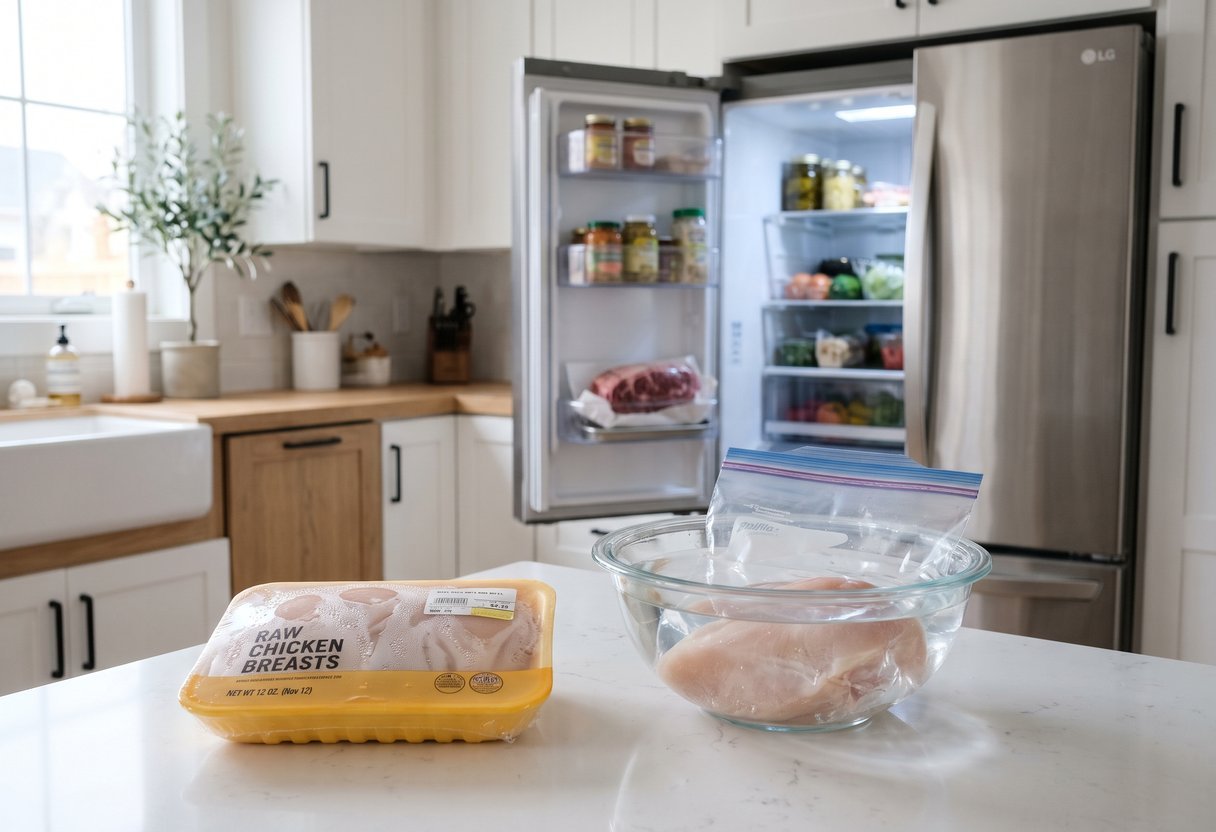
At breakfast, a package of frozen ground beef comes out for tonight’s tacos. Letting the clock do the work seems convenient, but the time spent waiting does not tell the cook whether the meat stayed at a safe temperature. A small change in how the thawing time is handled can make dinner prep safer.
Countertop thawing puts the surface of meat at risk
Thawing meat, poultry, or seafood on the counter is unsafe because the outside can warm enough for bacteria to grow while the center remains frozen. The USDA recommends 3 alternatives: thawing in the refrigerator, in cold water, or in the microwave. A package that still feels frozen in the middle is not necessarily safe on the outside.
Countertop thawing may seem convenient when dinner is a few hours away, but it offers no reliable way to keep the food’s surface cold. Moving a package to the refrigerator after it has sat out for hours does not undo bacterial growth that may have occurred. Choose a thawing method based on when the food needs to be cooked, rather than leaving it at room temperature to speed things up.
The outside warms before the center thaws
The USDA’s Food Safety and Inspection Service calls 40°F to 140°F (4°C to 60°C) the temperature Danger Zone. Bacteria grow most rapidly in that range and can double in number in as little as 20 minutes under favorable conditions. That figure describes how quickly growth *can* happen, not a way to calculate whether a particular package is safe.
As frozen food thaws on a kitchen counter, its exposed surfaces can enter that range long before the thickest part softens. Freezing keeps food safe while it remains frozen, but bacteria present before freezing can begin growing again as the food warms. Avoid using the center of a roast or a package of chicken as a guide to how warm its surface has become.
Safe thawing depends on when cooking starts
For advance planning, use the refrigerator. Keep it at 40°F (4°C) or below so the food stays cold throughout thawing. For a turkey, allow approximately 24 hours for every 4 to 5 pounds (1.8 to 2.3 kg); smaller packages may take less time, but thickness matters. A turkey thawed this way can remain refrigerated for 1 to 2 additional days before cooking.
For a faster thaw, use cold water. Put the food in a leak-proof plastic bag, submerge it in cold tap water, and change the water every 30 minutes until thawed. USDA guidance allows about 30 minutes per pound (0.45 kg) for a turkey; a small, 1-pound (0.45-kg) package may take an hour or less. Cook the food immediately after cold-water thawing, and do not rely on torn or leaking packaging to keep water away from it.
The microwave is another option when cooking can begin right away. Follow the appliance’s defrost instructions, then cook the food immediately: microwave heating can start cooking some spots while others remain frozen. It is not a method for thawing now and holding the food for later.
Plan the thaw before taking food from the freezer
These methods offer different schedules, but none makes countertop thawing a safe shortcut. If a package has been left at room temperature for hours, discard it rather than trying to make it safe by chilling it again. For the next meal, move frozen food to the refrigerator ahead of time, or use cold water or the microwave only when cooking will follow immediately.