Heavy cream can turn a thin sauce into something rich and smooth, but it isn’t the only ingredient capable of doing the job. Coconut milk can build a creamy base while bringing its own flavor, making it useful for curries, soups, stews, and sauces where dairy isn’t needed.
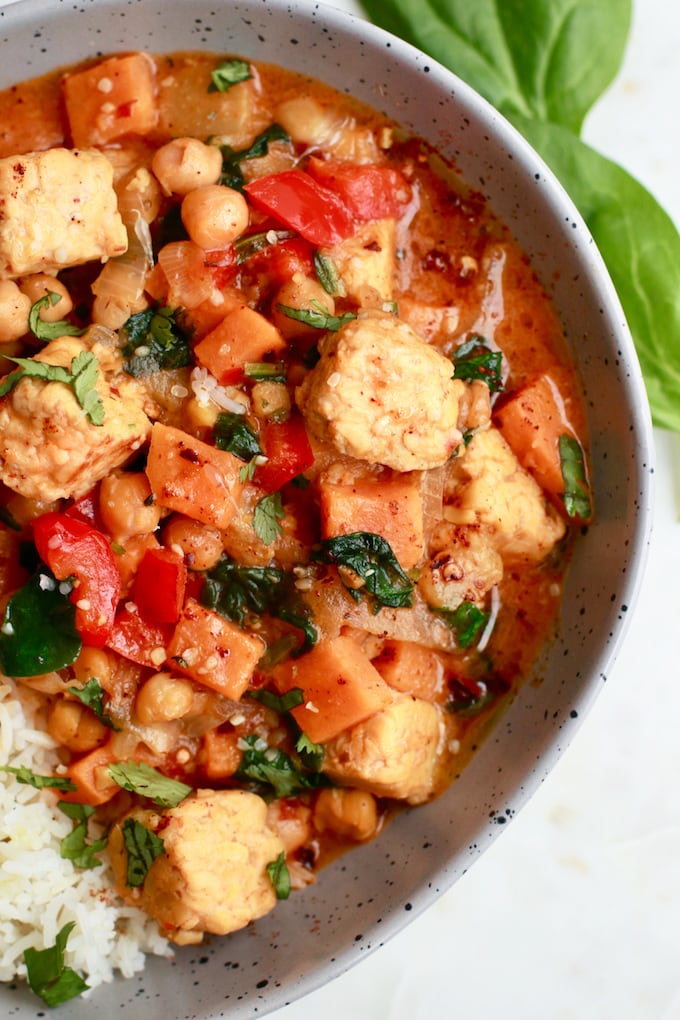
That approach shows up in this Thai red curry stew, which gets its rich base from full-fat coconut milk rather than heavy cream. Red curry paste, lime, garlic, vegetables, chickpeas, and tempeh keep the dish from depending on cream for either flavor or body.
Knowing how ingredients behave this way is useful beyond home cooking. Professional cooks need to understand how fat, heat, acid, seasoning, and texture work together, whether they’re developing a dairy-free dish or adapting food around available ingredients. Those are also practical skills for cooks looking at opportunities such as H2B cook jobs, where working in a commercial kitchen can mean preparing the same dishes with consistent results.
Coconut Milk Can Do More Than Replace Cream
Coconut milk contains enough fat to give a sauce body, but its flavor makes it different from a neutral swap such as milk thickened with flour. That difference works in dishes built around ingredients that already pair with coconut.
Thai red curry is one example. Curry paste brings chile and aromatics, while lime adds acidity that cuts through the rich coconut base. Instead of tasting like a lighter imitation of a cream sauce, the finished dish is built around coconut milk from the start.
Full-fat coconut milk is the better choice when richness is the goal. Light coconut milk contains more water, so the finished sauce may be thinner.
Try the Technique With This Coconut Red Curry

This version takes inspiration from Nutrition in the Kitch’s Thai red curry stew and keeps the same useful idea: coconut milk forms the creamy base while vegetables, chickpeas, and protein turn it into a full meal.
Ingredients
- 1 tablespoon olive oil
- 2 garlic cloves, minced
- 1/2 small onion, sliced
- 1 red bell pepper, chopped
- 1 medium sweet potato, cut into small cubes
- 9 ounces tempeh, tofu, or another protein
- 1 to 2 tablespoons Thai red curry paste
- 1 tablespoon soy sauce or tamari
- 1 14-ounce can full-fat coconut milk
- 1/2 cup vegetable broth
- 1 cup cooked chickpeas
- 1/2 cup pineapple chunks
- Juice of 1/2 lime
- 1 cup spinach
- Cilantro and lime wedges for serving
- Cooked rice, optional
Heat the oil in a large pot over medium heat, then add the onion, garlic, bell pepper, and tempeh. Cook until the onion softens and the tempeh starts to brown.
Add the sweet potato and curry paste and cook for another minute or two. Giving the curry paste brief contact with the hot pan before adding the liquids helps distribute its flavor through the stew.
Pour in the coconut milk and vegetable broth, then stir in the soy sauce. Bring the mixture to a simmer and add the chickpeas and pineapple. Cook until the sweet potato is tender and the sauce has reduced enough to coat the ingredients.
Stir in the spinach near the end so it wilts without spending the entire cooking time in the pot. Finish with lime juice, taste, and adjust the seasoning. Serve as a stew or spoon it over rice, then add cilantro and another wedge of lime.
Richness Comes From More Than Fat
Coconut milk provides the creamy texture, but it isn’t doing all the work. Browning the vegetables and protein creates another layer of flavor before any liquid enters the pot. Curry paste contributes concentrated spices and aromatics, while soy sauce adds salt and savory depth.
Lime plays another role. Rich dishes can taste flat when they have plenty of fat but little acidity. Adding lime toward the end gives the coconut-based sauce contrast without thinning it with more liquid.
This combination matters more than trying to find one ingredient that behaves exactly like heavy cream. Coconut milk supplies richness, while browning, seasoning, curry paste, and acid build the flavor around it.
Coconut Milk Isn’t a Swap for Every Cream Sauce
Coconut milk has a distinct taste, so replacing heavy cream cup for cup won’t work in every recipe. Alfredo sauce, for example, will change character if coconut becomes one of its dominant flavors.
Curries, lentil dishes, sweet potato soups, pumpkin soups, and some spicy sauces give coconut milk more room to work. Instead of hiding the coconut flavor, the other ingredients support it.
That is the more useful lesson to borrow from a professional kitchen: don’t replace an ingredient just because the texture looks similar. Choose a substitute that makes sense with the rest of the dish.
Would you use coconut milk instead of heavy cream in a savory recipe?