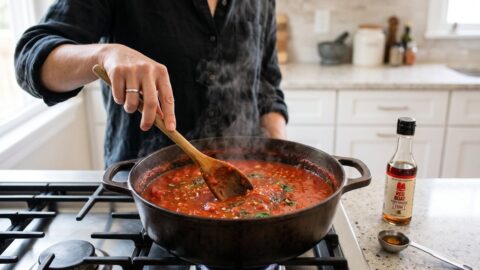
On a busy weeknight, chicken and salad ingredients can crowd the counter while dinner comes together. A small decision in that familiar scramble may be worth a second look.
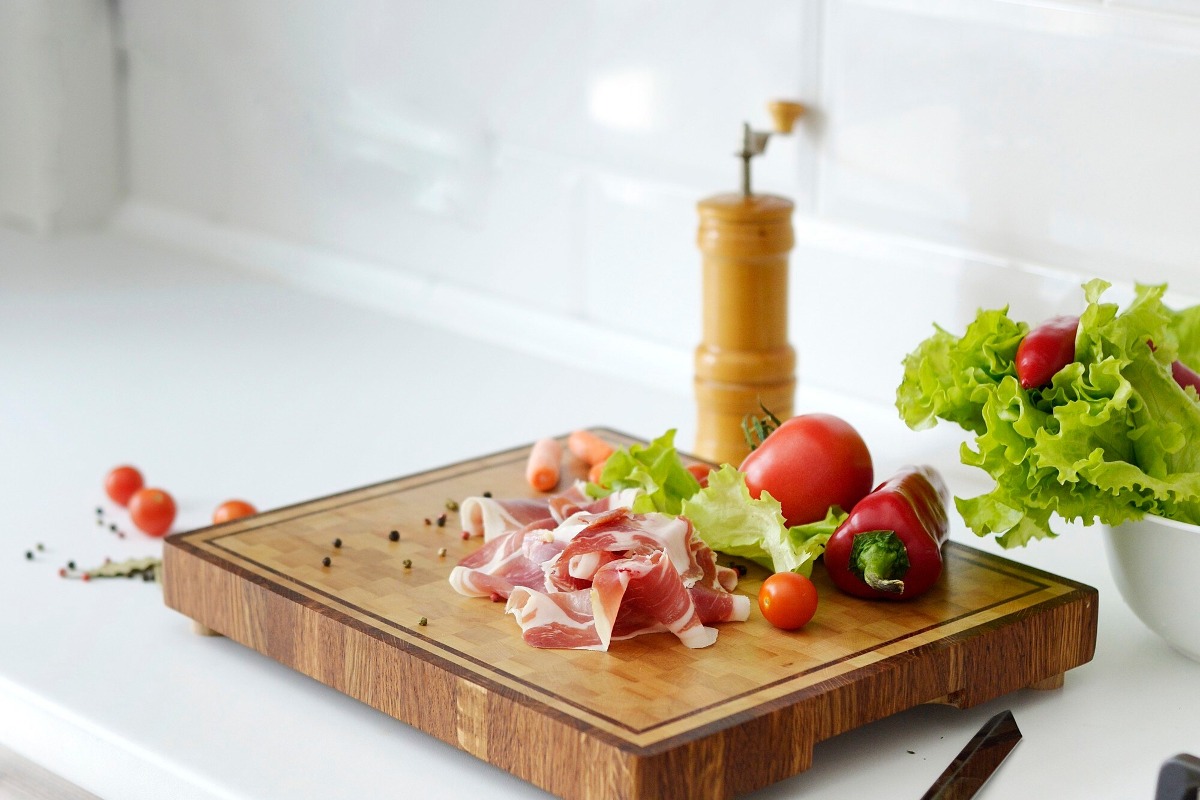
Raw fish goes into the pan, and the next task is chopping cilantro for the topping. The prep area may look clean after a quick wipe, but that does not necessarily make it ready for food that will be eaten uncooked. A small choice made before prep begins can help keep the routine safer without complicating dinner.
Separate boards keep raw juices off ready-to-eat food
Keep 1 cutting board for raw meat, poultry, and seafood and a different board for vegetables, fruit, bread, and other foods that will not be cooked. This separation helps keep raw juices and the bacteria they may carry from reaching food that will be eaten without further cooking. A board can look clean even when it needs washing.
The CDC recommends separate boards or plates for raw animal foods and foods that will not be cooked. The same distinction matters when preparing a salad alongside chicken or slicing bread after trimming raw fish: the food eaten as-is has no later cooking step.
Bacteria can move with a knife or a splash of juice
Cross-contamination does not require placing vegetables directly on top of raw meat. Juices left on a board can reach the next food cut there, while a knife used for raw poultry can carry contamination to produce if it is not washed first. Moisture on the work surface makes those juices easier to spread.
Separate boards reduce that particular route of transfer, but they do not make the whole kitchen safe on their own. Hands, knives, countertops, and plates can also carry raw juices to ready-to-eat food. Keep raw foods and their packaging away from prepared food as work continues.
A simple board system is easier to follow
Set aside 1 board for raw meat, poultry, and seafood, and another for produce and bread. A consistent color system can help everyone in the household remember which is which; the colors themselves do not provide any protection. If more boards are available, separate ones for poultry, seafood, and other raw meat can further reduce mix-ups.
When only 1 board is available, cut foods that will be eaten raw first and move them away from the work area before cutting raw meat. Before using that board again for ready-to-eat food, wash it thoroughly with hot, soapy water and sanitize it. Wash the knife and any countertop touched by raw juices, too.
Cleaning still matters with separate boards
After raw meat, poultry, or seafood touches a board, wash the board with hot, soapy water. USDA FSIS guidance also calls for sanitizing cutting boards with a solution of 1 tablespoon (15 mL) of unscented liquid chlorine bleach in 1 gallon (3.8 L) of water. Follow the bleach label’s contact-time directions, rinse thoroughly with clean water, and let the board dry.
Never mix bleach with vinegar, ammonia, or other cleaners, and keep the solution away from children and pets. Replace a board with deep grooves or significant damage that makes thorough cleaning difficult. Neither wood nor plastic is a substitute for washing after contact with raw foods.
Contaminated ready-to-eat food should be discarded
If raw meat juices reach a salad, sliced fruit, or another food that will be eaten without cooking, discard that food rather than trying to rinse it clean. Wash and sanitize the affected board or surface, and wash hands after handling raw meat, poultry, or seafood. For the next meal, put the ready-to-eat foods on their own board before opening the raw protein.