You grab a can of pumpkin for Thanksgiving pie, assuming it starts with the same orange pumpkins piled outside grocery stores. But the familiar label may leave you with the wrong picture of what’s inside.
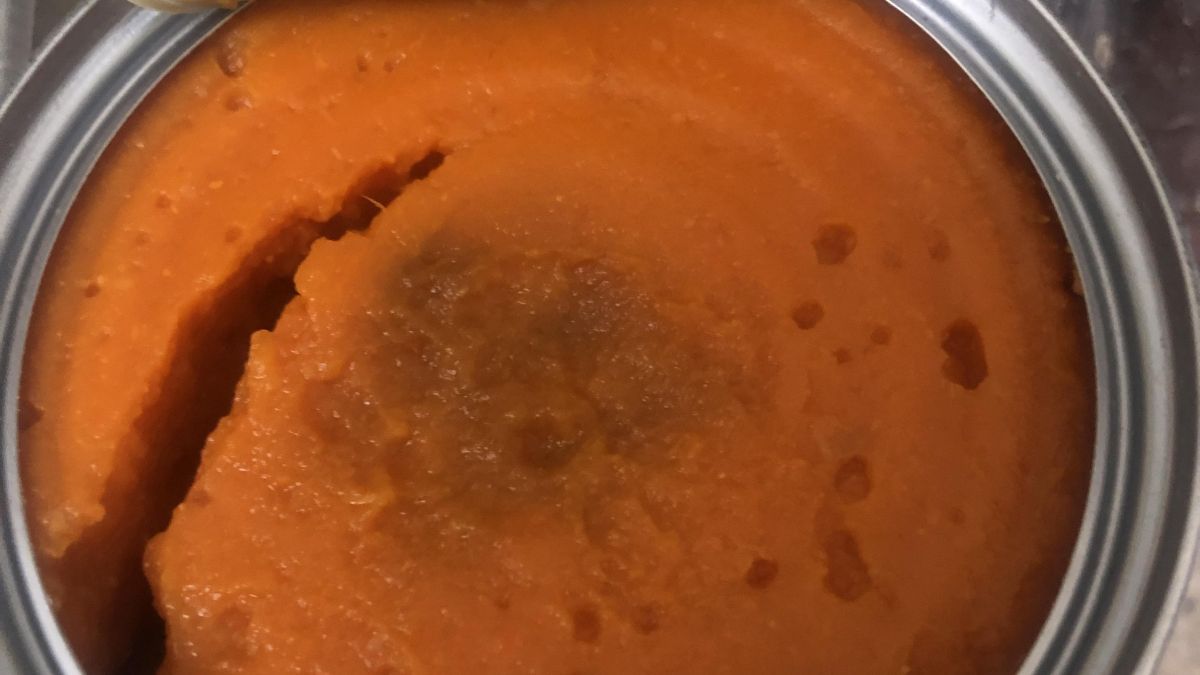
A spoonful of canned pumpkin holds its shape in a measuring cup, with none of the stringy bits familiar from carving a pumpkin. The smooth texture raises a question that the front label does not quite answer: what went into the can? A small distinction behind that familiar name helps explain the difference.
Most canned pumpkin is not made from carving pumpkins
Most canned pumpkin sold in the U.S., led by Libby’s, is made from Dickinson pumpkin, a tan, oblong variety rather than the round orange pumpkins used for jack-o’-lanterns. Dickinson is chosen for the taste and texture that make it useful as a baking puree. That difference matters most in fall, when a can of pumpkin may be headed for a Thanksgiving pie.
The word “pumpkin” on the label can bring a carving pumpkin to mind, but it does not promise that particular shape or variety. The can contains a prepared puree, so its consistency matters more to a recipe than how the fruit looked in the field.
Dickinson pumpkin is closer to butternut squash
Dickinson pumpkin, also called Dickinson squash, is classified as Cucurbita moschata, a close relative of butternut squash. Its tan skin and oblong, football-like shape set it apart from the familiar orange carving pumpkin, which is typically Cucurbita pepo.
Libby’s says it uses Dickinson pumpkin rather than a blend. The company describes its taste and texture as the reasons for that choice. Some other brands may use mixtures of winter squashes, so a can labeled “pumpkin” does not necessarily contain the same variety as another brand’s can.
Federal labeling policy allows sweet squash in canned pumpkin
The FDA has allowed certain sweet, golden-fleshed squashes to be labeled “pumpkin” for decades. It advised canners of that approach in 1938, and its 1988 pumpkin labeling policy says the agency will not take action solely over that name for the squash and mixtures it describes.
That policy discusses field pumpkin and certain varieties of sweet squash; it does not specifically name Dickinson. Separately, the USDA uses one canned pumpkin and squash standard to grade qualities such as color, consistency, defects and flavor. USDA grades assess product quality; they are not a guarantee that every can carries a grade or that an opened can can be stored indefinitely.
The label describes a useful ingredient, not a carving pumpkin
The labeling can feel surprising because shoppers may picture a jack-o’-lantern when they read “pumpkin.” It does not mean the puree is an imitation food or that the name alone signals a safety problem. The meaningful difference for home cooks is the variety used and the resulting taste and texture.
A carving pumpkin is not the best comparison for baking. Canned puree offers a ready-to-use consistency, while homemade puree can vary with the pumpkin and how much moisture remains after cooking.
Home cooks can choose canned puree or a pie pumpkin
For recipes calling for canned pumpkin, the canned puree remains a practical choice. Shoppers who want to prepare their own can look for smaller pumpkins labeled “sugar pumpkin” or “pie pumpkin,” rather than assuming a large carving pumpkin will produce the same result.
Pie pumpkins can be roasted and pureed, but the finished puree may contain more moisture than the canned version and change a batter or filling. For predictable baking, choose the puree the recipe specifies; refrigerate any opened canned puree promptly instead of leaving it on the counter.