You can follow the same mashed potato recipe every Thanksgiving and still end up with a bowl that feels heavy or gluey. The difference might begin before you even turn on the stove.
At the grocery store, a bag of familiar potatoes lands in the cart for Sunday dinner without a second thought. Later, an extra splash of cream may loosen the mash, but it cannot undo the texture the potatoes developed while cooking. That makes the choice in the produce aisle worth a closer look. One less-familiar option could make the next bowl creamier without changing the recipe.
Yukon Gold potatoes make creamy mashed potatoes
Yukon Gold potatoes are a strong choice for creamy mashed potatoes because they break down readily and absorb cream and butter without losing their naturally rich flavor. Russets are better suited to a light, fluffy mash, while waxy red potatoes hold their shape more firmly and can leave a mash chunky.
The difference comes down largely to starch and moisture. Russets are high in starch and can turn gluey if worked too much; red potatoes are lower in starch and do not break down as easily. Yukon Golds fall between them, giving cooks a smooth texture without having to mash aggressively. In 1 roundup, all 5 chefs asked to pick a potato for mashed potatoes chose Yukon Gold, specifically for creamy results. That is a small group of opinions, not a rule for every style of mash.
Yukon Golds bring flavor as well as texture
Yukon Golds have a mild buttery flavor and golden-yellow flesh, so the finished potatoes look and taste rich even before the additions go in. Their balance of starch and moisture also helps them take up cream and butter while staying smooth.
The variety began as a cross between a North American white-fleshed potato and a South American yellow-fleshed selection. Plant breeder Garnet “Gary” Johnston developed it at the University of Guelph, and it was released in Canada in 1980. The breeding history helps explain why it sits between fluffy and waxy potatoes in the kitchen, though careful cooking still matters more than the name on the bag.
Gentle cooking keeps the mash smooth
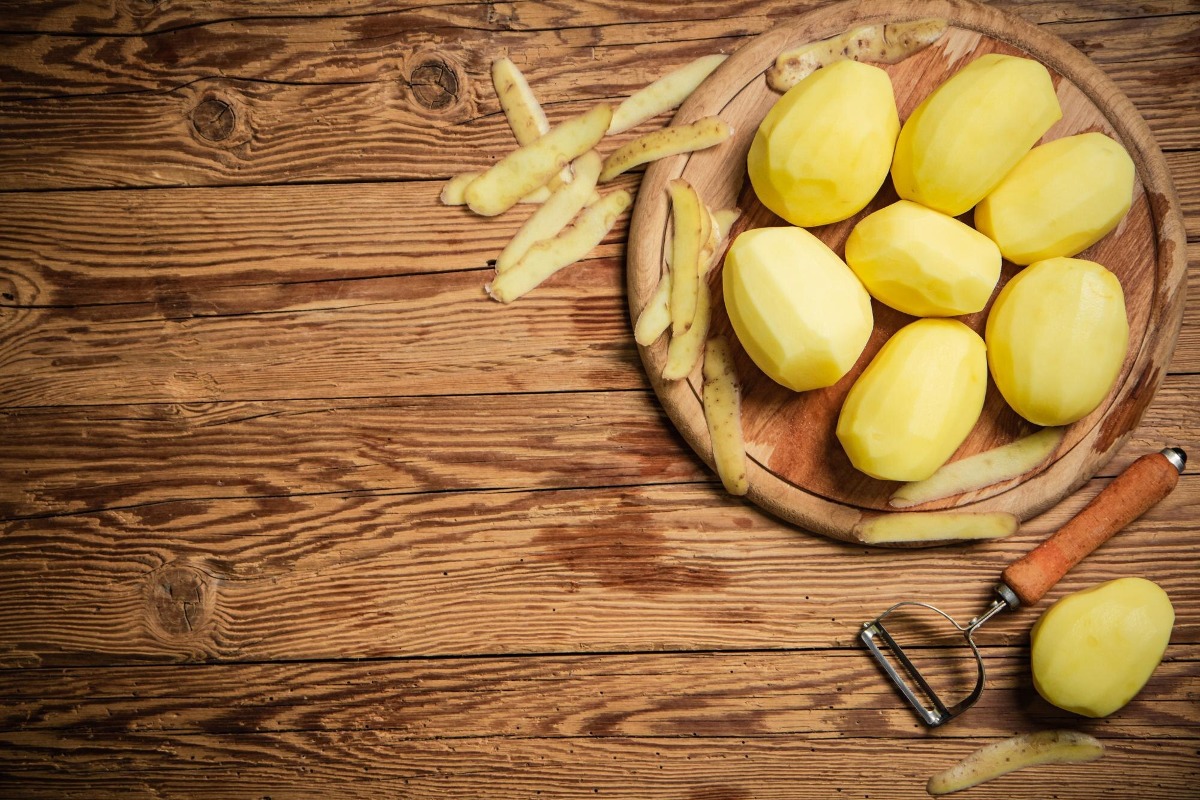
Peel the potatoes for a uniformly smooth mash, then cut them into roughly 2-inch (5 cm) chunks. Put the chunks in a pot, add enough cold water to cover them, and bring the water to a gentle boil. Starting cold gives the centers time to cook before the outsides become too soft.
Cook until a fork slides into a chunk easily, typically 15 to 20 minutes, then drain. Let the potatoes sit for 1 to 2 minutes so surface moisture can evaporate; excess water can thin the mash before any cream is added.
While the potatoes are still warm, use a masher, ricer, or food mill just until they are smooth. Fold in warm cream and melted butter in small additions, stopping when the consistency is right. A blender or food processor can work the potatoes too hard, releasing starch that makes the mash gummy.
The best choice depends on the dish
Yukon Gold is not the best answer for every potato preparation. Choose russets when the goal is a fluffier mash, or when making fries or hash browns. Red potatoes can suit a more rustic dish where distinct pieces and skins are welcome.
Do not keep boiling potatoes that are already fork-tender: overcooked pieces can release more free starch and turn gluey when mashed. If the chunks are still firm in the center, continue cooking rather than trying to mash out the lumps. Refrigerate leftovers promptly, especially after cream and butter have been added.
A troubled mash can still be useful
If the potatoes seem dry, fold in a little more warm cream or melted butter, then stop mixing. Gluey mash cannot be made fluffy again; use it in potato cakes or stir it into soup instead. For the next batch, choose Yukon Golds for creaminess and mash only as much as needed.