At Thanksgiving, a guest who can’t eat wheat can make the familiar stuffing dish feel suddenly complicated. Yet some American families have been handling that problem since long before specialty products filled grocery shelves.
A Thanksgiving cook sets a baking dish on the counter and realizes the bag of bread cubes never made it home. A trip back to the store might seem necessary, but Southern cooks have long made holiday dressing without relying on that bag. The alternatives vary by region, and the difference is more than a simple ingredient swap.
Cornbread and rice take the place of white bread
Southern Thanksgiving tables offer 2 alternatives to white-bread stuffing: cornbread dressing across much of the South and rice dressing in Cajun Louisiana. Both bring a grain-based side dish to the meal, but they are distinct traditions with different textures and ingredients.
“Without bread” needs a distinction here. Cornbread dressing contains cornbread, so it is not bread-free in the literal sense; it replaces the white bread used in many stuffing recipes. Rice dressing contains neither white bread nor cornbread. Both can suit a gluten-free table, provided every ingredient is checked.
Cornbread dressing has roots in kush
Cornbread dressing traces part of its history to kush, also called kusha, a cornbread-based dish made by enslaved African Americans in the South. Cooks stretched rationed cornmeal and other available staples into a filling meal. Kush was sometimes called “Confederate cush” during the Civil War, but its history begins with the people who made it under slavery.
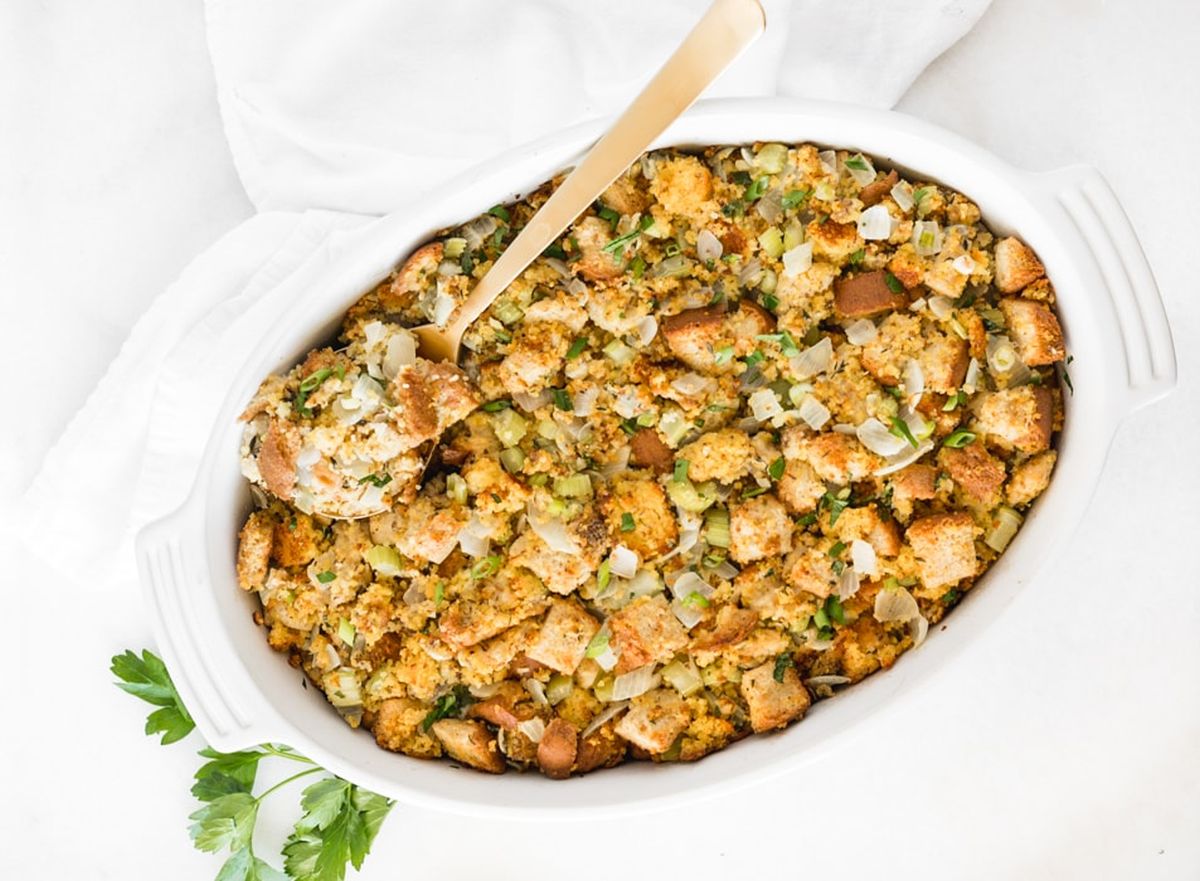
Native American cornbread traditions also form part of this dish’s longer history. Today, Southern-style dressing commonly pairs crumbled cornbread with onion, celery, sage, butter, and broth. The crumbs absorb the liquid and seasonings, creating a moist dish that remains more crumbly than a typical white-bread stuffing.
Plain cornmeal is made from corn and is naturally gluten-free, but that does not make every cornbread gluten-free. Self-rising cornmeal and packaged cornbread mixes may contain wheat flour. A gluten-free dressing needs cornbread made with gluten-free ingredients, as well as a check of the broth and other packaged ingredients.
Rice dressing belongs to Louisiana’s Cajun tradition
In Cajun Louisiana, rice dressing offers a different route to a Thanksgiving side dish. It commonly combines rice with sausage, onion, celery, and green bell pepper. Often called dirty rice, it gets its darker color from the meat and seasonings mixed through the rice, not from bread crumbs.
Rice makes this version bread-free, and the base itself contains no gluten. Sausage and seasonings still deserve a label check when cooking for someone who avoids gluten. Rice also will not absorb broth or hold together like cornbread, so it should be chosen for its distinct texture rather than as an exact imitation of stuffing.
Ingredient checks matter more than the dish’s name
Cornbread dressing is not suitable for someone avoiding corn or all grains, even when its ingredients are gluten-free. It may also contain butter, which rules out a standard version for someone avoiding dairy. For guests with dietary restrictions, check the complete ingredient list rather than relying on “Southern dressing” or “dirty rice” as a description.
Keep food safety separate from the gluten-free question: raw sausage and other meats need thorough cooking, and a cooked dressing should not be left sitting out through a long holiday meal. For a practical Thanksgiving choice, use gluten-free cornbread when the familiar crumbly dressing is the goal, or serve Cajun rice dressing when the table calls for a side without bread at all.