You buy a fresh loaf for sandwiches, but a day later the slices feel disappointingly firm. The reason might have less to do with the bread than with what happened after you brought it home.
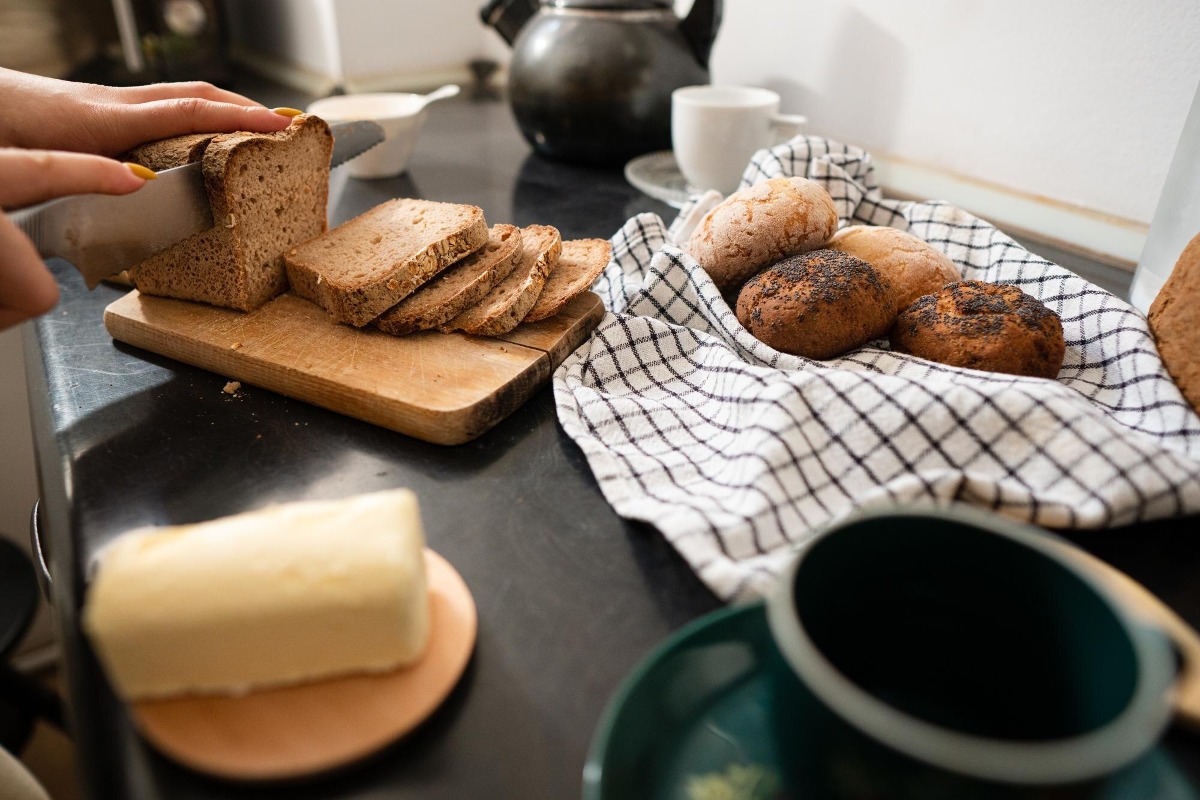
At breakfast, a slice of bread breaks apart when folded around an egg. Keeping the loaf somewhere cool might seem like a sensible way to protect it, but that choice can leave the bread less pleasant to eat. A simple change in storage can help, although how soon the loaf will be eaten and the risk of mold both matter.
Refrigeration makes bread stale faster
Bread generally stays softer on the counter than in the refrigerator. The fridge slows mold growth, but its temperature speeds up the starch changes that make bread feel firm and dry. For a loaf that will be eaten within a few days, room-temperature storage is usually the better choice for texture.
As bread bakes, its starch absorbs and holds water. After baking, starch molecules gradually reorganize and squeeze out some of that moisture, a process called retrogradation. Refrigerator temperatures of about 36, 40°F (2, 4°C) accelerate that process compared with room temperature.
Cold storage has 2 different effects
One bread-storage estimate puts staling in the refrigerator at about 6 times the room-temperature rate. That figure is not a promise for every loaf: ingredients, packaging and storage conditions affect how bread changes. A slice can therefore become unpleasantly firm even while it remains free of visible mold.
Freezing is different from refrigerating. At 0°F (-18°C) or lower, bread stales much more slowly, making the freezer a better place for bread that will not be eaten soon. Cold alone does not undo staling that has already happened, so freezing bread while it is still fresh gives the best result.
Short-term bread belongs at room temperature
For bread expected to be eaten within 2, 3 days, keep it in its original package or a closed plastic bag at room temperature. The packaging limits moisture loss without exposing the loaf to the refrigerator temperatures that speed staling. Virginia Cooperative Extension recommends room-temperature storage in its original package.
This approach has a limit: warmth and humidity can make mold a concern sooner, especially for bread without preservatives. Check the loaf before using it, and discard moldy bread rather than trying to save the affected slices. If a loaf is unlikely to be finished promptly, freeze the extra portion instead of leaving it on the counter.
Freezing works better for extra bread
Wrap the extra loaf or individual slices tightly in plastic, then seal them in a freezer bag and place them in the coldest part of a freezer set to 0°F (-18°C) or lower. Keeping the bag away from the freezer door helps avoid temperature changes. King Arthur Baking advises freezing bread stored beyond a few days.
For best quality, King Arthur Baking gives well-wrapped bread up to 3 months in the freezer; University of Nebraska-Lincoln guidance gives store-bought bread a 3, 5 month freezer window. In a humid home, refrigeration may be a reasonable short-term trade-off when slowing mold matters more than softness, but it will not keep bread from staling. Keep the next few days’ bread on the counter and freeze the rest while it is fresh.