Your beef stew has simmered all afternoon, but the first spoonful still tastes strangely flat. Before you put the lid on next time, one unexpected addition could make all that waiting worthwhile.
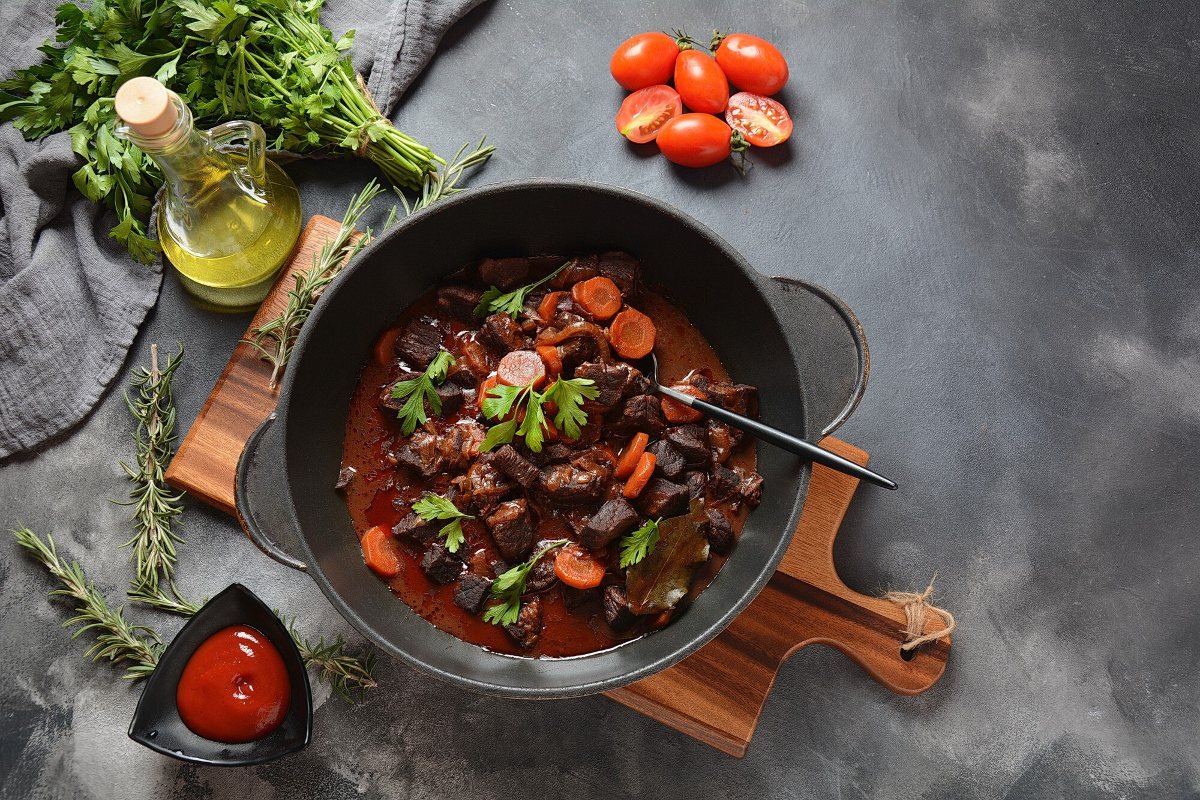
The beef is browned, the onions are soft, and the lid is waiting beside the pot. The usual braising liquid will help cook the beef, but tender meat alone does not guarantee a rich-tasting stew. A small change before the lid goes on can bring more flavor to the finished pot.
Coffee, wine, beer and tomato paste each add depth to beef stew
Black coffee, dry red wine, beer and tomato paste are 4 ways to give beef stew more depth. Coffee and wine add acidity that balances richness, beer brings malt flavor, and concentrated tomato paste adds savory flavor without adding much liquid. There is no single ingredient that suits every pot.
Beef and vegetables can taste flat when the braising liquid has little to contrast with their rich, familiar flavors. The choice depends on what the stew needs: a bitter edge, a brighter sauce, roasted notes or more savory body.
Coffee and red wine change the braising liquid
For a coffee version, replace 1 cup (240 mL) of the recipe’s broth with 1 cup (240 mL) of freshly brewed black coffee when adding the braising liquid. Treat that amount as a starting point, not a standard ratio for every recipe. Coffee’s measurable acidity helps balance rich beef, while its roasted flavor adds a bittersweet note. Use plain, unsweetened coffee so added flavors do not compete with the stew.
For wine, sear the beef first, then add 1 cup (240 mL) of dry red wine to the pot and scrape up the browned bits stuck to the bottom. Simmer over medium heat until roughly one-third remains, checking after about 20 minutes, before adding the other liquids and returning the beef. Lifting those browned bits builds flavor in the sauce; reducing the wine concentrates its flavor. Wine’s acidity may also help soften the meat, but a long, gentle braise still matters for a tough cut.
Beer and tomato paste offer different kinds of richness
For a beer-based stew, replace 1 1/2 cups (360 mL) of the planned braising liquid with beer, then add it with the broth, seasonings and browned beef. Beer is the braising liquid in Belgian-style beef and onion stew. An Irish stout brings roasted malt notes and hints of coffee and chocolate, while a heavily hopped beer can make the sauce too bitter. Choose the beer for its flavor, not simply because it is on hand.
Tomato paste is useful when the stew needs more savory body but not more liquid. Sauté 2 to 3 tablespoons with the onions and garlic before pouring in broth or wine. Its concentrated flavor adds umami and helps thicken the sauce; using much more can make tomato dominate. Red wine and tomato paste can work together, but adding both at full strength may obscure the beef.
Small changes make the result easier to judge
Try 1 addition at a time, then taste the finished stew before adjusting salt or herbs. These additions have less time to blend in a quick-cooking stew, and coffee or acidic ingredients may not suit every preference. For anyone avoiding alcohol, choose coffee or tomato paste instead of wine or beer; cooking does not reliably remove all alcohol. Refrigerate leftovers promptly, and start with the addition that addresses what the stew is missing.